

Fresh milk on Thai menus
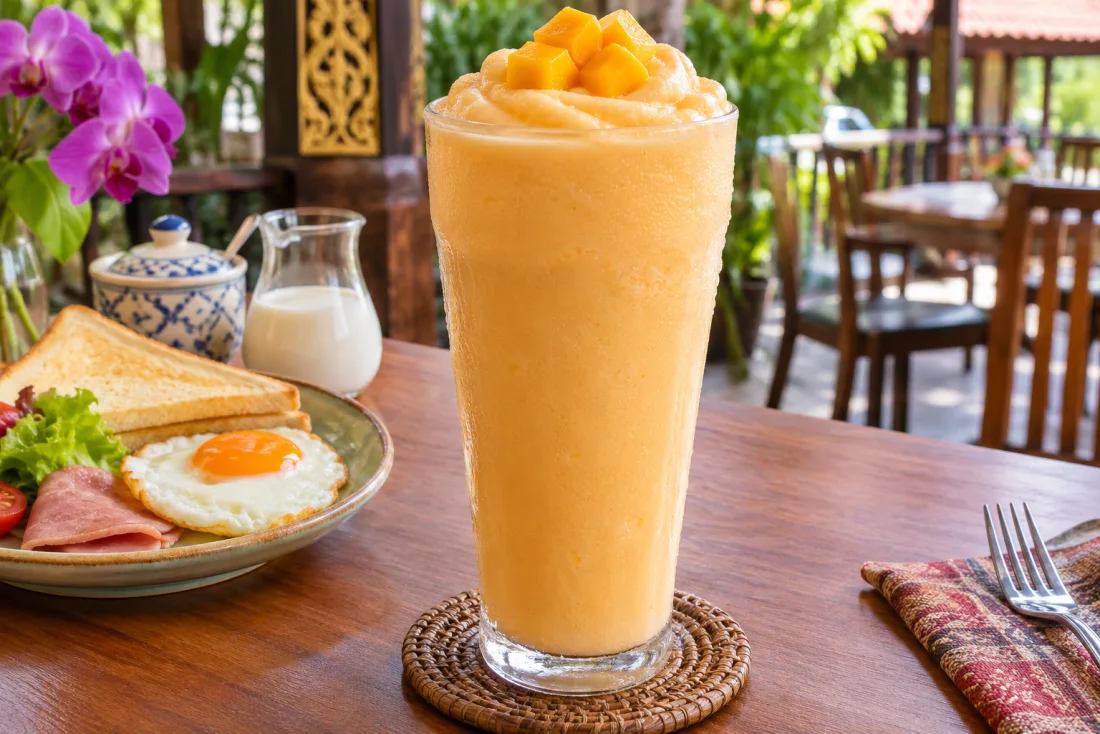
Mamuang nom sot pan explicitly identifies mango, fresh milk and blending. A Thai shop offers a 22-ounce version with chopped ripe mango. Other shops distinguish plain fruit, fresh milk and yoghurt. Nam Dok Mai is one real mango example, with variations across vendors.
Blending ripe fruit and milk
Peel the fruit and cut off the flesh, avoiding tough fibres near the stone. Soft ripe chunks are blended with milk and ice. One Thai merchant uses Nam Dok Mai mango, ice and a little fresh milk. Frozen fruit or a higher fruit ratio can give more body.
Ripe fruit and dairy texture
Mango gives a yellow-orange colour and ripe, floral sweetness. Cold milk softens its aroma and adds creaminess. Ice makes the blend colder and less dense. Pieces on top can be eaten with a spoon. Colour alone cannot indicate actual sweetness or added syrup.
What a large cup means
Twenty-two ounces is a seller’s cup capacity. Other menus can differ. Capacity includes fine ice, pulp, milk and air. Takeaway foam may settle in transit. Stir before pouring portions if the fruit and milk have begun to separate.
Milk, coconut and yoghurt variants
Nom sot indicates fresh milk and kati indicates coconut milk. They give different aromas. Yoghurt adds a cultured tang. A plain fruit shake gives mango and ice without a dairy base. Glutinous rice belongs to a separately identified dessert-style recipe.
Allergens and preparation contact
The representative fresh-milk shake contains cow’s milk. Condensed milk, cream and yoghurt also contain dairy. Plant alternatives can include soy or nuts. If relevant, ask about the blender, toppings and actual base. Ripe fruit still contributes sugar when none is added.
If you have a food allergy, tell the restaurant before ordering and ask about ingredients, sauces and shared cooking equipment.