

Reading coconut milk on the menu
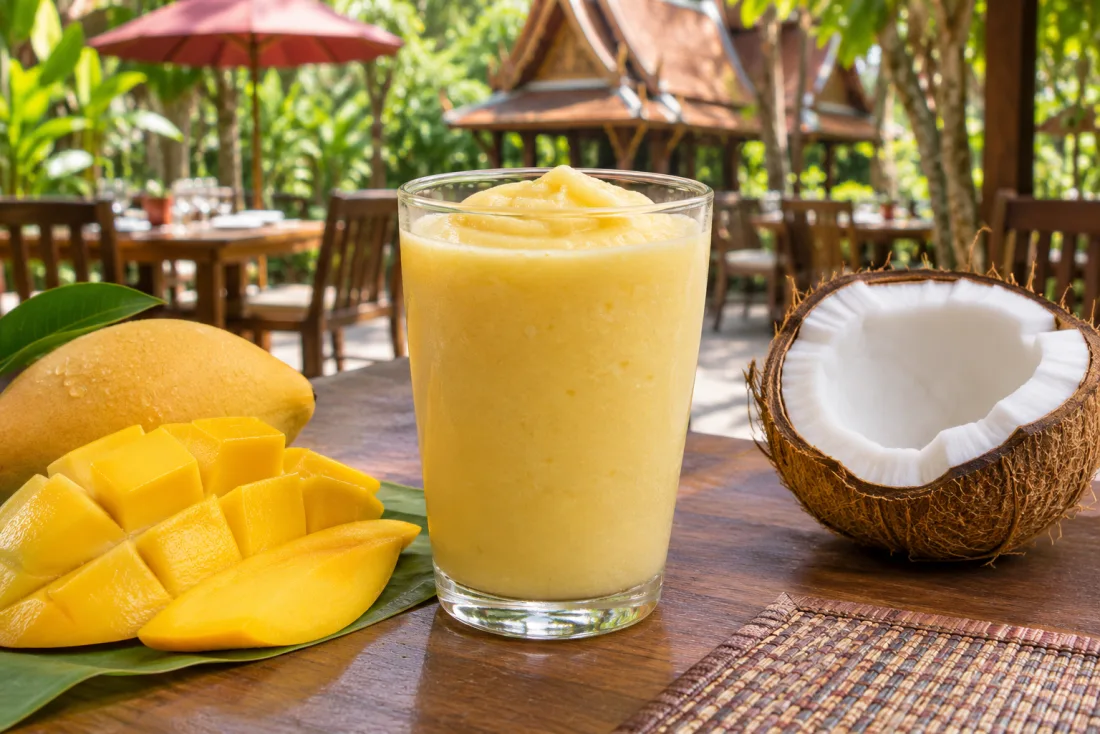
Mamuang means mango and kati means coconut milk. A Bangkok smoothie vendor lists the pair as a blended drink. A local one-serving recipe uses ripe Nam Dok Mai mango. Other suitable ripe mangoes work, and the combination has no fixed province of origin.
Ripe fruit and coconut milk
Remove the skin, stone and any tough fibres. Blend soft mango with coconut milk and ice. Coconut milk brings body and a lighter golden colour. A Thai recipe adds coconut sugar. Coconut water would give a lighter result with a different texture.
Mango first, coconut to finish
Mango brings ripe fragrance and sweetness, while coconut milk adds a round finish. A higher proportion of fruit gives a fuller mango flavour. Finely blended ice makes the texture soft and cold, and extra mango cubes provide optional fruit bites.
Serving a single cup
Serve a short or medium glass. The original one-serving recipe reserves a few pieces for garnish. Capacity is shop-specific. Stir if the blend softens or separates in transit. Coconut milk is the recipe distinction from the larger fresh dairy shake.
Dairy and sticky rice versions
Fresh milk gives a dairy character, while coconut milk supplies coconut flavour. Some Thai dessert smoothies use both plus sago or pomelo. A sticky rice smoothie uses cooked rice as an additional ingredient. The simple coconut shake does not need it.
Allergens and other milk bases
The representative recipe uses coconut milk and does not require dairy. Milk, condensed milk and cream remain possible in other versions. Plant blends can contain soy or nuts. Ask about the actual base and shared tools, and avoid coconut or mango if you know you react to them.
If you have a food allergy, tell the restaurant before ordering and ask about ingredients, sauces and shared cooking equipment.