
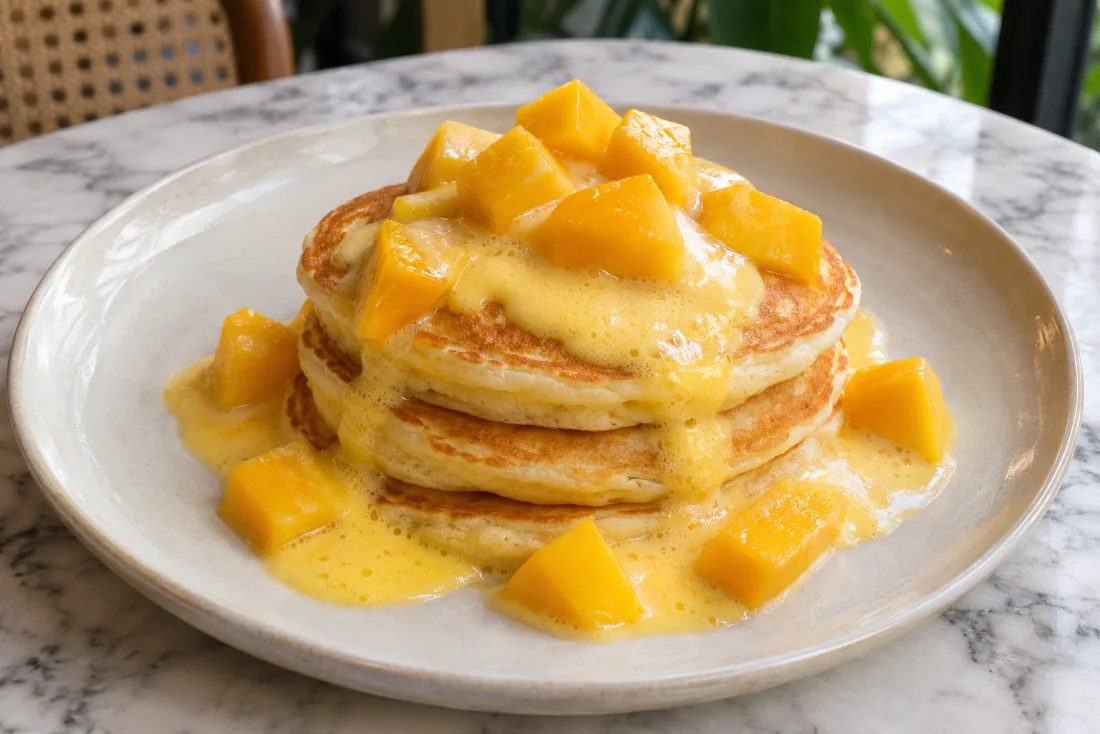

A modern Thai café dish
The Thai name means mango pancakes. Cafés in Bangkok and Krabi document different toppings for Western-style griddled pancakes. The examples establish contemporary service and leave the origin of the pancake itself open.
Pancake batter and café toppings
Pancakes commonly use wheat flour, egg and dairy, sometimes buttermilk. Ripe fragrant mango is cut into pieces. Mango sabayon uses a light egg-based foam style, and other versions can add ice cream, whipped cream or honey.
Serve warm pancakes with fruit added late
Cook the small rounds through, then add cut mango and sauce close to serving. Ice cream and cream can be kept beside the warm pancakes so their distinct temperatures and textures remain apparent.
Pan-toasted batter and fresh fruit
The soft pancake has a lightly browned surface. Mango ripeness shapes the sweetness and acidity. A little sauce complements it, while honey or ice cream increases sweetness and shifts the texture.
Two finished café presentations
One plate has a stack with yellow mango sabayon and fruit pieces. Another has a group of smaller pancakes with fresh mango, one scoop of ice cream, whipped cream and separate honey. Portions and accompaniments vary by café.
Allergens in batter and toppings
Wheat, egg and milk are common. Ask whether the sabayon contains alcohol and about other ingredients in sauces, cream or ice cream. Cross-contact with nuts or soy can occur through shared griddles, bowls and scoops.
If you have a food allergy, tell the restaurant before ordering and ask about ingredients, sauces and shared cooking equipment.