
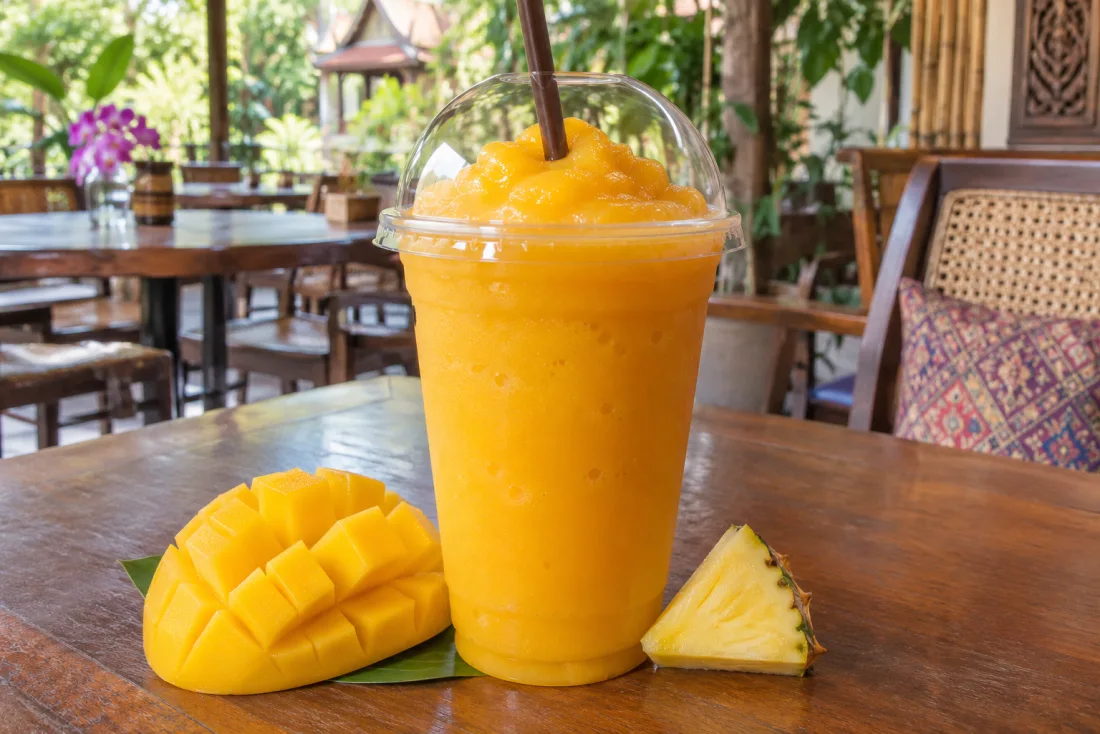

Two fruits on Thai menus
A Bangkok fruit shop lists mango and pineapple together, alongside separate mango, mango milk and mango passion fruit drinks. Pan identifies blending. The format is common to contemporary fruit cafés and does not establish a particular province or fixed serving volume.
Fruit and ice preparation
Peel ripe mango and remove the stone. Peel pineapple, remove its eyes and trim the hard core as needed. Blend the pieces with ice. Mango gives body while pineapple contributes juice. Frozen fruit can replace some separate ice.
Proportion and flavour
More mango often gives a thick golden blend with ripe sweetness. More pineapple can bring an earlier tart note and lighter body. Pulp may show tiny pineapple fibres. Actual colour is a poor indicator of how sweet the fruit or recipe is.
Serving a standard cup
A normal single serving can go into a café glass or takeaway cup. A garnish of mango or pineapple is optional. Stir if ice melts and pulp settles. Ask about the actual cup volume, as standard is a shop-specific category.
Yoghurt, coconut and other fruit
Thai recipes and cafés also make variants with yoghurt and almond milk, or with coconut flesh and aloe. Coconut flesh and coconut milk add different textures. The named fruit combination does not identify those optional bases.
Allergens and shared equipment
The simple fruit-and-ice version does not require milk. Yoghurt and dairy toppings contain milk. Almond or soy alternatives and coconut ingredients matter to people avoiding them. Ask about shared tools, extra fruit and other ingredients if relevant.
If you have a food allergy, tell the restaurant before ordering and ask about ingredients, sauces and shared cooking equipment.