
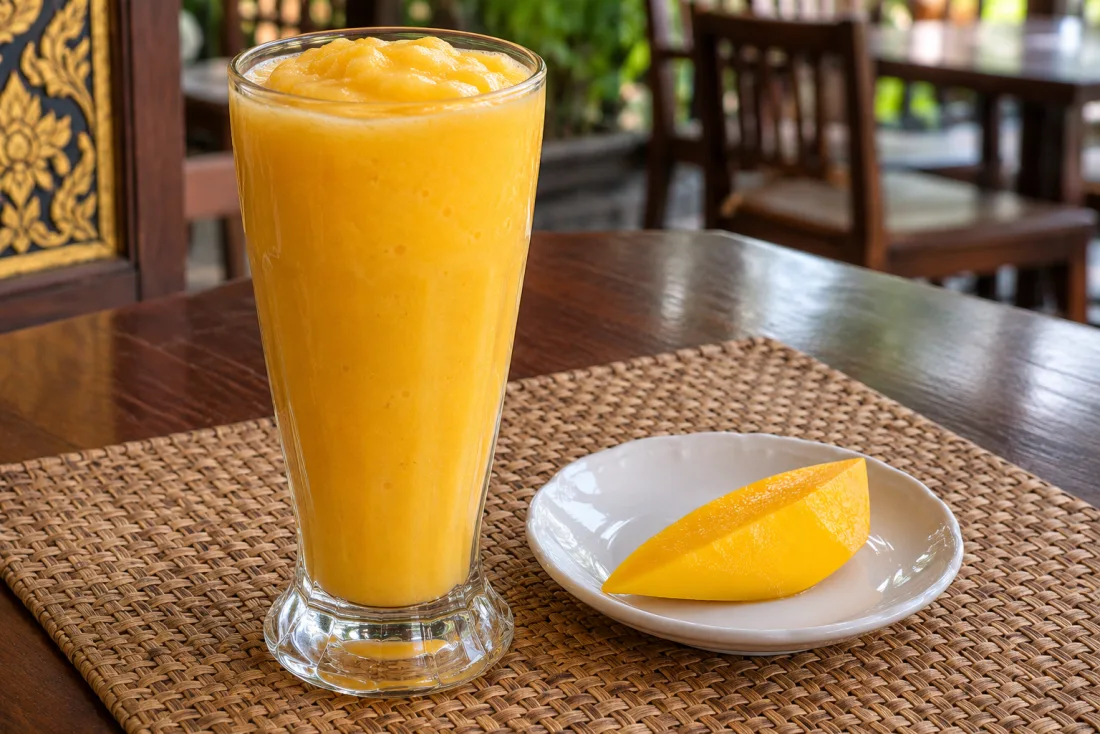

Ripe mango shakes at Thai fruit stalls
Mamuang pan means blended mango. Thai recipes often use ripe aromatic Nam Dok Mai mangoes, although fruit and ripeness vary by season and shop. A regular-size drink can still offer choices of sweetener and toppings.
Mango flesh, ice and optional dairy
Ripe mango makes a smooth, naturally sweet purée. Ice cools and lightens it. Some recipes add fresh milk or yoghurt and some use water, a little syrup, lime or salt. Mango pieces can go on top for texture.
Cutting, blending and keeping some texture
Remove the skin and stone and blend the chopped fruit. Frozen fruit can replace some extra ice. Blend the dairy through for a smooth drink or layer yoghurt at the bottom. The texture softens as the ice melts.
Fruit fragrance and a creamy texture
Ripe mango is fragrant and can be sweet without syrup. Yoghurt introduces acidity, milk adds smoothness and lime brightens the finish. Ask about any extra syrup separately from the fruit’s natural sweetness.
Juice, ice slush and yoghurt blends
Mango juice is generally thinner than the shake, while a yoghurt drink can have a tart layer. Ask whether a plain fruit and ice version is possible. Pieces of ripe mango can be kept separate or served on top.
Allergens in fruit, dairy and equipment
The drink contains mango. Milk, condensed milk and yoghurt add dairy. Alternative milks, powdered mixes and toppings can add soy, nuts or wheat. Ask about the base and shared utensils and blenders. Removing a topping cannot remove dairy already blended in.
If you have a food allergy, tell the restaurant before ordering and ask about ingredients, sauces and shared cooking equipment.