
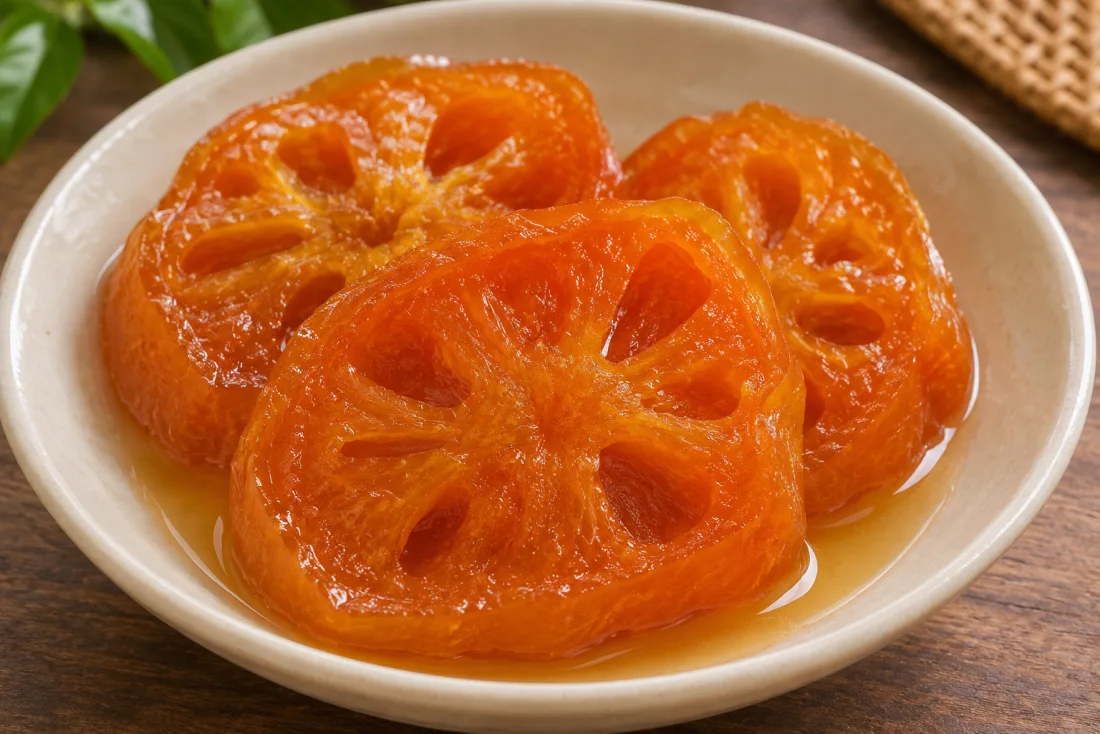

A fruit slice with a radiating pattern
Matuem is the fruit commonly called bael. Chueam describes cooking in syrup. Cross-sections can retain the pattern of the fruit chambers after the seeds are removed. Dried bael can be brewed as a drink, while candied bael is a slice of fruit to chew.
Regional records of a Thai sweet
A local reference for Phetchaburi and Prachuap Khiri Khan documents dried candied bael as an accompaniment to hot tea. An older Thai household cookbook records peeling, seeding and cooking it in sugar. The references document the practices without establishing a single place of origin.
Bael, water and sugar
A firm fruit keeps its shape as it cooks. The maker removes the hard shell and the seeds, then cuts the flesh into slices. Some old recipes describe soaking and rinsing the pieces before cooking. Fruit maturity and syrup concentration help determine the amber colour and texture.
Slowly candy and choose how dry to serve it
Prepare the fruit and simmer it gently in syrup. In some methods the fruit rests in sugar and then cooks again, before being drained. Syrup served with the fruit stays glossy. A drier version can be lifted by hand and may develop a fine sugar coating.
Sweet syrup and dense fruit texture
Sugar is the first taste, followed by a warm fruit aroma and a dense, chewy bite. Drier edges firm while the middle can stay tender. Some batches retain slight bitterness. Thin slices can accompany unsweetened tea, which lets the fruit aroma come through.
Allergens and mixed desserts
The typical recipe uses bael and sugar syrup. Ask about added fruit, spices or garnishes. Bael on a cake can share milk, egg, wheat or nuts from the cake or equipment. Ask about preparation and shared tongs, and use the Thai word มะตูม if the English fruit name is unclear.
If you have a food allergy, tell the restaurant before ordering and ask about ingredients, sauces and shared cooking equipment.