

The name and auspicious occasions
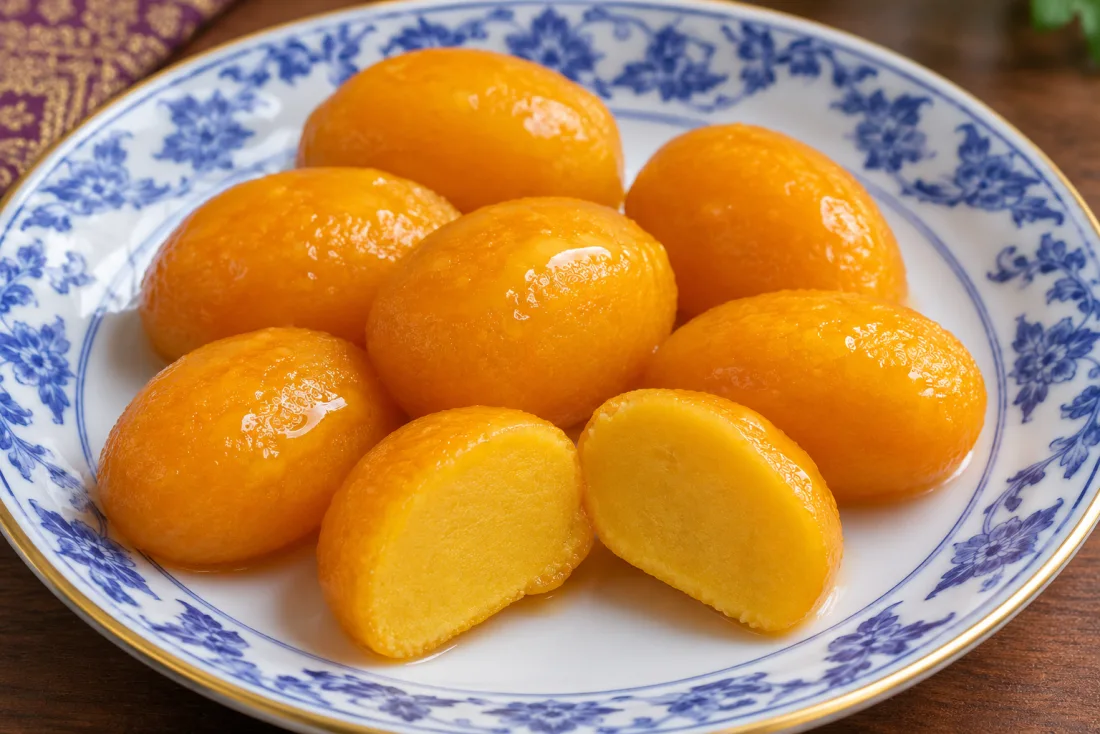
The name evokes a jackfruit seed’s shape. Thailand Foundation includes it among traditional auspicious Thai desserts and describes a connection with the idea of support. It can share a celebration tray with other golden sweets.
Mung bean, coconut and duck egg yolk
A KRUA.CO recipe cooks peeled mung beans with coconut and sugar to make a filling, then coats each piece with duck egg yolk. A documented taro variation has a different centre. The golden colour alone cannot tell you which filling is inside.
Shaping, coating and poaching
The bean paste is cooked until it can hold an oval shape when cool. The pieces are dipped in yolk before poaching in syrup. The thin yolk layer sets around the filling. Draining the pieces leaves a glossy finish.
The soft filling and sweet yolk shell
Expect a sweet syrup coating, tender egg and a soft, slightly dense bean centre. The balance depends on the thickness of the yolk and filling. Related sweets made entirely of yolk or formed as strands have a different bite.
Retail boxes and festival trays
Shops may box one variety or present the sweets among other golden desserts. Check whether the centre is mung bean or taro. The oval shape and separate filling help distinguish it from flower, drop and thread sweets.
Allergens, filling and shared syrup
The sample contains egg, mung beans and coconut. Ask about each part and about syrup or tools shared with other sweets. Taro versions may still be coated with yolk. Removing the coating does not remove contact with egg.
If you have a food allergy, tell the restaurant before ordering and ask about ingredients, sauces and shared cooking equipment.