
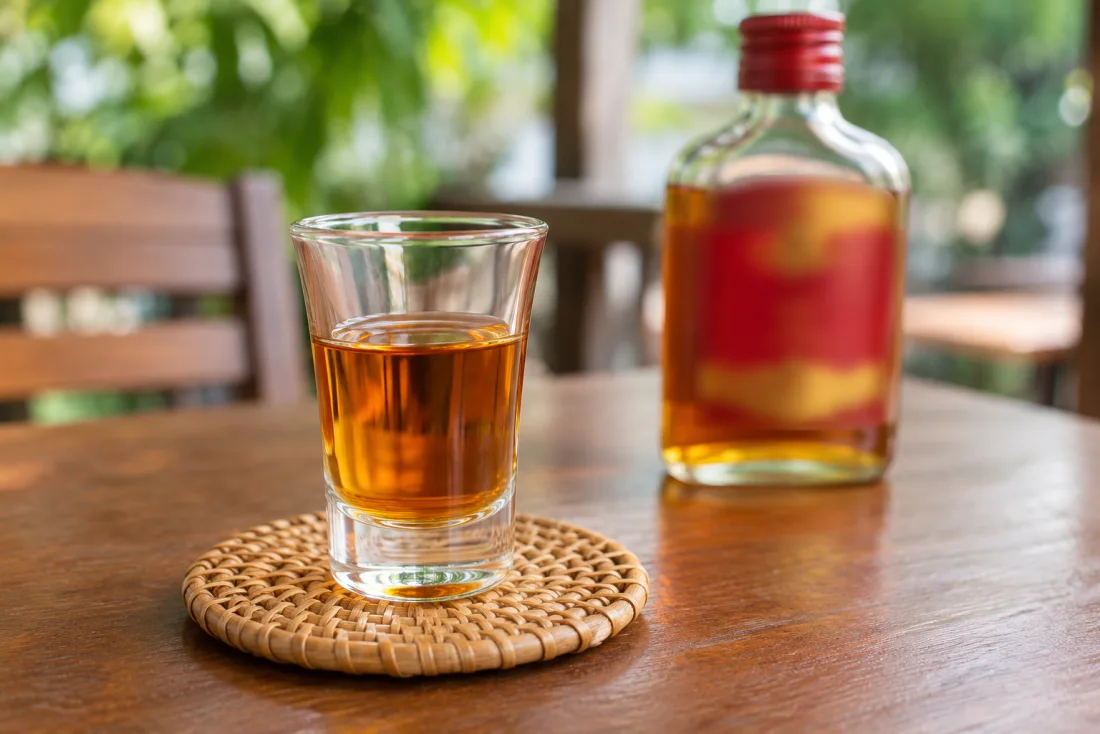

The name and its Thai bottle
The maker traces this special blended spirit to 1941, and Thai restaurants and retailers document the small 350 mL bottle. The brand name and label identify the spirit, while the bottle gives exact volume and origin.
Distillation and herbs
The producer identifies sugarcane molasses and glutinous rice as distillation inputs, followed by a blend of natural herbs and spices. The full botanical recipe is not published. Garnishes from a branded cocktail are separate from the original bottle.
Amber colour and spice
The spirit is amber with warm molasses-like sweetness, herb aroma and warming alcohol. Ice reduces intensity over time. Citrus or soda adds new flavour or carbonation to the finished glass.
Small bottle and glass portions
The 350 mL is the sealed pack's capacity. A restaurant pour or mixed glass uses a separately measured amount. Spirits, ice and mixer can arrive apart. The bottle's ABV belongs to the unmixed spirit.
Mekhong and its cocktails
The producer publishes cocktail ideas and bars can add lime, syrup or herbs. Those are ingredients of a restaurant glass. State the original spirit and added components separately on the menu.
Allergens, botanicals and alcohol
Check the actual bottle and ask the producer if you need a particular botanical or ingredient. A local 350 mL bottle is listed at 35 percent ABV. Fruit, dairy and shared bar tools can add contact.
If you have a food allergy, tell the restaurant before ordering and ask about ingredients, sauces and shared cooking equipment.