

 pork
Glass noodles and pork from a two-zone Thai grill
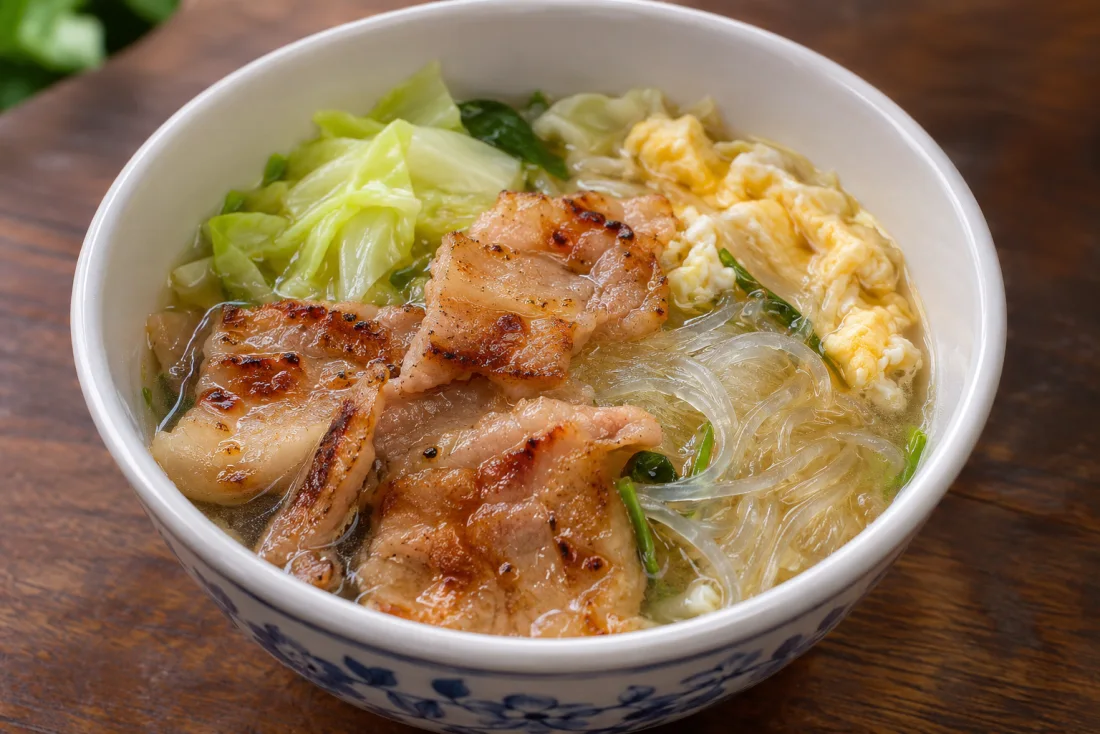
Moo kratha is a Thai pork grill and hotpot, and wun sen means glass noodles. A raised center cooks meat, and the broth moat cooks noodles and vegetables. Meat juices can add savory flavor to the broth. Cooked pork and soup noodles can be served in the same bowl or on separate plates with dip. The pictured portions are fully cooked. In an ordinary pork noodle soup the meat need not have a grilled aroma.
A Thai cook-and-share format
Thai home recipes use pork broth, vegetables, glass noodles, sliced meat and dip. Some use an electric pan. Thai meal sets can include noodles, pork and optional egg or seafood. Some venues provide raw ingredients for cooking at the table. Some kitchens cook the dish before serving. These examples explain the formats without establishing a province of origin. Ask whether the broth and grilled pork come together and what is included in the set.
Glass noodles, pork, greens and broth
Glass noodles can be made from mung bean or other starches. Soak and cook them according to the product. Use thin pork belly, shoulder or leaner pork. Garlic, pepper, soy sauce, oyster sauce and egg are possible marinade ingredients. Napa cabbage, water spinach, other greens and pork broth are common possibilities. A cooked egg can add texture. Chicken, shrimp or squid can accompany larger hotpot sets. Ask about sesame, chili and other dip ingredients.
Cook glass noodles in broth and grill the pork thoroughly
Cook softened glass noodles in the broth, with pork on the raised grill. Use separate tools for raw and cooked ingredients. If raw juices enter the moat, bring the broth to a full boil before serving. USDA minimum internal temperatures include 63°C with a three-minute rest for whole cuts of pork, 71°C for ground pork and 74°C for poultry. Cook any egg through. Put thicker cabbage stems in before leaves and noodles to retain their textures.
Roasted meat and noodles that take up the broth
Pork has a savory browned edge. The noodles taste mild on their own and take on the broth, keeping a smooth, springy bite. Greens bring a little sweetness and an egg can soften the texture. A sesame or chili dip can add toastiness, heat and tartness. Sample the broth before adding sauce. The grilled meat and soup can be eaten separately to keep the roast flavor prominent.
Allergens in marinade, stock, dip and shared cooking
Soy sauce contains soy and may contain wheat. Oyster sauce may contain oyster, a mollusc. Egg can be in marinade or toppings, and shrimp is a crustacean. Squid is a mollusc and fish sauce contains fish. Sesame can be in marinades or dips. Check glass noodle mixes. A shared pot can carry ingredients from other meats or seafood even after they are taken out. Ask about the broth, dip and shared pans if avoiding cross-contact.
If you have a food allergy, tell the restaurant before ordering and ask about ingredients, sauces and shared cooking equipment.