
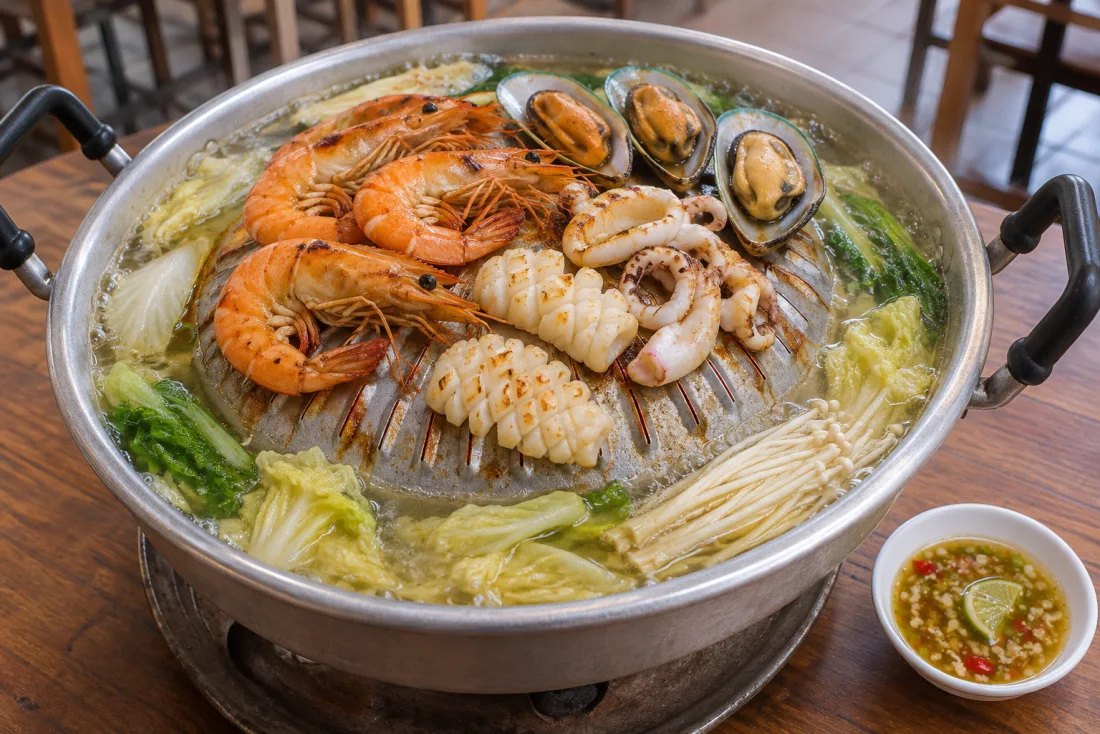

 shrimp
 squid
Seafood for a Thai grill and hotpot
Mookata names a table grill with a raised centre and a shallow broth channel. Talay means seafood. The restaurant may grill or simmer shrimp, squid and mussels according to the pan and its service. Napa cabbage and morning glory cook well in the broth. Despite the seafood description, a mixed set may include pork, pork stock or fat. Ask what is in the set and how it is served. Some kitchens deliver the food already cooked.
Seafood sets in Thai restaurants
A Pattaya menu offers shrimp, squid, mussels, vegetables and dipping sauces in a mookata set. A Bangkok restaurant lists a separate assortment with shrimp, squid, jellyfish and other items. These menus illustrate the range a Thai table might choose. They do not establish a single origin or fixed seafood list. Compare whether the restaurant offers a seafood plate, a mixed meat and seafood set or a larger assortment to share.
Shrimp, squid, mussels, greens and dips
Shrimp can be shelled or grilled with shell. Squid can be scored or cut into rings. Mussels are bivalve molluscs with a different texture from shrimp and squid. Napa cabbage, morning glory, mushrooms and glass noodles vary by kitchen. Stock can be made with meat, seafood or a prepared seasoning. A restaurant may serve a chilli-lime seafood dip and a Thai suki dip, which can contain sesame or other seasonings.
Cook thoroughly on the grill or in the broth
The dome can leave grill marks, while vegetables and noodles soften in the broth. Follow the restaurant's method and cook seafood fully. Opaque shrimp flesh and open shells are useful cues in context, but do not assume every piece is done just from a photograph or a colour change. Discard shellfish that remain closed after cooking. Keep raw and cooked plates and tongs separate, and heat the broth thoroughly before serving after raw ingredients have been added.
Grilled seafood, natural sweetness and savoury broth
Cooked shrimp can be tender and subtly sweet, squid gently springy and mussels mild and briny. The grill adds toasted aroma, while broth gives a softer finish to the vegetables. Chilli-lime dip brings acidity and heat, and some suki dips are sweeter. Try the seafood by itself before adding either sauce. As vegetables and noodles cook in the broth, their texture changes and the stock may become more concentrated.
Allergens in seafood, sauces and shared cooking tools
Shrimp is a crustacean. Mussels and squid are molluscs, while fish is a separate ingredient group. Fish sauce contains fish and oyster sauce may contain oyster. Dips, marinades and processed surimi may contain soy, wheat, sesame, egg or additional seafood. Ask about the stock, sauce and shared pan and tools. Cooking vegetables in the broth beside seafood can still bring cross-contact, even when they are picked out separately.
If you have a food allergy, tell the restaurant before ordering and ask about ingredients, sauces and shared cooking equipment.