
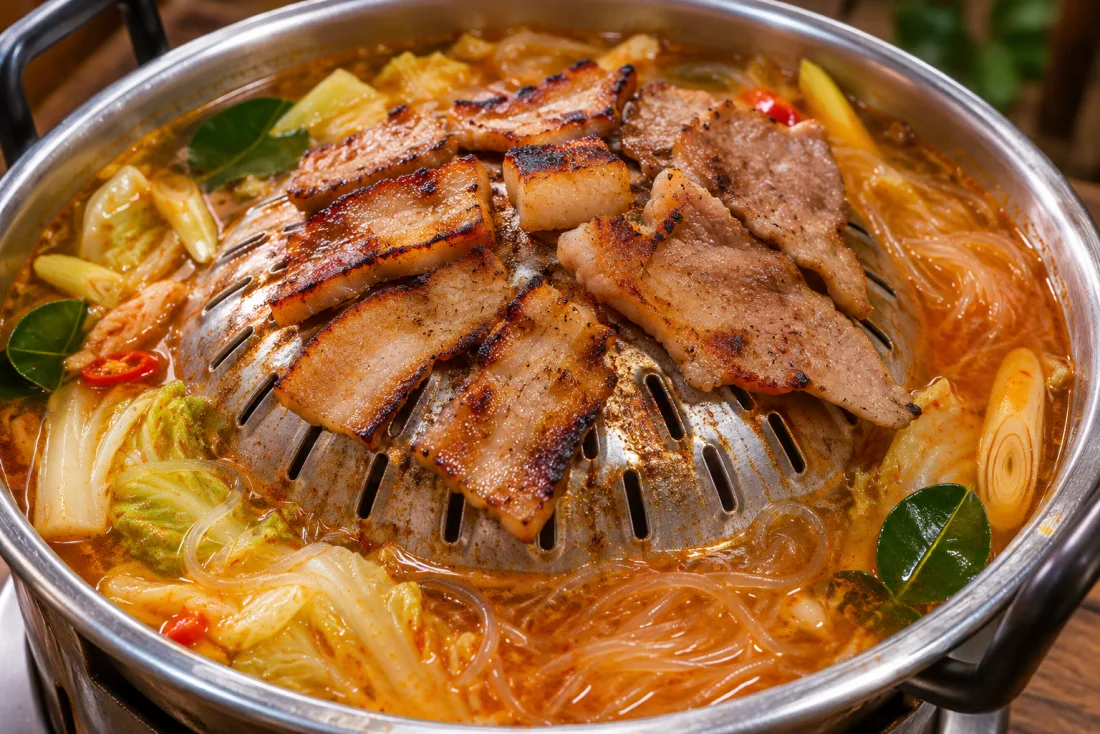

 pork belly
Looking at the centre and the broth
Cooked pork has browned edges on the raised grill. Cabbage and glass noodles soften in the hot moat. The broth may be yellow-orange to red, with chilli, lemongrass, galangal and makrut lime leaf visible in some kitchens.
A broth choice from Thai restaurants
Moo kratha combines table grilling with simmering. A shop in Phetchaburi lists tom yum alongside pork-bone and other broths. Tom yum describes a sour, fragrant preparation. A broth with that name can be served with pork and should be checked separately for seafood.
How the sour and spicy broth is seasoned
Lemongrass, galangal and makrut lime leaves fragrance the liquid. Chilli brings heat, lime is a common souring ingredient and fish sauce or salt adds savouriness. Pork belly and shoulder cook on the grill while cabbage and glass noodles cook in the moat. Use separate tongs for raw and cooked food.
How the pot changes during the meal
Vegetables soften and flavour the broth, and liquid can become stronger as it evaporates. Lifting out sliced chilli leaves heat from crushed chilli behind. Take out noodles when they reach the texture you like and leave the woody pieces of lemongrass or galangal aside.
Choosing broth, vegetables and dipping sauces
Ask which broth is included, whether it is already spicy and whether the sauce is separate. Additional ingredients or a second pan depend on the restaurant. Ask separately whether a takeaway order includes the equipment.
Allergens and contact in the shared pot
Fish sauce, shrimp-based paste or seafood stock can add fish and crustaceans. Soy, wheat or sesame can be present in premade broths, marinades and dips. Creamy broth may contain milk. Ask whether the broth, grill surface and utensils can be kept separate when needed.
If you have a food allergy, tell the restaurant before ordering and ask about ingredients, sauces and shared cooking equipment.