
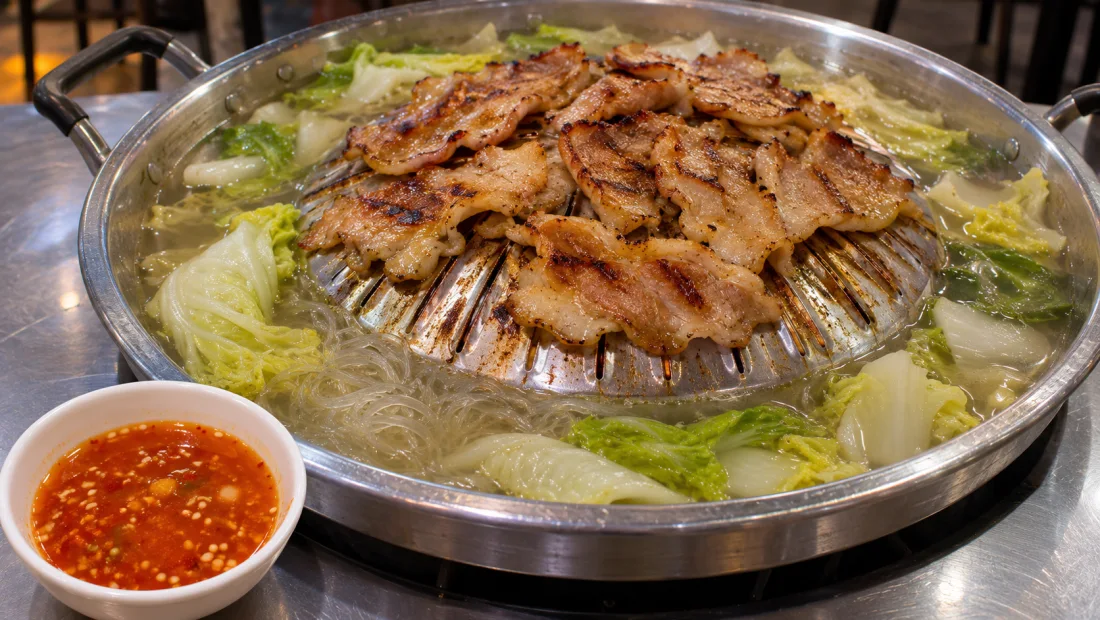

 pork belly
 optional shrimp
What is on the table
Meat cooks on the raised metal grill and vegetables or glass noodles soften in the outer broth. The suki sauce sits in its own bowl. It may show sesame or chilli seeds. Some mixed sets also serve an independently prepared seafood dip.
How Thai menus identify it
Moo kratha refers to the grill-and-simmer meal. Nam chim suki is a dipping sauce also served with Thai suki. Restaurants and takeaway shops may offer it on its own, with seafood sauce, or as an option with a pork or mixed set.
How the meat, vegetables and sauce fit
Pork belly and shoulder have different fat and texture. Napa cabbage and glass noodles soften in broth. Suki sauces vary and may contain chilli, garlic, sugar, acidic seasoning, sesame, fermented bean curd or soy seasoning. Sauce stays in the dipping bowl so diners can set their own intensity.
Grilled, simmered and dipped flavours
Pork develops browned edges, while simmered parts have gentler sweetness. Suki dip usually tastes sweet, tangy and hot, with thickness and spice levels that vary by kitchen. A seafood sauce, if supplied, brings a second flavour.
Ordering and sharing
Confirm what is included and whether the grill is supplied with a takeaway set. Keep separate utensils for raw and cooked foods. Ask about additional broth, vegetables or dip and use clean serving utensils when sharing.
Allergens and shared grill surfaces
Suki sauce or marinades can contain sesame, soy, wheat, fish or crustaceans. Seafood sets can also contain molluscs. Ask about precooked and processed ingredients, where the sauce and stock come from, and whether the kitchen can use separate utensils and cooking surfaces.
If you have a food allergy, tell the restaurant before ordering and ask about ingredients, sauces and shared cooking equipment.