

 beef
 fish sauce
How to identify beef skewers
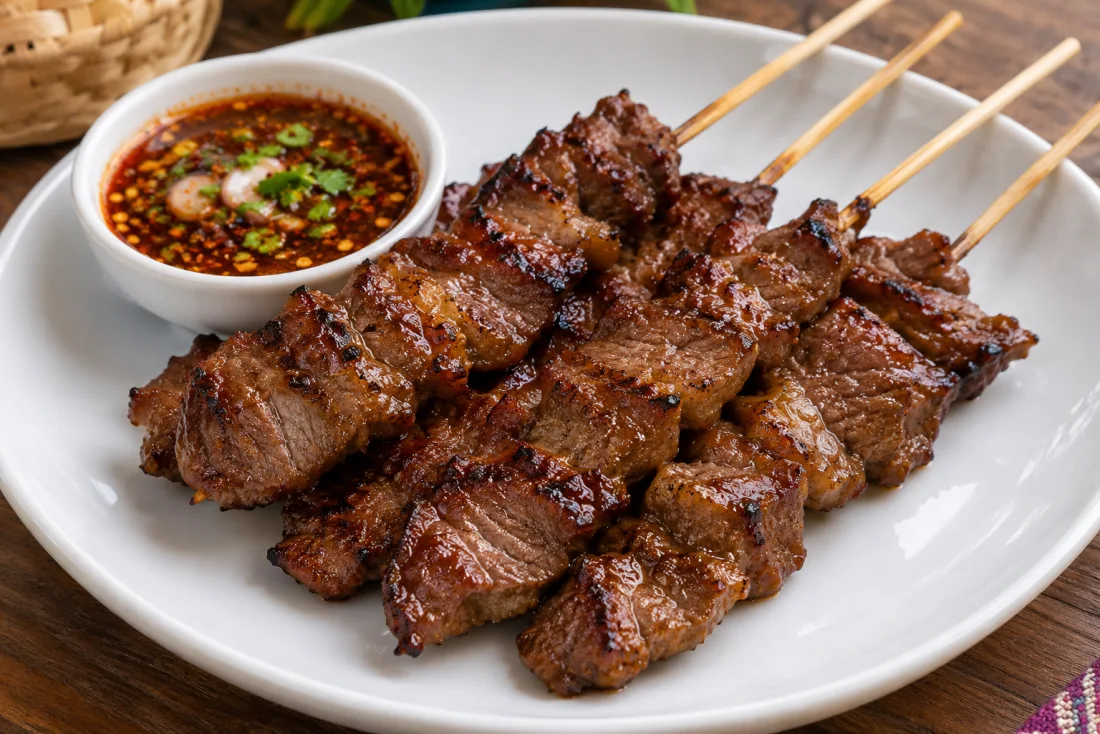
Nuea ping and nuea yang siap mai can describe grilled beef skewers. Nuea wua explicitly says beef. Moo ping means grilled pork, a similar-looking dish. Thin folds of beef darken as they grill. A menu may specify feedlot beef or a cut, but appearance alone cannot establish either.
Thai stalls and sticky rice
A Thai beef skewer shop offers cooked skewers and sticky rice as sets. A Thai cook documents a spiced version and recalls buying beef in Bangkok's Bang Lamphu neighborhood. The general dish has multiple settings and does not have one proven place of origin. Chili dips vary by stall.
Beef, aromatics and optional milk
One Thai cook uses beef with some fat, garlic, pepper, cilantro root, toasted coriander and cumin, condensed and evaporated milk, oyster sauce, fish sauce, seasoning sauce and palm sugar. Some other stalls omit milk or season differently. A chili dip can use tamarind or lime.
Cook the center and keep tools clean
Marinate under proper refrigeration and grill the skewers evenly. Browning or char alone cannot show that the inside is adequately cooked. Follow safe cooking guidance for the particular meat and preparation. Use clean tools and plates for the finished skewers and a separately prepared finishing sauce.
Grilled edges and savory sweetness
Grilling gives the edges a roasted flavor, while the thin beef remains savory and slightly chewy. Sweet marinades make the browning more evident. A spicy tangy dip can also taste of toasted rice. Sticky rice catches the juices and cucumber can refresh the palate.
Allergens in marinades, dips and grills
Marinades may contain milk, soy, wheat, fish sauce, oyster or egg. Oyster is a mollusk. Peanuts or sesame can be in dips and other skewers. Ask about the marinade, finishing glaze, dip and grills or brushes shared with other food.
If you have a food allergy, tell the restaurant before ordering and ask about ingredients, sauces and shared cooking equipment.