

 marinated pork
 fish sauce
What each part looks like
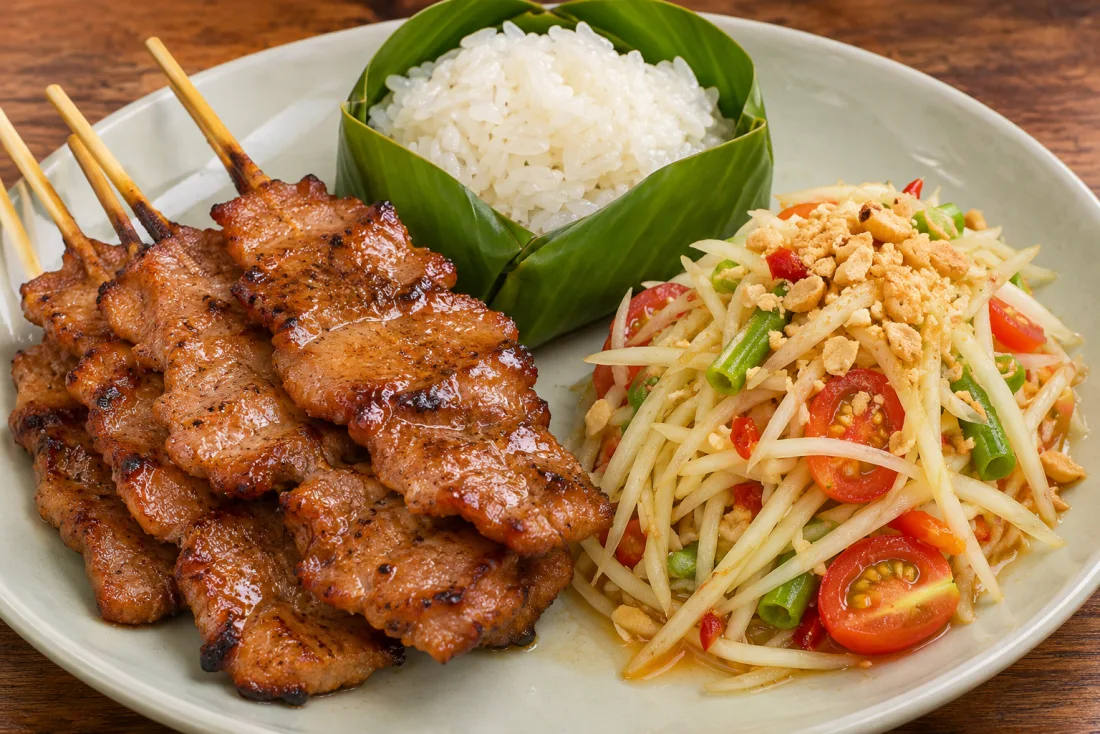
Pork skewers have browned edges. Green papaya salad has crunchy pale shreds, often with tomato, chilli, long beans and peanuts. Sticky rice holds together in a leaf, bag or basket. A box can keep the salad dressing away from the rice and may have a fourth portion of cooked mince with shallots and herbs.
How markets and restaurants sell it
Pork and sticky rice are sold at Thai markets in different quantities. Places serving som tam may add papaya salad to the meat and rice. An example from a Bangkok restaurant lists pork skewers, som tam Thai, larb and sticky rice. The number of skewers and specific sides depend on the selected set.
How the three parts are made
Pork is marinated and grilled until cooked. Milk, garlic or coriander root may be used depending on the kitchen. Sticky rice is soaked and steamed, and shredded green papaya is dressed with lime, fish sauce and chilli. Tomato, long beans, peanuts and dried shrimp depend on the salad style.
Grilled, crunchy and chewy
The pork has savoury sweetness and toasted edges. Papaya tastes crisp and can be tart and hot. Mild sticky rice helps balance the dressing. Larb, when supplied, adds minced meat texture, herbs and toasted rice powder.
What to ask when ordering
Ask whether papaya salad comes with the set or is separate, and check the number of skewers and portions of rice. Confirm heat, dressing and extra sides. Separate packaging can keep the rice and grilled pork from becoming soaked in salad dressing.
Allergens in each part
Soy sauce can contain soy and wheat and marinades may use milk, fish sauce or oyster sauce. Som tam can contain peanuts, fish sauce, fermented fish or dried shrimp. Ask about shared mortars, grills and utensils and whether the different parts can be kept separate.
If you have a food allergy, tell the restaurant before ordering and ask about ingredients, sauces and shared cooking equipment.