

 pork
Where you can find it
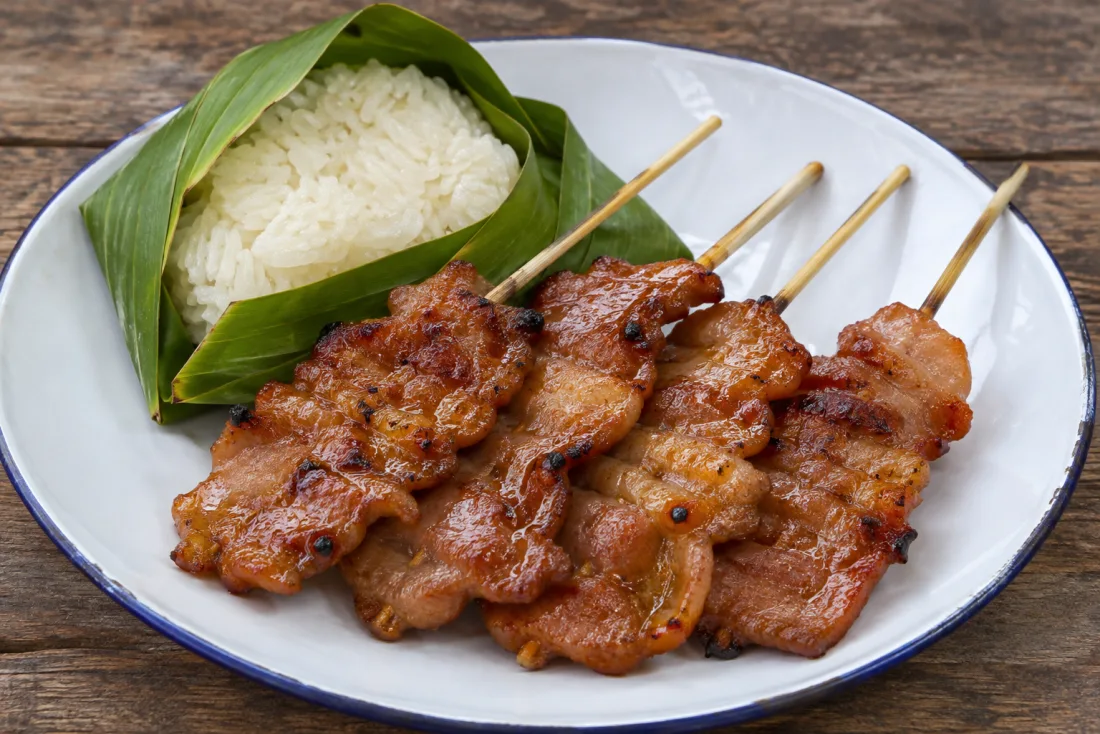
Moo means pork and ping means grilling over heat. The name describes the main ingredient and technique. Grilled pork and sticky rice make a familiar stall combination, and the Tourism Authority of Thailand lists barbecue pork with rice among local stall meals. Where stalls sell it today does not establish where the dish first appeared.
Look for khao niao moo ping when you want a set with sticky rice. Moo ping by itself may mean the skewers only.
Pork, marinade and accompaniments
Pork is cut into strips or small pieces that fit a skewer. Lean cuts can feel firmer, and pieces with fat can stay richer. A published recipe pairs the skewers with sticky rice, uses garlic and palm sugar in the seasoning, and calls for a separate tamarind, sugar and fish-sauce dip. Sticky rice and dip are accompaniments.
Similar-looking skewers can use different seasonings. The balance of sugar and sauces affects sweetness, and some skewers alternate lean pork and pieces with more fat.
What grilling does to the texture
Direct heat browns the outside of marinated pork. The edges may pick up a charred aroma, while a thicker piece can stay tender inside. Differences in heat source, thickness and marinade affect color, and skewers that look alike may have different textures.
Sugar in a marinade can contribute to browning. A dark surface is not a reliable indication that pork is cooked through.
How the sweet-savory pork goes with sticky rice
These skewers smell grilled and can taste savory first, with a mild palm-sugar sweetness in some versions. The plain, chewy rice makes a bite less concentrated. A tamarind dip, when provided, adds acidity against the richness of fattier pork.
Take a small piece of pork with a little sticky rice. If dip comes on the side, taste the meat first and add the seasoning to your liking. Dips and heat differ by stall.
Why it works as stall food
Small skewers can be sold individually and paired with a portion of sticky rice. They are easy to serve in simple takeaway packaging and can also be presented on a plate. People can eat a few as a snack or combine them with enough rice for a meal.
The menu photo may show narrow skewers alone or a set with several skewers and rice. Portion size and the number of skewers vary. Both presentations can be moo ping. Menus may group skewers with other grilled meats. If the menu just says grilled pork, look for small skewers or a larger cut served sliced. Skewers are easy to share individually. A sliced cut is more likely to come on a platter, with the sauce and rice served separately.
Allergens, sauces and shared grills
Pork is the main ingredient. Ask separately about the marinade and dip. A fish-sauce dip involves fish; soy sauce or mixed seasonings in a restaurant recipe may involve soybeans, wheat or other ingredients.
If you have an allergy, name the ingredient before ordering. Ask what is in the marinade, dip and glaze, and whether the grill, tongs or work surfaces are shared. Leaving off a dip does not remove ingredients already in contact with the pork.
If you have a food allergy, tell the restaurant before ordering and ask about ingredients, sauces and shared cooking equipment.