

Red bean paste in Thai kitchens
ถั่วแดง means red beans and กวน describes stirring to a thick consistency. The Thai agricultural extension recipe gives molded portions or use as a filling. Thai home cooks also document firmer molded and coconut-milk variations. The sources record the preparation rather than a particular province of origin.
Beans cooked to softness
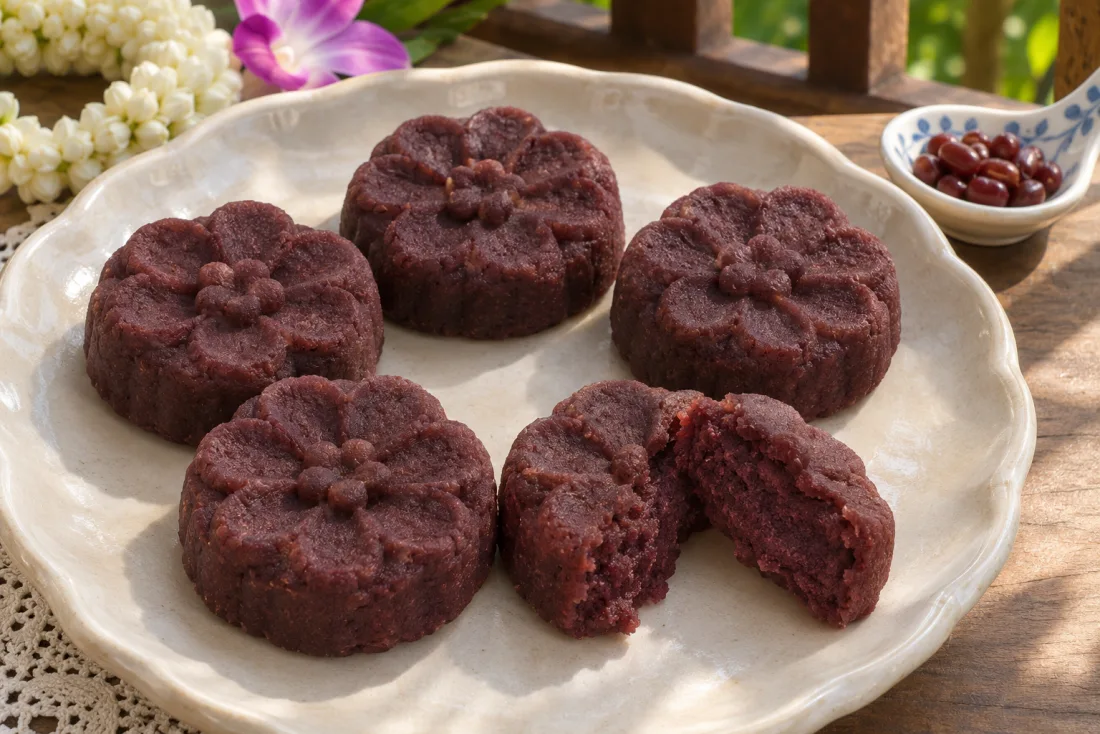
Cook the beans until completely soft, then mash or blend them and stir with sugar to reduce excess moisture. Coconut milk and a little salt appear in some variations. Fine straining produces smoother paste; retained skin gives it texture. Whole cooked beans on the side illustrate the ingredient.
Bean aroma and color
The paste ranges from brown-red to deep burgundy. A firmer batch holds a pattern, while a softer batch can retain a little sheen. It tastes sweet with a recognizable bean aroma. Coconut milk can soften the texture and add a rounded note. Color does not identify the exact formula.
Molded pieces and spooned portions
A mold can make small flower shapes once the paste holds together. The other presentation uses a soft mound in a bowl. Neither depends on thin syrup. Optional coconut or prepared beans beside the serving are additions, not its main volume.
Dessert or filling
The same type of paste can fill buns, rice sweets or other confectionery, or be spooned onto shaved ice. A menu for a stand-alone paste dessert should show the paste itself. Red bean soup is more fluid and may leave much more of the whole bean intact.
Allergens and substitutions
Red beans may affect people with a relevant legume allergy. Coconut is present in some versions, and another recipe can add dairy. Ask about shared molds and tools, and whether wheat, egg, soy, sesame or nuts are in any surrounding pastry. Read the specific label when it is packaged.
If you have a food allergy, tell the restaurant before ordering and ask about ingredients, sauces and shared cooking equipment.