

Colour and aroma
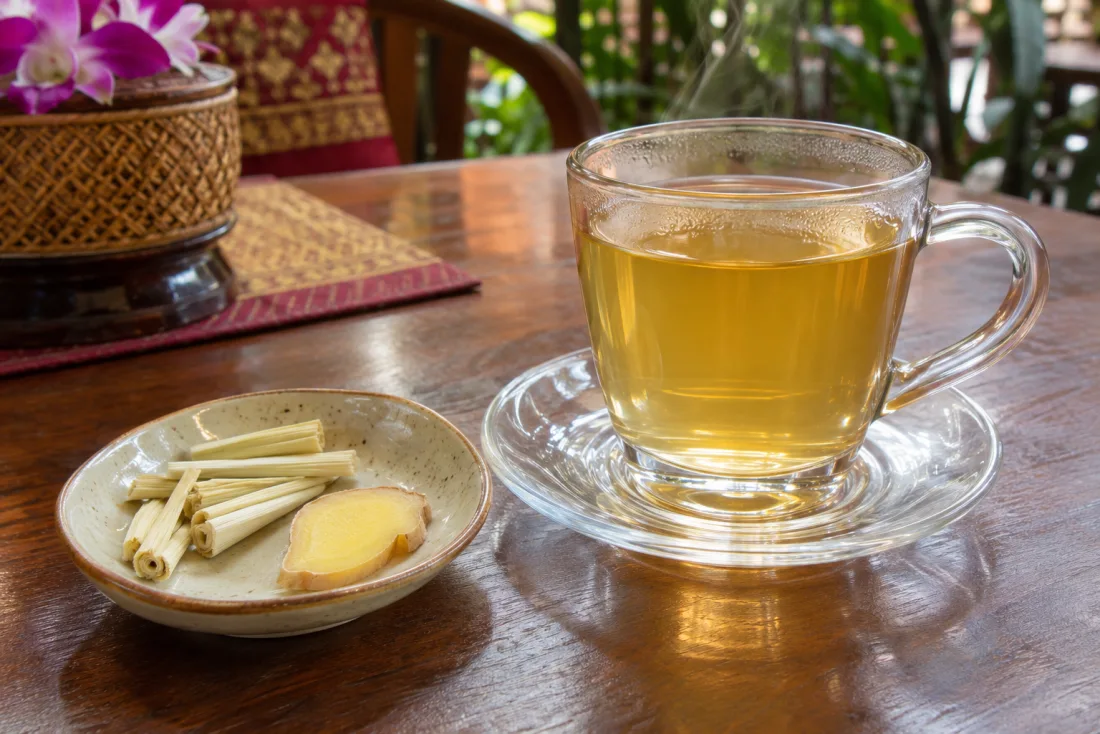
The infusion can be pale straw or deeper gold. Lemongrass gives a citrus-like smell and ginger adds gentle heat. A tea bag keeps particles out; a pot steeped with fresh herbs may show stalks and slices before it is strained.
Why the two herbs appear together
Thai tea producers and restaurant menus offer lemongrass and ginger together. The word cha can describe herbal infusions as well as tea leaves. This blend has both a fresh lemongrass aroma and ginger spice, which single-herb drinks feature differently.
How they are brewed
Hot water can steep dried herbs in a bag or fresh lemongrass and sliced ginger. The liquid can then cool and be poured over ice. Honey, syrup, lime or lemon may be added. Lemongrass aroma and added citrus acidity are separate.
How heat, cooling and sugar change it
Warm cups release more aroma as they are served. Ice and dilution can make the heat feel softer. Brewing time and ginger affect the bite. Sweeteners can soften the edge and honey contributes its own taste.
Ordering the temperature and sweetness
Ask whether it is served hot, over ice, in a cup or in a pot. A prepared batch may already be sweetened. A menu image can show the herbs even when the finished drink is strained.
Allergens and additions
Plain lemongrass and ginger brewed in water usually have no added common allergens. Fruit, honey, milk and other blends may add ingredients. The plain blend has no caffeine from tea leaves; added black or green tea changes that. Ask about shared ice, strainers and cups if needed.
If you have a food allergy, tell the restaurant before ordering and ask about ingredients, sauces and shared cooking equipment.