
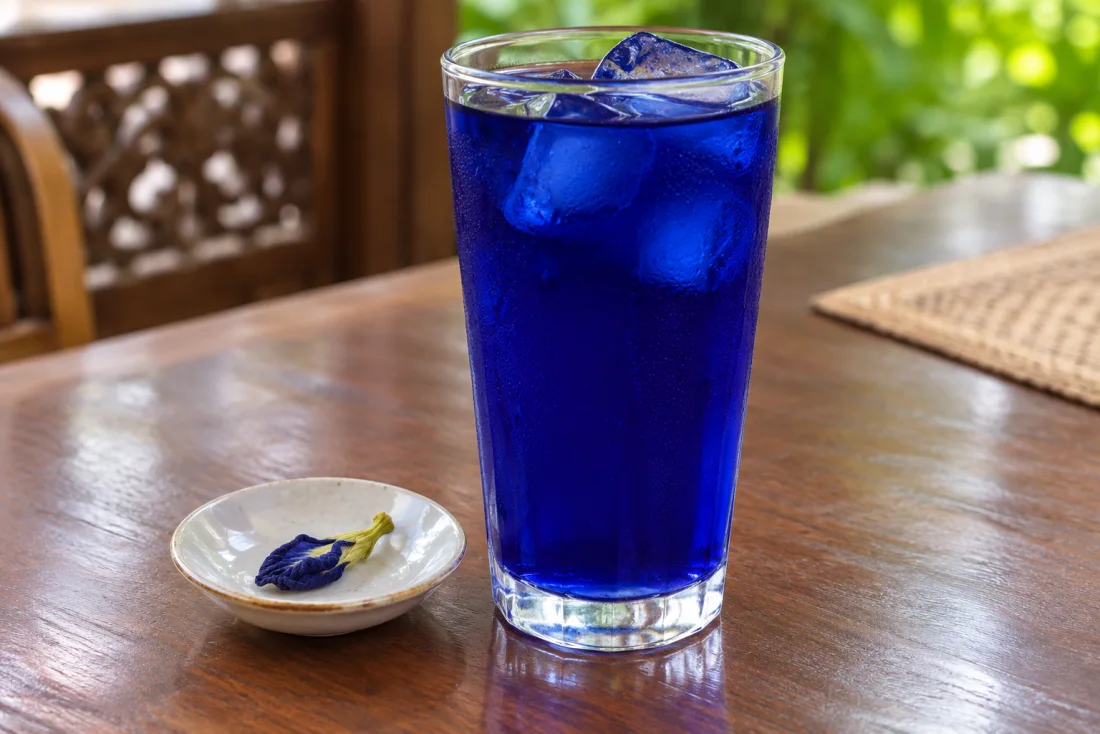

Which flower gives the Thai drink its name?
Nam dok anchan means butterfly pea flower drink. Thai kitchens also use the petals to colour rice and sweets. A Bangkok restaurant menu lists the infusion among other Thai beverages. Thai food-science sources document steeping and straining the flowers without establishing a single place of invention. Ask whether it is plain or mixed with fruit or soda.
Colour from the petals, sweetness and acidity from additions
Water-soluble anthocyanins in the petals give the liquid its colour. Fresh or dried edible flowers can be used. The colour changes with the amount of flower, the infusion and the water’s acidity. The plain drink uses flower and water; sugar, syrup, honey or ice can be added. Lime is an optional flavour that changes both colour and taste.
Steep, strain and chill
Briefly simmer or steep the edible petals in hot water, then strain when the colour comes through. Let the infusion cool before serving it over ice. Sugar can be dissolved in the batch or added per glass. If adding lime, pour it into the strained liquid to see where the colour first changes. A flower garnish may be added after straining.
Why blue turns purple and how the drink tastes
Butterfly pea anthocyanins change colour as acidity changes. Experiments document this response and lime can produce a visible shift in the glass. The plain infusion is generally lightly herbal. Sweetness comes mostly from added sugar, and ice gradually dilutes the aroma. Layers of blue and purple can be parts of one drink before it is stirred.
Choosing plain, lime or sparkling
Dok anchan names the flower, manao indicates lime and soda usually means a sparkling version. Ask whether the base is already sweetened or acidified. A plain version is good for tasting the light floral flavour; a lime version offers more acidity. Some cafés mix the infusion with milk or other ingredients, so check the drink name and description.
Allergens in flowers and mixed drinks
Ask about the actual plant if you have a known reaction to it. Milk, plant milk, fruit, honey and flavourings vary across mixed drinks. Plant milk may contain soy or nuts, and toppings may add wheat, egg or dairy. Ask about shared filters, jugs or blenders if cross-contact matters. Read the ingredient list on bottled products.
If you have a food allergy, tell the restaurant before ordering and ask about ingredients, sauces and shared cooking equipment.