
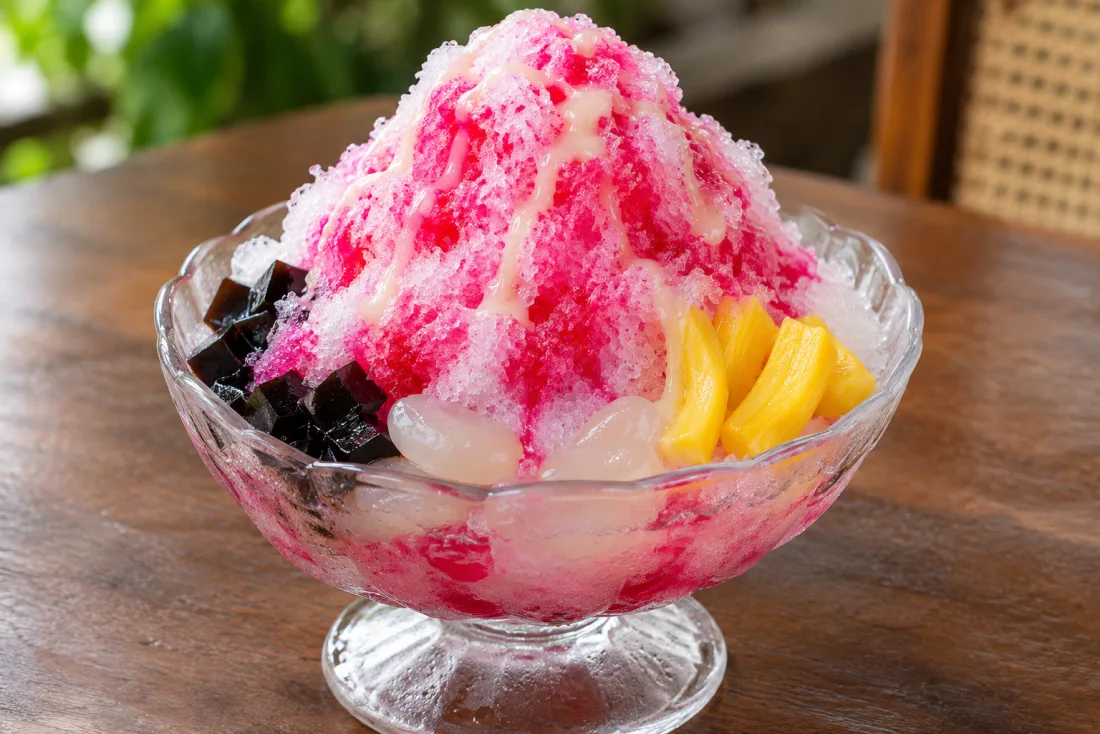

Shaved ice with selectable toppings
Nam khaeng sai names the shaved ice. Fine ice catches syrup over a bowl or tray. Red syrup may tint the ice pink, while coconut milk gives a pale finish. Jelly or fruit can sit around the outside or under the ice. The name does not specify a fixed topping combination.
Shaved ice at Thai stalls
Thai culinary records describe vendors gradually moving from ice pieces in sweet water to finer shavings. Shops use hand or motorised shavers. Red syrup and condensed milk remain a recognisable choice. Some dessert shops sell shaved ice with coconut milk and fruit.
Red syrup, coconut milk and toppings
A typical red version uses ice, red syrup and sweetened condensed milk. Sala flavour describes the syrup. Coconut milk versions can come with jelly, fruit, tapioca or nata de coco. Some shops use grass jelly, bread or other extras. Ask which ingredients come by default.
Build the bowl and add syrup at serving
Top the ingredients with freshly shaved ice, or arrange them around it. Pour syrup over the ice and add sweetened milk or coconut milk as chosen. The liquid runs down into the bowl as ice melts. A spoon can take ice and topping together. Bread softens when it absorbs the syrup.
Cold ice and a mix of textures
The fine ice melts quickly, leaving sweet liquid. Red syrup, milk and coconut milk have different aromas. Jelly is springy and fruit juicy. As the ice melts, sweetness can collect near the bottom. Sugar syrup can already be present in the selected toppings.
Milk, coconut, wheat and other allergens
Red versions often use condensed milk. Coconut versions contain coconut and may also use dairy. Bread or biscuits can contain wheat, egg and milk. Ask about jellies, soy, peanuts or nuts and shared tongs or scoops. Ingredients can be hidden under the ice or dissolved in the syrup.
If you have a food allergy, tell the restaurant before ordering and ask about ingredients, sauces and shared cooking equipment.