
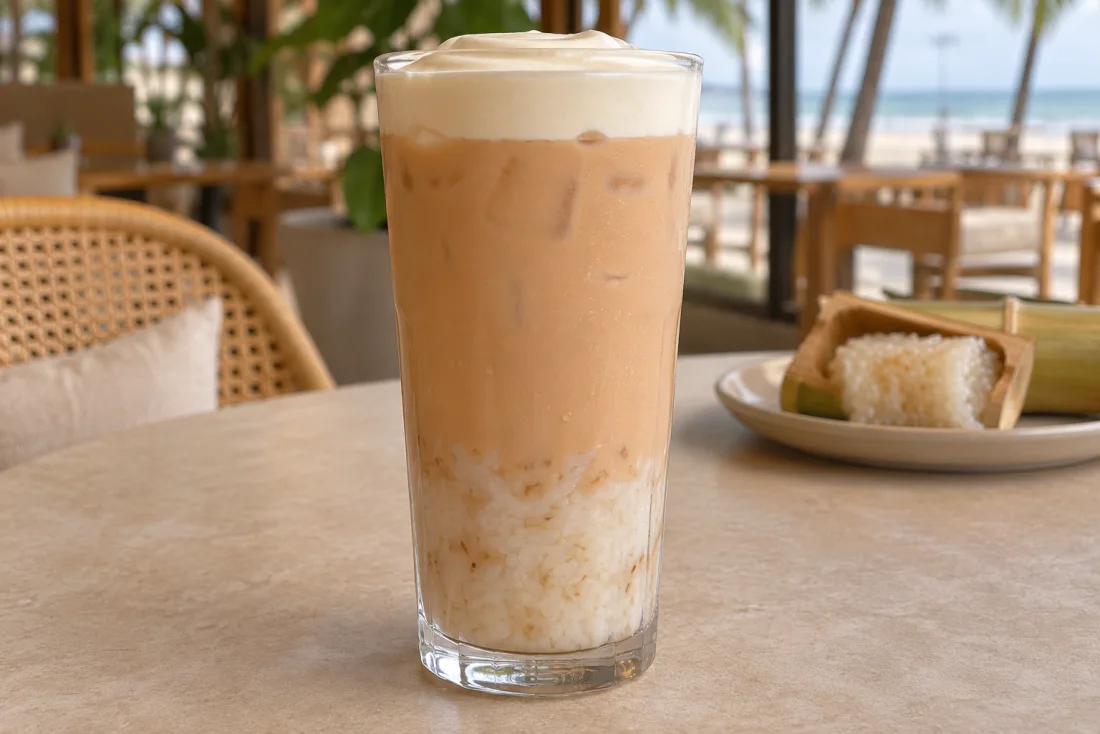

How bamboo sticky rice enters the drink
Khao lam typically refers to rice cooked in bamboo. The sweet version often includes glutinous rice, coconut milk, sugar and salt. It can be blended with tea and kept in pieces in the base. The tea is served in a cup, and the two documented examples contain actual rice.
Bang Saen and nearby dessert traditions
Nong Mon Market in Chonburi is known for bamboo sticky rice, with local research documenting white and black glutinous rice and other variations. A Bang Saen tea shop developed two contemporary branch drinks using it. The examples do not establish a nationwide historic drink or current availability across branches.
Tea bases and ingredients
The Assam version has a rice layer, blended Assam tea with khao lam, and a cream-cheese cap. The jasmine version blends jasmine tea with khao lam, adds red beans below, and also uses cream cheese. The type and quantity of extra milk or sweetener are recipe details. Coconut milk in the rice and dairy cheese above provide distinct aromas and textures.
Layering, aroma and chew
Assam can provide a deeper tea note with soft coconut rice and a lightly salty cream-cheese cap. The jasmine version can smell more floral and add beans to the chewy rice base. Blending, ice and milk can influence colour and body.
Service and nearby drinks
A clear cup can reveal the tea, cheese and rice layer. The red bean version has separately visible beans. These grains or beans need not be tapioca pearls. Khao lam can also be eaten as a standalone dessert without tea.
Allergens and tea ingredients
Both documented examples have milk in the cream cheese. Confirm any other dairy. Coconut milk is common in khao lam, and red beans are listed in the jasmine version. Verify other legumes, gluten ingredients, nuts and shared utensils where relevant. Tea can contain caffeine.
If you have a food allergy, tell the restaurant before ordering and ask about ingredients, sauces and shared cooking equipment.