
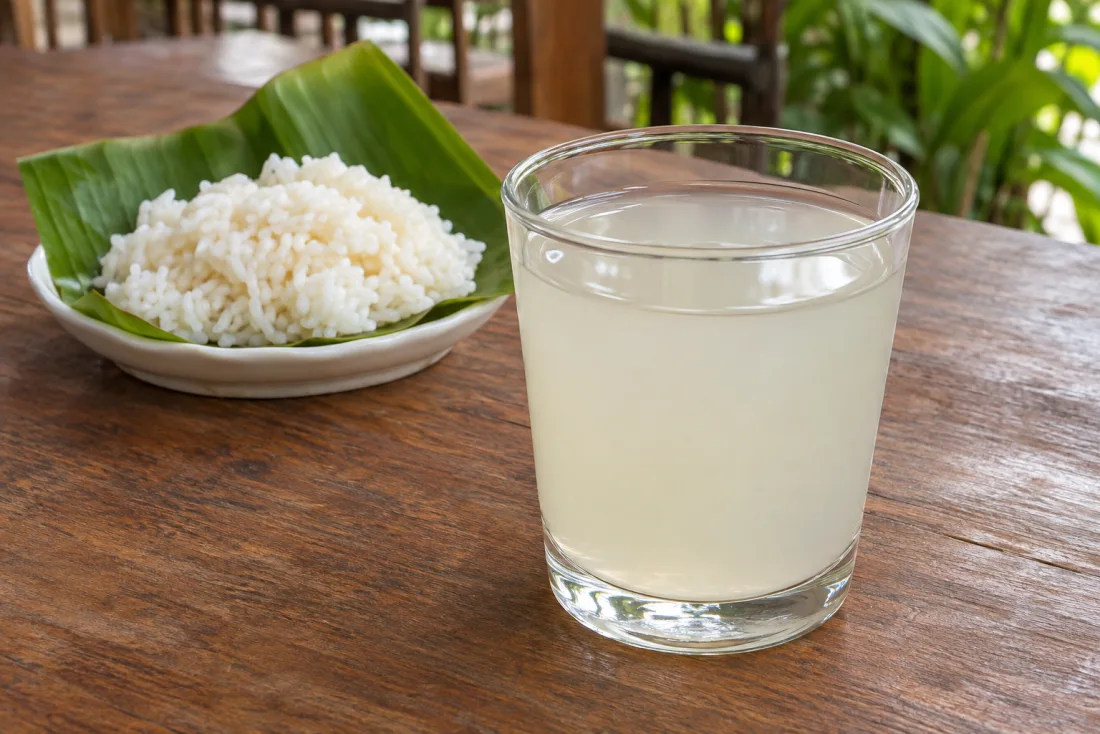

The liquid from sweet fermented rice
Nam means liquid here, and khao mak is Thai sweet fermented rice. The drink separates most rice grains and solids from the liquid. The Thai name น้ำข้าวหมัก is broader, while น้ำข้าวหมาก specifies the established rice food behind this drink. Khao mok is a differently spelled spiced rice dish. An ivory or cloudy appearance does not establish the use of dairy. A version with abundant spoonable grains is closer to the fermented rice served as a food.
A Thai finished beverage
A Thai agricultural technology publication describes a drink based on the strained khao mak liquid. Kasetsart University researchers also developed a clarified beverage drawing on the rice flavour of khao mak. These sources establish a range of Thai applications without assigning a single province or national popularity. The finished drink can be poured into a glass or served in a small carafe. Ask whether the restaurant uses a packaged product, what rice is used and whether it declares alcohol.
Rice, water and a rice fermentation starter
Rice, clean water and a starter for khao mak are core ingredients in the published examples. Rice variety, starter ingredients and dilution can differ. Fermentation can release sugars from rice, so the drink can taste sweet without added sugar. Check any actual product for added sugar or flavourings. Passing the liquid through a filter removes most solids, while fine material can leave it lightly cloudy. A single documented recipe does not establish every producer's ingredient ratios.
What the finished bottle can tell you
Documented commercial or research preparation can involve straining, checking the fermented liquid, heating and bottling, followed by cold storage where applicable. Alcohol may be present after fermentation. Heating and straining do not establish a zero-alcohol result. Use the package declaration or reliable product information for the particular batch, including storage guidance. Ice changes serving temperature and dilution, not what the original bottle declares.
Rice aroma and a mild sweet-tart finish
The drink can look like a thin cloudy rice liquid and taste of cooked rice, with a soft fermented aroma, mild acidity and sweetness. A filtered serving is lighter on the tongue, while more suspended rice solids make it fuller. Aroma and sweetness can seem different depending on temperature. Cloudiness does not demonstrate dairy or alcohol content. Serving without ice makes it easier to notice the flavour of the actual drink before it dilutes.
Allergens in the starter, additions and equipment
The actual starter, processing aids and added ingredients can vary. Ask about specific grains, soy, dairy or other ingredients if relevant. A rice base does not automatically certify a gluten-free drink. Check for cross-contact in filters, bottles and dispensing tools. Alcohol content is a separate question and requires reliable information about the finished drink. Neither a milky colour nor a sweet taste shows whether alcohol is present.
If you have a food allergy, tell the restaurant before ordering and ask about ingredients, sauces and shared cooking equipment.