

From grain to drink
The Thai name refers to drinks made with black glutinous rice. Its pigments can tint the liquid. The drinks here remain pourable, and the finished serving need not contain visible grains. They are two examples from applied research at Thai universities.
The red-purple pandan extract
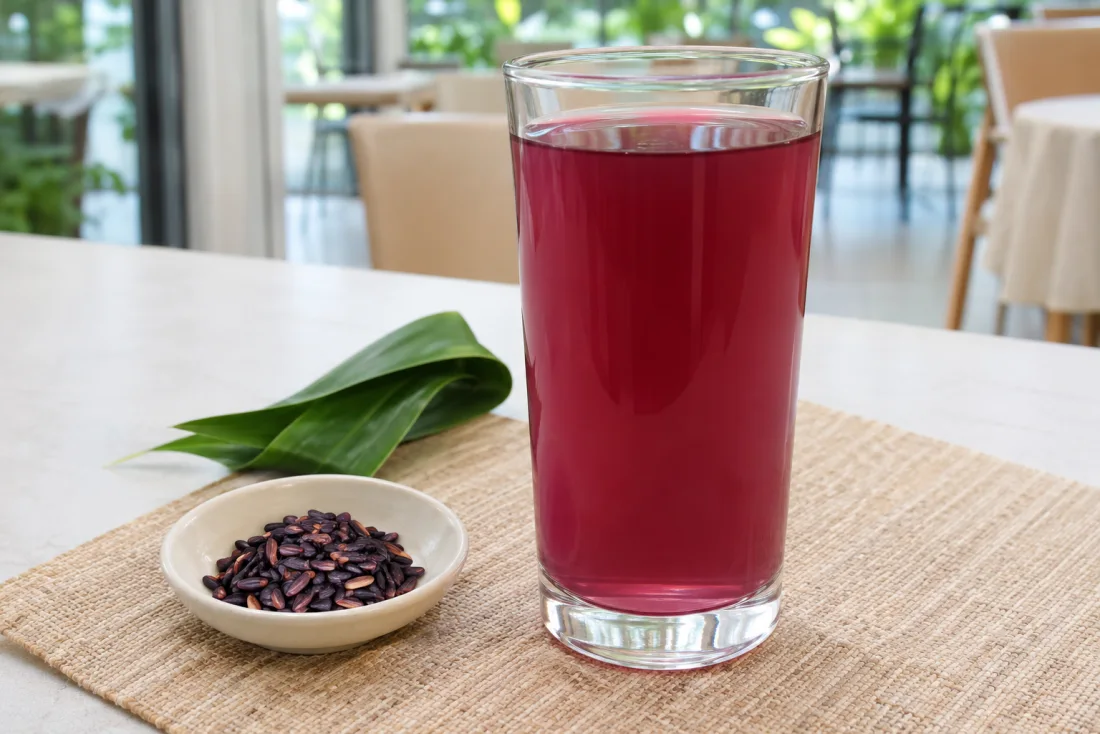
Kasetsart University’s food research institute reported an amylase-treated black glutinous rice extract mixed with pandan juice and sweetener. The institute describes the finished drink as red-purple with a light pandan aroma. A clear glass makes the tone easy to see.
The brewed roasted rice version
Suan Dusit University studied a bagged infusion made from germinated black glutinous rice. Roasting and steeping distinguish this preparation from the sweetened pandan extract. The spent rice remains in the bag as the drink is served.
Tasting the two samples
Pandan gives the first drink a fresh fragrance and the sweetener affects its flavor. The roasted infusion brings a more toasted aroma. Rice variety, concentration and the serving cup can affect the look of each drink.
Reading a beverage menu
Ask whether a black glutinous rice drink is brewed, sweetened or served with rice grains. The two research examples are water-based and prepared without alcoholic fermentation. Treat other drinks, including rice wine and milky rice drinks, according to their own ingredients.
Allergens and prepared ingredients
Glutinous describes the sticky rice texture. It does not mean the grain contains wheat gluten. Check added flavorings, sweetener and processing aids where relevant. People with allergies can also ask whether the equipment or packing line handles wheat, milk, soy or other ingredients.
If you have a food allergy, tell the restaurant before ordering and ask about ingredients, sauces and shared cooking equipment.