
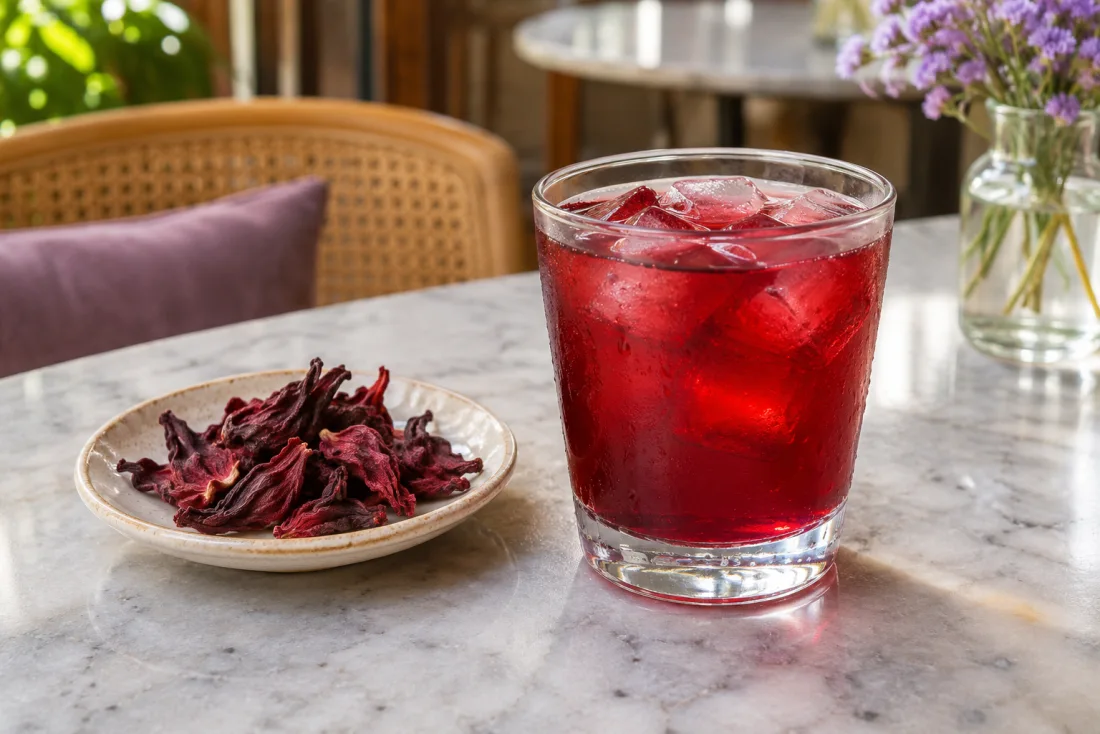

Recognising nam krachiap
Thai restaurants list lower-sweetness versions of nam krachiap. The relevant ingredient is roselle calyces, not green okra. English menus may say roselle or hibiscus.
Calyces, water and sweetening
The calyces are simmered in water, giving the drink red colour and a tart flavour. The clear brew is strained and can be lightly sweetened. Some variations add other fruits or plants. Ask about premixed batches.
Ruby colour and tart flavour
The drink is ruby red to wine-red and still, with a bright tart taste and a light sweet finish. Ice gradually dilutes it. A berry-like aroma does not establish that berry juice was added.
Less sweet in a sour drink
Less sweet compares with the restaurant’s own recipe. The natural tartness can seem stronger when sugar is reduced. It neither establishes sugar content nor guarantees no added sugar.
Chilled, iced or sparkling
The base drink may be chilled in a bottle or poured over ice. Adding soda makes a different sparkling roselle drink. Glass size and ice do not establish the amount of brew.
Allergens and combined drinks
The basic infusion uses calyces, water, sugar and ice. Ask about other fruits, sweeteners, dairy, shared tools and actual tea leaves. A blended version can have additional ingredients or caffeine.
If you have a food allergy, tell the restaurant before ordering and ask about ingredients, sauces and shared cooking equipment.