

 chicken eggs
 fish sauce
 minced pork and soy sauce in some versions
What the Thai Name Means
Tom yum refers to a cooked hot-and-sour soup, and khai means egg. Home cooks may call the egg-drop version tom yum khai nam, while shop menus can specify tom yum khai chiao nam khon for a creamy soup with fried omelet. The shorter name khai nam is also used for milder egg soup. Tom yum tells the diner to expect acidity and spices. Home recipes and actual restaurant menus document the pairing, but they do not establish one place or date of invention.
Flavor and Texture
Fresh lime normally provides the tart note, chili adds heat and fish sauce gives a savory edge. A beaten egg cooked directly in broth sets into tender thin sheets or ribbons and feels especially soft in clear soup. A torn fried omelet has toasted edges and a tender middle that can take up the seasoned broth. Roasted chili paste and evaporated milk can add color and richness to the creamy example. Coconut milk is a documented alternative. The depth of color depends on what goes into the broth and does not indicate a fixed level of heat.
Clear Soup With Egg Ribbons
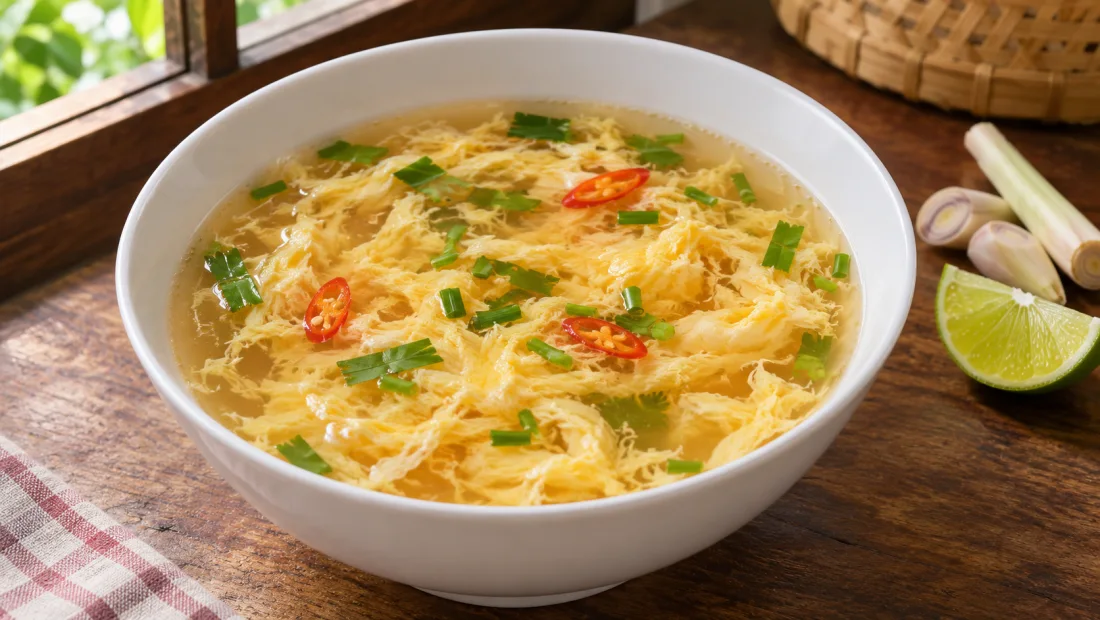
One Thai home cook starts with a tom yum seasoning cube in water, adds lightly beaten egg and finishes with culantro once the egg starts to set. Fresh aromatics such as lemongrass, galangal and makrut lime leaves are another way to build a tom yum base. A little fresh lime or sliced scallion can be added as appropriate to the actual broth. The eggs set in the hot liquid and form fine ribbons when moved gently. The soup often remains light enough to see the outlines of the set egg.
Creamy Soup With Fried Omelet
One documented home version fries beaten egg with minced pork, soy sauce and pepper. The finished omelet is torn into pieces and served in a separate broth seasoned with lemongrass, galangal, makrut leaf, shallot, roasted chili paste, fish sauce and cooked mushrooms. Evaporated milk or coconut milk can give the broth its cloudy richness. Nam khon on a menu indicates a richer, opaque style and does not specify a single thickener. The egg contributes a toasty, savory bite rather than the silky texture of egg ribbons.
Recognizing the Bowl at the Table
Serve the soup in its own bowl alongside steamed white rice or other shared dishes. Look for the natural floating ribbons of a clear bowl and the broader golden sections of an omelet soup. Red and orange color may reflect roasted chili paste and the color of the stock as well as fresh chilies. Heat can vary by cook. Diners who avoid pork, shellfish or milk can ask about the egg preparation, broth and seasonings separately. A name or a photo cannot show all three reliably. Slices of galangal and older pieces of lemongrass or makrut leaf may stay in the bowl after releasing their fragrance. These tougher pieces are usually left behind. A sip of broth on its own shows the lime and chili before a spoonful of egg.
Allergens and Dietary Details
Egg is the central allergen. Fish sauce contains fish, while stock cubes or roasted chili paste may contain shrimp, fish, wheat or other ingredients. The creamy bowl contains dairy when prepared with evaporated milk. A coconut version still contains coconut. Soy sauce in the pork omelet can contain soy and wheat. Broth may be meat-based even if the bowl appears to feature eggs alone. Ask about the actual stock, seasonings and shared utensils where relevant. The eggs shown are cooked and set.
If you have a food allergy, tell the restaurant before ordering and ask about ingredients, sauces and shared cooking equipment.