
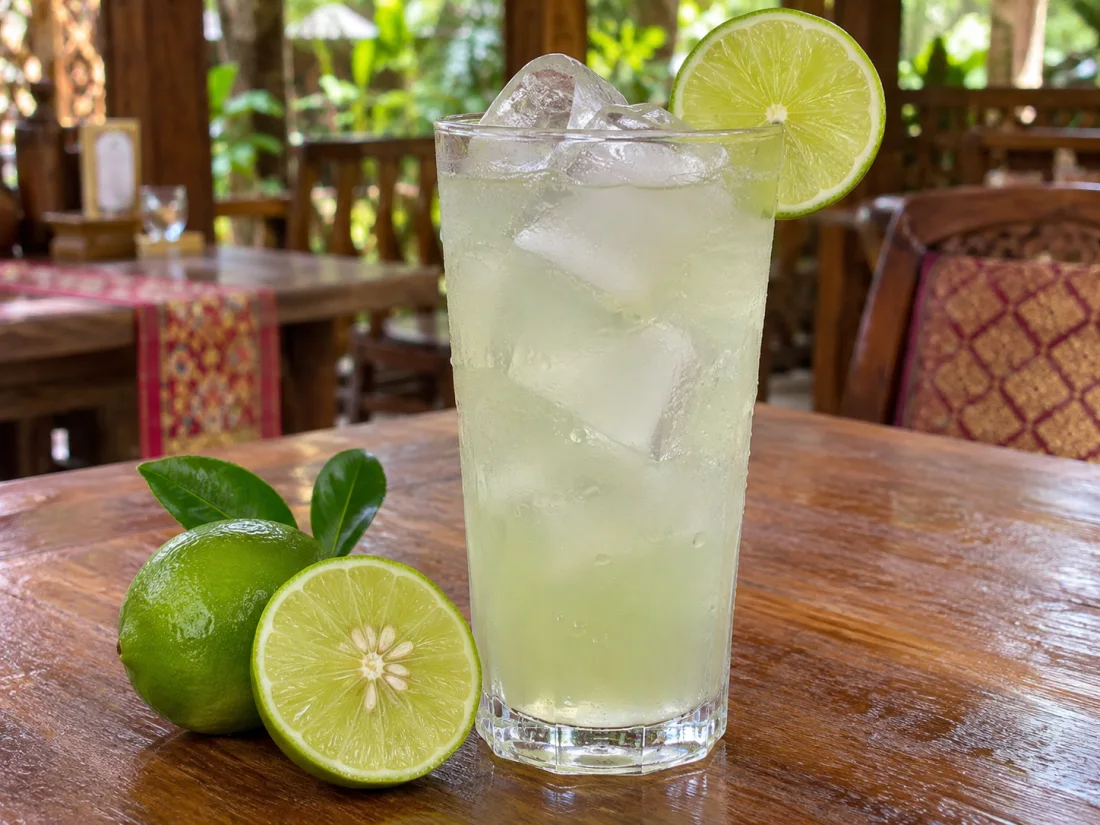

Limeade and cooking juice share a name
Nam manao can mean freshly squeezed lime juice. On a drinks menu it usually refers to a diluted, sweetened drink. Cha manao has tea, and nam manao soda uses sparkling water. A glass with mint or a lime slice can still be the plain, non-carbonated drink.
A Thai drink counter staple
Thai recipes describe mixing freshly squeezed juice with syrup and ice. Related drinks add watermelon or soda. A restaurant may serve it in a tall glass, while stalls use takeaway cups and crushed ice. No fixed serving volume or place of origin is established by the recipes.
Lime juice, water, syrup and ice
A representative version uses lime, water, syrup and ice. Water softens the acidity and syrup disperses in the cold liquid. Some versions add salt or substitute honey. Ask whether the lime base is already sweetened and whether there are other juices in it.
Squeeze, strain and pour
Squeeze the fruit and strain the seeds if desired. Stir lime juice, water and syrup before pouring over ice. Lime strength varies by fruit. Crushed ice melts faster than large cubes. Blending the ice into the drink creates a thicker slush with fine crystals.
Bright acidity and gentle citrus aroma
The first sip can be distinctly tart, followed by sweetness and a citrus aroma. Salt can produce a slight savory finish. Fine pulp adds texture. The flavour gets lighter as the ice melts, and sparkling water changes the mouthfeel.
Lime, syrups and shared equipment
Ask about lime, other citrus and premixed syrups if relevant. Shops may use the same strainers, blenders or scoops for milk, soy or nut drinks. Honey and toppings are additional ingredients. Removing a lime slice or straining the pulp leaves the dissolved juice in the cup.
If you have a food allergy, tell the restaurant before ordering and ask about ingredients, sauces and shared cooking equipment.