
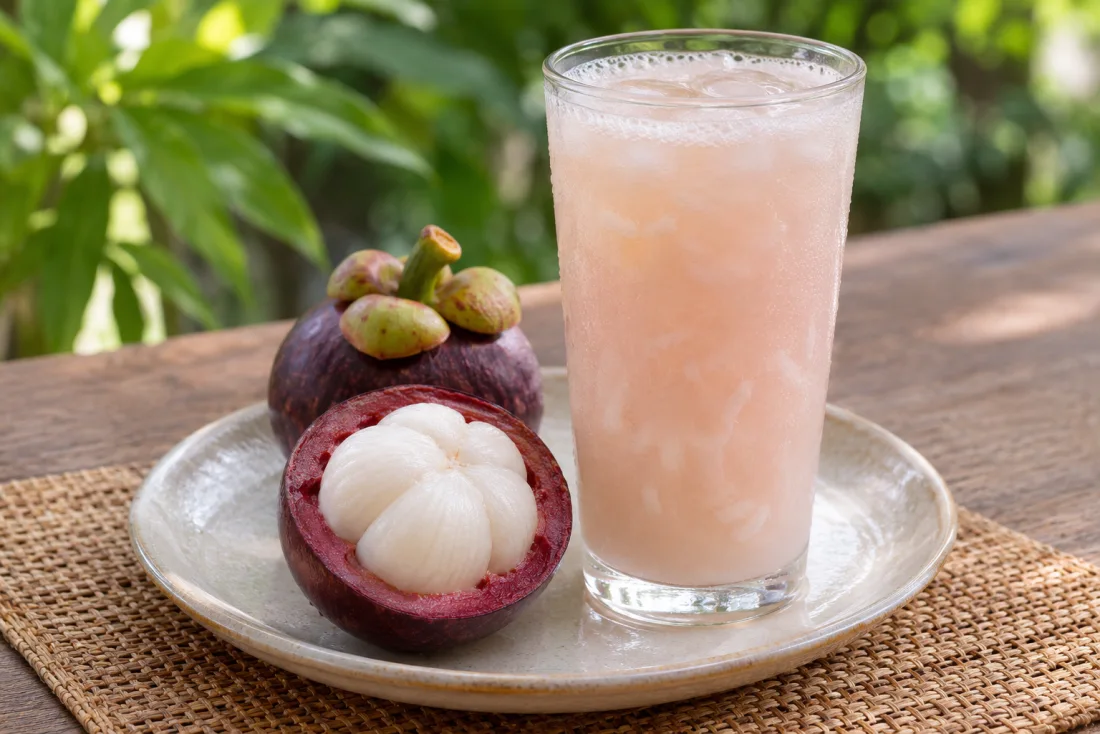

Recognising mangosteen
น้ำมังคุด means mangosteen juice. The thick purple-red rind surrounds white segments. Thai growers sell the fruit fresh, and Thai agricultural researchers have also developed juices and concentrates from it.
White flesh and other ingredients
The common juice base uses the white segments with large seeds removed. Juice drinks may add water, sugar or acids. A mixed or commercial formula may use additional juices. The rind is a separate ingredient when specifically used.
Colour and flavour
Ripe mangosteen has subtle fruit fragrance, sweetness and a soft tart edge. Pressed juice can look pale and nearly clear. Pulp, blending, processing or oxidation can change the colour. Ice gradually dilutes the drink.
How it is made
Flesh can be pressed or pulped and strained. Some drinks retain fine pulp. Large-scale production can control browning and standardize the base. A drinkable juice over ice and a blended ice smoothie have different textures.
On the menu
Ask whether the drink is pressed, diluted or sweetened and whether it has pulp. Fresh fruit availability can be seasonal, while a prepared juice may be available outside the harvest period.
Allergens and mixed drinks
Plain mangosteen flesh, water and ice do not normally contain milk, egg or tree nuts. Fruit allergy remains possible. Dairy, soy or nut drinks change the ingredients. Check labels and shared press, knife, strainer or blender equipment.
If you have a food allergy, tell the restaurant before ordering and ask about ingredients, sauces and shared cooking equipment.