
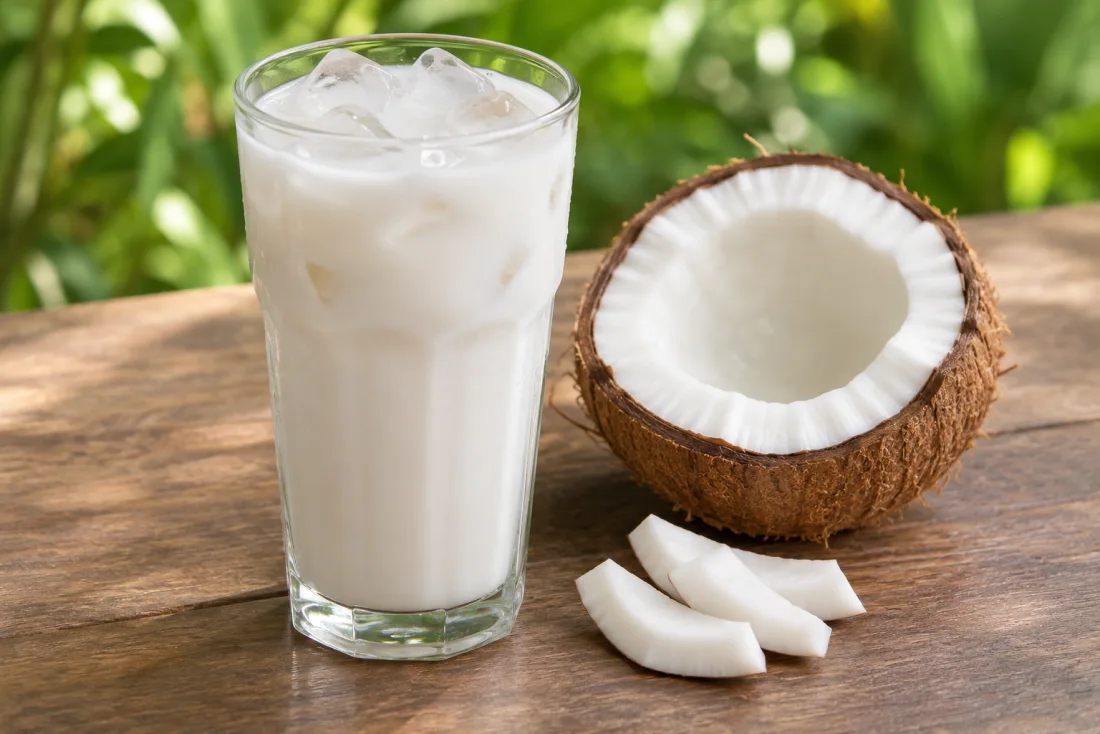

Coconut milk drinks in Thailand
กะทิ is coconut milk. Some Thai cafés mix a cold drink from it, and Thai makers sell bottled blends of coconut milk and coconut water. Ratchaburi is one example of a source of coconut water for a producer.
Coconut flesh, water and additions
Coconut milk is pressed from the white flesh, while coconut water is the liquid inside the fruit. The two can be combined for a drinkable consistency. Sweetener, tender coconut or springy nata de coco are possible additions.
Milky colour and texture
The drink can be ivory or white. More coconut milk makes it richer; coconut water lightens it. Tender coconut is soft while nata de coco is springier. Colour alone does not indicate sweetness or dairy content.
Preparing a cold cup
Mix finished coconut milk with coconut water or water, then adjust sweetness if desired and chill. Serve over ice with any pulp or coconut jelly. Blending ice into the drink makes a thicker, separate style.
Choosing the cup
Ask about sweetness, the coconut-water ratio and any dairy ingredients. The drink can complement a dessert or stand alone. Sparkling coconut water is a lighter, fizzy menu item, and cup size depends on the shop.
Allergens and added milks
Coconut is an actual ingredient. Dairy milk, condensed milk and some creamers or toppings contain milk. Plant drinks can introduce soy or tree nuts. Check labels and shared pitchers, scoops and blenders if you have an allergy.
If you have a food allergy, tell the restaurant before ordering and ask about ingredients, sauces and shared cooking equipment.