
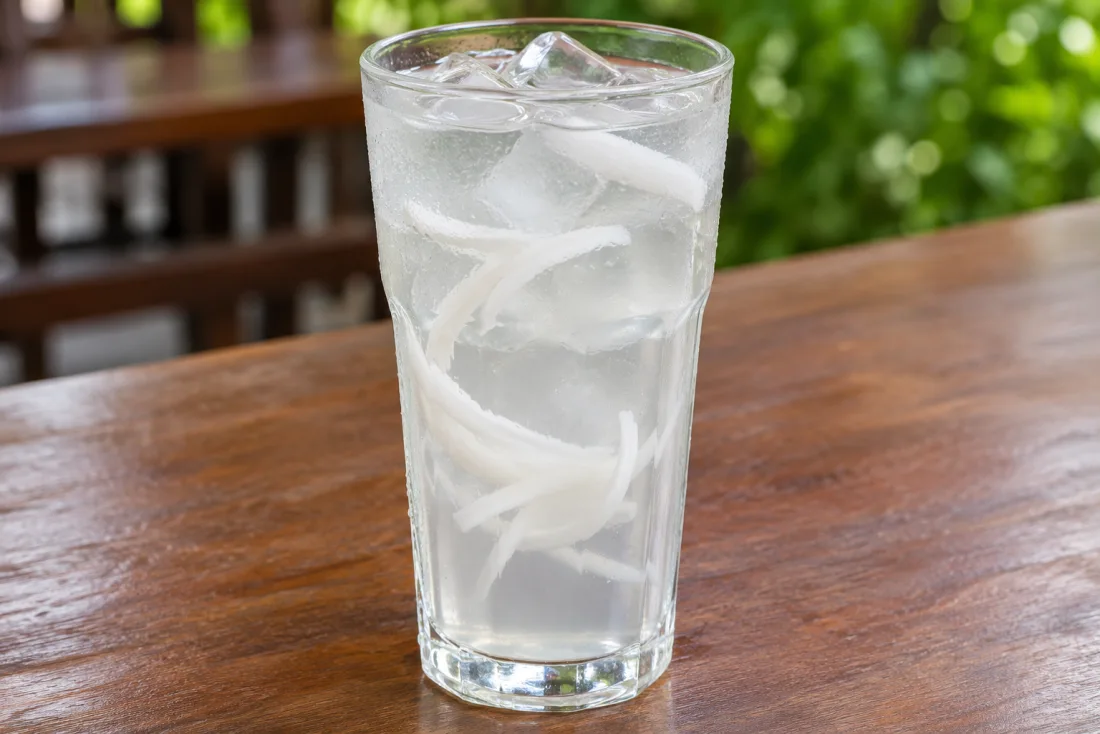

Fresh coconut water at a Thai market
Nam maphrao sot denotes fresh coconut water. Sellers open chilled coconuts or pour the water into cups and bottles. Ban Phaeo aromatic coconuts are a named geographical indication, while coconut water can come from many growing areas.
Coconut water and the soft flesh
The clear liquid is already inside the fruit. A young coconut can also have a thin layer of tender white flesh. Coconut milk is extracted from grated flesh and has a creamier colour and texture. Natural sweetness varies among fruits.
Opening, straining and serving
A vendor can serve the opened shell, strain the water and pour it over ice, or add strips of tender coconut. Chilling the fruit before serving can reduce the need for ice. Packaged products should follow their stated storage directions.
Light sweetness and a tender bite
Fresh coconut water tastes gently sweet. Aromatic varieties can leave a noticeable fragrance. Coconut flesh gives a tender bite and melting ice lightens the water. Taste the water and flesh separately to notice their different textures.
Clear water, coconut milk and blended drinks
Young coconut water is usually clear. A smoothie may blend water, flesh and ice, with milk or syrup in some recipes. Optional coconut jelly brings a separate texture. Ask whether the drink comes directly from a fresh fruit.
Coconut allergy and optional ingredients
The drink contains coconut. Plain coconut water and flesh require no dairy, soy, nuts or wheat, but other recipes and shared utensils may introduce them. Check any milk, flavouring or jelly, and consider shared measures or blenders. Removing pieces of flesh leaves the coconut water.
If you have a food allergy, tell the restaurant before ordering and ask about ingredients, sauces and shared cooking equipment.