
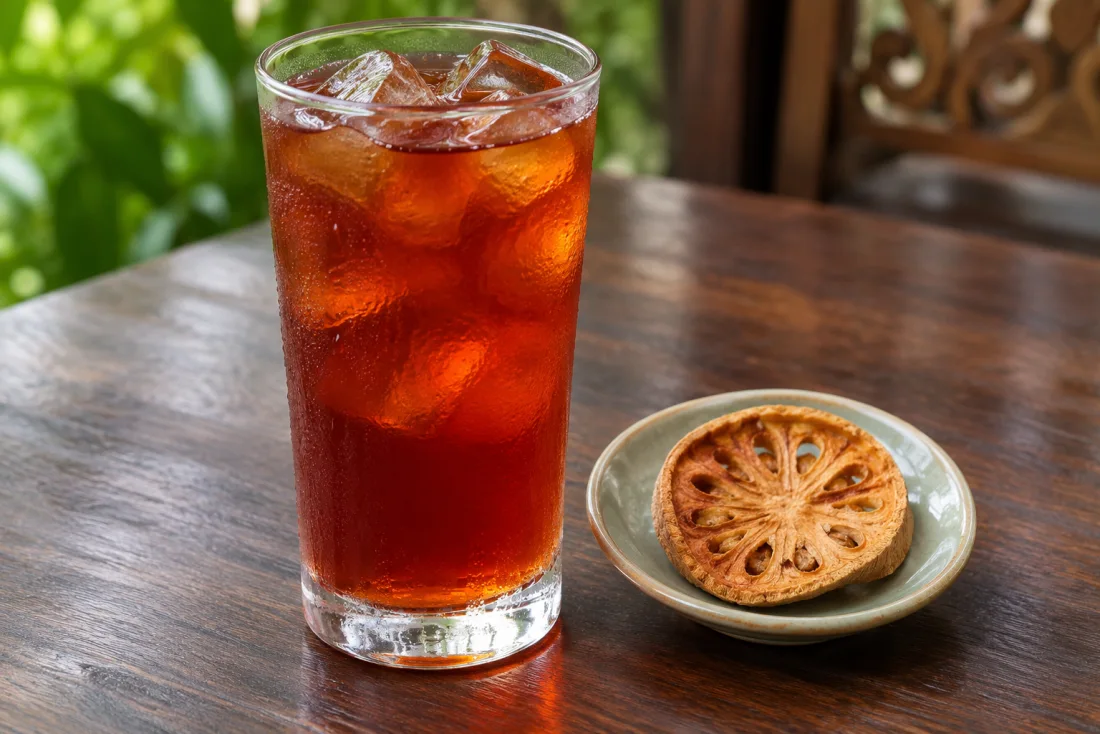

The fruit behind Thai bael tea
The Thai name nam matum uses the name for bael, Aegle marmelos, as identified by Thai agricultural references. Restaurant menus in Bangkok and Khao Yai document servings under Bael Fruit or Bael Juice. Those menus show where people drink it today without establishing one historical origin. The usual tea is made by simmering dried slices rather than pressing fresh oranges.
Dried fruit, brown sugar and ice
The fruit is commonly sold dried in round slices. The rim and the patterns inside make it recognisable. The reference uses dried slices, water and brown sugar. Both the fruit and the sugar can deepen the colour. Ice is common and a slice can garnish the glass. Slice thickness, toasting and the amount of water change the result between kitchens.
Toast the fruit, simmer and strain
One Thai recipe briefly toasts the dried slices before simmering them until the liquid is fragrant and brown. Dissolve the sugar and strain the drink to remove fine fruit particles. Taste it before adding ice, which will dilute it as it melts. Bael can also be used as a base and seasoned with fresh lime after cooking and straining.
Dried-fruit fragrance, toastiness and variable sweetness
Plain bael tea has a warm dried-fruit aroma and a clear, light mouthfeel. Sugar may be the first taste and the fruit lingers. Brown sugar can give a caramel note. Roselle usually brings brighter acidity, while bael is softer and warmer. Honey and lime can make a bael variation noticeably sweet and tart.
Ordering a plain bael drink in Thailand
Restaurants may list it with lemongrass or Thai iced tea. Ask whether it is plain or includes lime, honey, soda or another tea. A batch may already be sweetened, so ask which adjustments are possible. It can accompany grilled or fried dishes. If a menu says Bael Juice, ask whether it is brewed from dried bael and whether it comes with sugar or ice.
Allergens, blended drinks and package labels
The plain reference uses dried bael, water and brown sugar. People with a known reaction to bael should consider their own dietary needs. Blended drinks can include dairy, plant milk, honey or herbs. For an allergen you need to avoid, ask whether the drink is brewed separately and whether measuring cups, filters or blenders are shared. Check the ingredient list on a bottled drink. A fruit slice in the glass cannot establish the entire recipe.
If you have a food allergy, tell the restaurant before ordering and ask about ingredients, sauces and shared cooking equipment.