

The Thai name and its context
Moringa is มะรุม in Thai. The word ใบ identifies the leaves. Pods turn up in savory Thai cooking, but this drink takes its flavor from leaves steeped in water and then strained. Thailand’s Department of Agriculture has documented moringa leaf drink development, and a local grower sells the dried leaf by itself in tea bags. These show distinct places where the drink can be encountered, not one standard commercial recipe.
Leaves, water and optional sugar
Dried moringa leaves and water are enough for a plain cup. A bag keeps the pieces together, while loose leaves can be separated by a strainer. Some makers use fresh leaves, and others add sugar or syrup. Blended teas and drinks stirred from leaf powder have a different ingredient list and may have a noticeably fuller texture.
A gentle leafy aroma
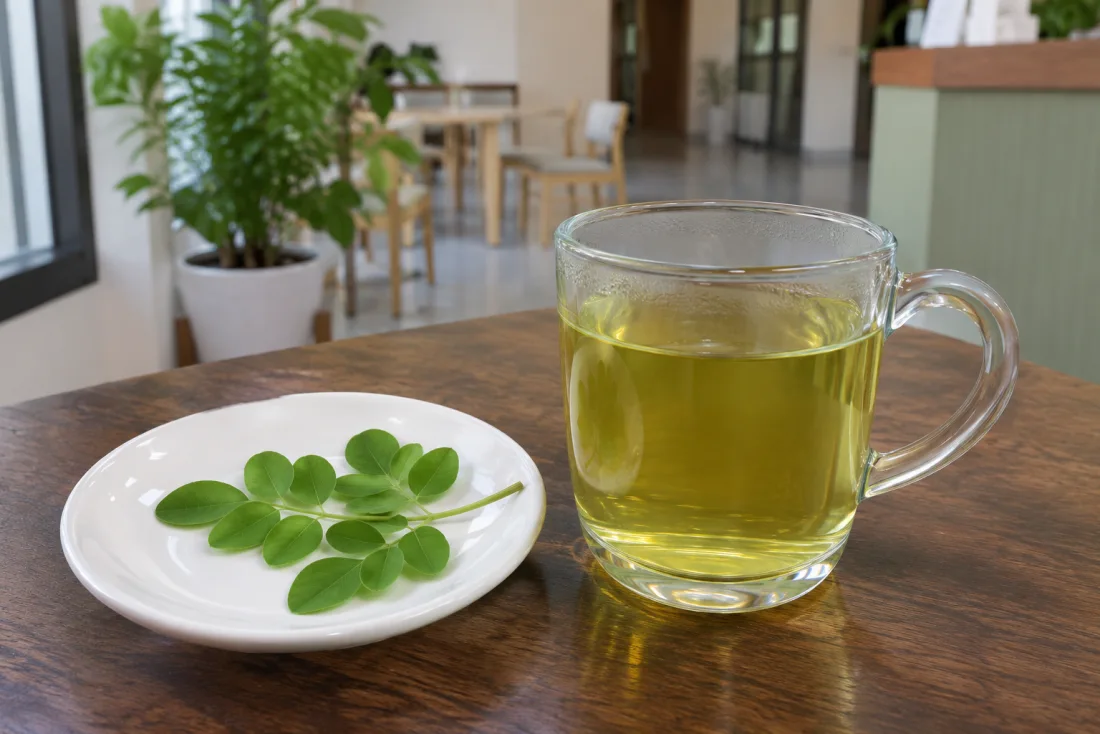
A clear light yellow, yellow-green or pale gold infusion may smell lightly herbaceous, like dried greens. Longer steeping can draw out an astringent edge, while chilled service and a little sugar can soften the impression. A warm pour releases the scent more readily. The clear, thin body is the simplest clue that this is a strained drink.
Warm and chilled presentations
A handled cup holds the warm infusion. If a restaurant serves it chilled, it may prepare and strain the liquid in advance, then pour it into a cold glass or add ice. Strength and sweetness change as ice melts. Ready-to-drink bottles can have a separate formulation from something brewed to order, so the ingredients should follow the individual item.
Reading a Thai menu
ชาใบมะรุม is a useful phrase for moringa leaf tea. A prepared drink can also start with น้ำ, as in น้ำใบมะรุม. Look for it with botanical drinks or at a grower’s shop rather than assuming every Thai café serves it. A simple description that says strained leaf infusion and states whether it is served sweetened gives the customer a clearer idea of the cup.
Allergens and ingredient notes
The simplest cup is leaf and water, with sugar optional. Standard versions naturally use no milk, soy milk, nuts or wheat, but blended products and shared strainers or café tools can introduce other ingredients. Ask about the sweetener, any creamer, and shared handling. A sealed bottle may carry different ingredients from the café’s fresh brew.
If you have a food allergy, tell the restaurant before ordering and ask about ingredients, sauces and shared cooking equipment.