

From palm flowers to a Phetchaburi table
Nam tan tanot sot is fresh sweet sap collected from palmyra flower clusters. Phetchaburi growers and farm cafés document it as a drink and also sell palm sugar and fruit. The region has a well documented connection with palmyra products. Fresh sap is also found in other growing areas.
The raw ingredient and the drink
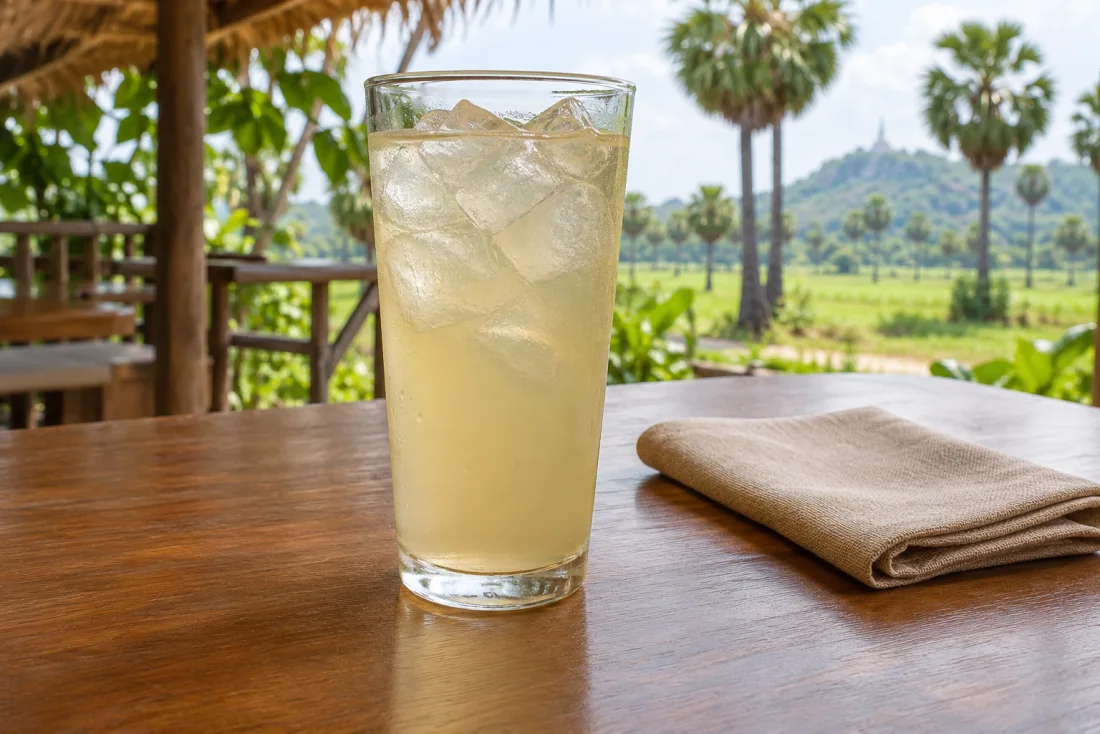
The base is light, drinkable palm flower sap. Its colour may be faint straw or pale honey, sometimes with slight haze. Handling and filtering vary. Ask how the producer treats the sap and whether anything is added. The drink can be made without palm fruit, coconut milk or dairy.
Sweetness and ice
The sap is thinner than concentrated palm sugar syrup, with a gentle aroma and natural sweetness. Ice can dilute the sweetness and aroma as it melts, while a chilled glass without ice shows more of the original flavour. Colour alone does not identify other ingredients or the amount of sweetness.
Two serving formats
A farm café can serve fresh chilled sap over ice in a tall glass. A smaller unmarked bottle with a separate short glass is another serving possibility. Ask for sap as a drink if the shop also has palm syrup or palm fruit in syrup.
The name on the menu
Nam tan sot and nam tan tanot sot can identify fresh sap in this context. Nam tan tanot can also mean a dried or concentrated palm sugar ingredient. Luk tan names fruit. Ask if a beverage is fermented where the seller also offers nam tan mao. The term palmyra specifies the featured palm.
Allergens, sweetening and other ingredients
The featured base is palmyra sap. Other recipes may add flavourings or mix the sap with a different drink. If you have an allergy, ask about added ingredients and shared ice scoops or measures. Ask about added sugar and fermentation if they matter to you. Appearance is not enough to determine the ingredients or handling.
If you have a food allergy, tell the restaurant before ordering and ask about ingredients, sauces and shared cooking equipment.