

 pork stock
Northern Thai and Shan noodle traditions
Nam ngiao primarily names the broth or sauce. Khanom chin nam ngiao specifies thin rice noodles, also called khanom sen or khao sen in parts of the north. An account from Chiang Mai University describes Shan noodles in Mae Hong Son with a tangy tomato broth and related local versions in northern Thailand.
Versions can be found around Chiang Rai and Chiang Mai, with lighter or more concentrated broths. The choice of fermented seasoning and dried flower stamens varies. The overlap between Shan and Lanna cooking helps explain these differences.
Tomato, pork stock and fermented soybeans
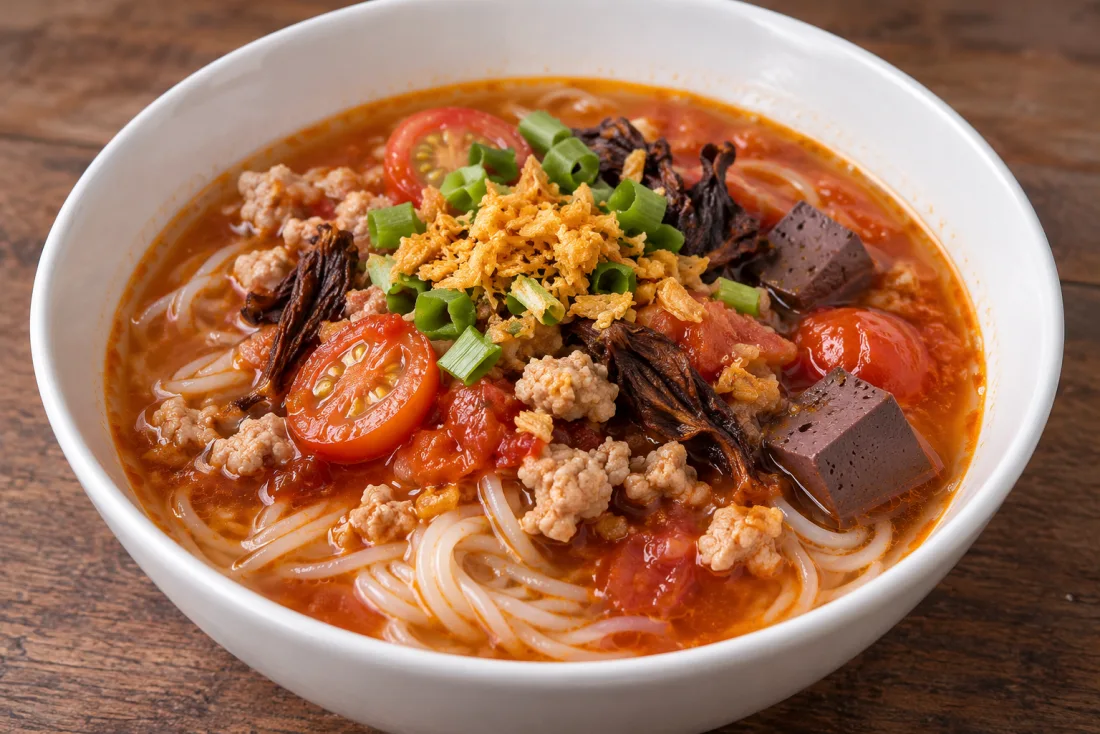
Pork bones flavor the stock before a cooked chilli paste and minced pork go in. Tomatoes soften into the soup and give it a red-orange color. Northern thua nao is fermented soybean seasoning that can be soft or dried as a wafer. Some cooks use fermented soybean paste instead.
Dried silk-cotton flower stamens can stay slightly chewy once softened. Cooked chicken blood cubes, pork ribs and extra pork vary by recipe. The hot sauce can be poured onto khanom chin or another rice noodle. Tomatoes and meat broth are common clues, while flowers and blood vary.
Fruit acidity, fermented savor and spice
Tomato brings fruit acidity and a little sweetness, followed by savory pork broth. Fermented soy brings another layer of flavor. Dried chilli can be warming or hot. Both tomatoes and chilli can create a red color, so color cannot indicate heat.
Soft rice noodles carry the tomato flavor. Cooked blood cubes are smooth, dried stamens can be chewy, and mince provides a looser texture. A concentrated broth gives more tomato and meat in each bite, while a clear version foregrounds the stock and aromatics.
Serving with sprouts, pickled greens and fried aromatics
One bowl makes a meal. Bean sprouts, pickled greens, fried garlic, coriander or fried dried chillies can come with it. Some people squeeze in lime. Taste the broth first, then adjust the acidity. Crisp sprouts add contrast to soft noodles.
If the noodles and sauce are separate, pour a little on at a time. The shop may pack them separately for takeaway. Pork crackling or other fried toppings start crisp and soften in the sauce. Check the accompanying vegetables and the portion when ordering.
Chiang Rai and Chiang Mai versions and other northern noodles
Thai sources document thicker Chiang Rai versions that often use dried stamens, and lighter Chiang Mai versions that can use fermented soybean paste. Accounts differ on whether stamens are always used. Ask about cooked blood, fermented beans and stamens if they matter to you.
Northern khao soi often uses egg noodles and coconut curry broth. Nam ngiao with thin rice noodles has more direct tomato acidity. Kuay tiew nam ngiao can refer to the same type of sauce with another kind of rice noodle. Ask about the exact noodle.
Allergies in fermented beans, broth and toppings
Fermented soybeans and soybean paste contain soy. Fish sauce or fermented fish can contain fish, and shrimp paste adds crustaceans. Prepared seasonings may contain wheat. Anyone avoiding pork or blood should ask about stock, sauces and the kinds of blood cubes the cook uses.
Ask about broth, noodles and side dishes separately. Lifting meat or blood cubes out does not remove what has cooked into the broth. Noodle water, ladles and fryer oil can be shared, so the kitchen can confirm how a separate portion would be prepared.
If you have a food allergy, tell the restaurant before ordering and ask about ingredients, sauces and shared cooking equipment.