
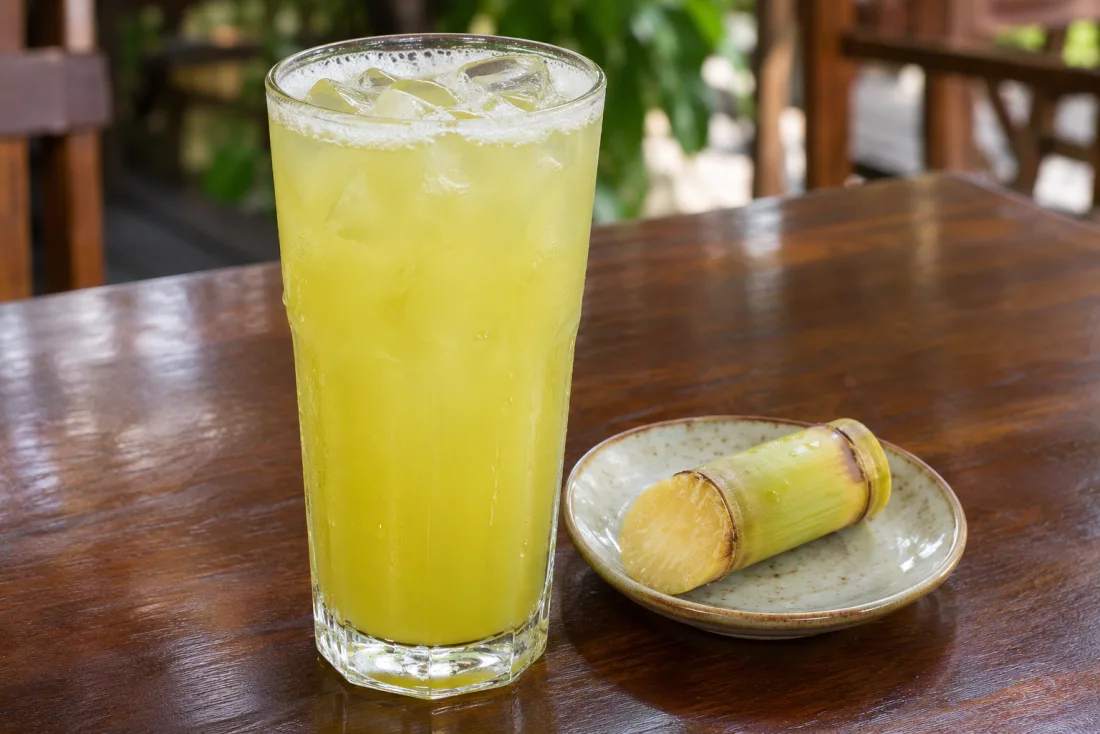

Where Thai markets get their sugarcane juice
Nam oi means sugarcane juice. Thai agricultural sources document cane grown for juicing around the country and strains from Suphan Buri. Regional records also describe the drink at markets, roadside stalls and restaurants in the south. A variety name does not establish the birthplace of the drink. The plain serving is usually strained and poured into a glass or bottle.
Cane stalks, their own sweetness and possible additions
The liquid is pressed from the inside of the stalk and can look pale yellow or green. Variety, maturity and ice change the appearance and flavour. One Thai producer documents a plain drink with no other ingredients. Lime can be added for a separate sweet-tart version. Ask whether the serving includes water, sugar or lime if you want to taste the cane alone. Cane juice is naturally sweet.
Press, strain and portion the juice
Cleaned cane sections go between rollers, which release the juice and leave fibrous pulp. After straining, the liquid may be served immediately over ice or put into bottles. A little foam may settle. Some vendors chill a batch and some bottled products are processed for distribution. The label or vendor can explain the preparation. Ice gradually dilutes the juice.
Sweetness, green aroma and the lime variation
The sweet taste arrives first, followed by a mild green aroma. More mature cane may give a fuller flavour and ice can soften it. Lime makes a bright, sweet-tart variation and changes the aroma. A plain glass lets you compare the cane itself. Similar pale colours can occur in both versions and do not show whether lime was added.
Choosing the version you want
Nam oi khan sot usually indicates fresh-pressed sugarcane. A menu mentioning manao may mean a lime blend. A cup is easy to drink at a market; bottled versions depend on how they were stored. The natural sugar is already in the juice, so reducing sweetness is not quite the same as reducing syrup in a mixed drink. More ice can dilute it.
Allergens, ingredient labels and shared equipment
The plain reference uses sugarcane alone. Ask about any known reactions relevant to the fruit, herbs or plant milk used in a blend, and read bottled labels. Knives, jugs, measures and ice equipment can be shared. If you need to avoid a particular ingredient, ask about the flavourings as well as the equipment and containers used to mix or bottle it.
If you have a food allergy, tell the restaurant before ordering and ask about ingredients, sauces and shared cooking equipment.