
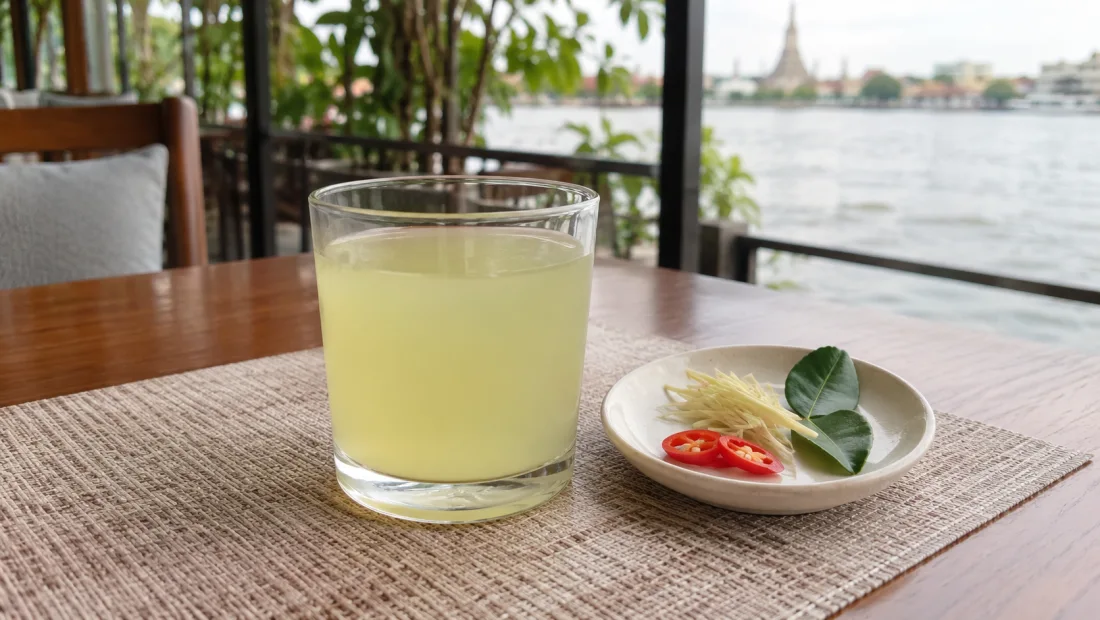

Two finished drinks
A still version can be strained and served over ice in a juice glass. A second can keep thin chile slices in a wide glass with ice, bubbles and a chile-salt rim. Lime and chile give both recipes their main flavor.
A modern Thai bar preparation
Siam University documents a Riva Surya mocktail with lime, red chile, lemongrass and makrut lime leaf. A Thai beverage brand gives a sparkling citrus version. A separate hotel menu uses lemon, chile, lemongrass and soda. These are documented contemporary drinks.
Citrus, sweetener and aromatics
Lime brings fresh acidity. Lemongrass and makrut lime leaf give different herbal smells. Syrup can soften the acidity, while a sparkling recipe may use a prepared mixer without extra syrup. A chile-salt rim tastes different from chile in the liquid.
Bright acidity and lingering heat
The first impression is often cool and tart. Red chile follows with heat. Ice melt softens the drink. The herbal version can smell more botanical, and the sparkling drink has a light fizz and salty edge. Ask about chile strength or a plain rim.
Reading the menu and choosing a photo
Mark the drink as alcohol-free, and indicate whether it is sparkling. A taller clear glass can show the still drink, while a wide tumbler can show the fizz and rim. List the actual garnish and portion.
Allergens and shared bar equipment
Ask about citrus, fresh chile, lemongrass, makrut leaf and prepared syrups if sensitive to them. Check any premade drink or seasoning for its ingredients. Shakers, strainers, ice scoops and boards may be shared. The examples here are alcohol-free.
If you have a food allergy, tell the restaurant before ordering and ask about ingredients, sauces and shared cooking equipment.