
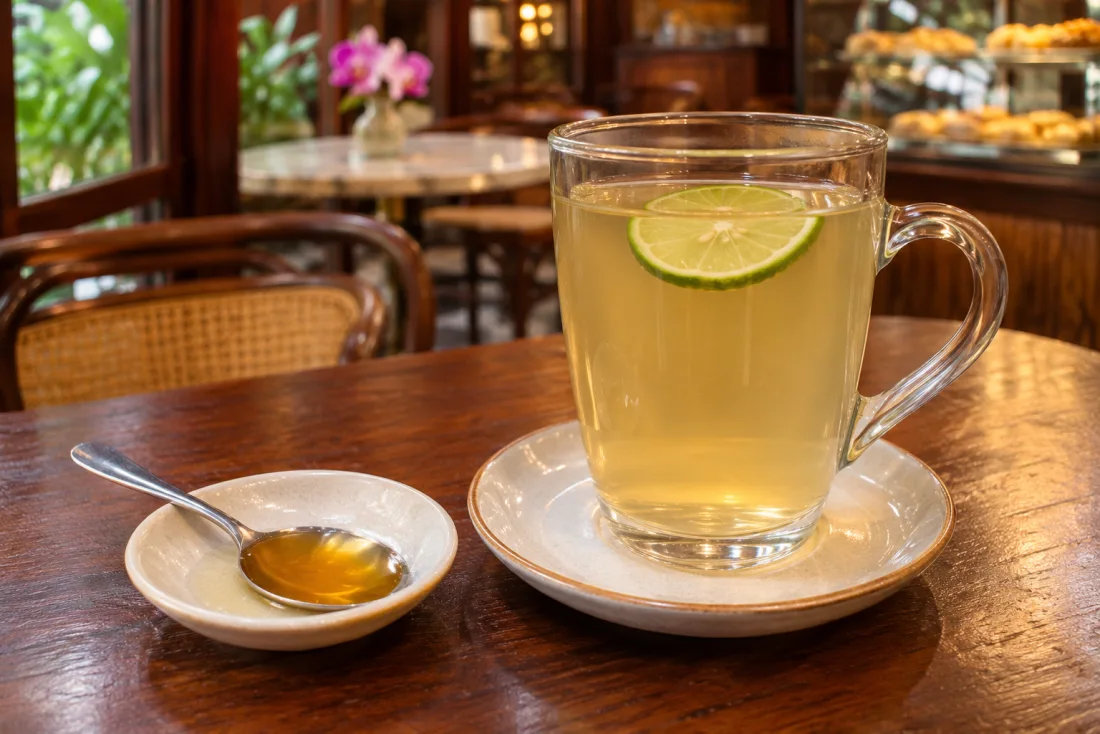

Where the colour comes from
Honey can turn the water pale gold or amber. Fresh lime juice may leave some pulp unless it is strained. A café can serve a clear glass or ceramic cup with honey or lime on the side.
How it appears on Thai menus
Nam phueng means honey, manao means lime, and ron means hot. Cafés sometimes list hot honey lime, iced honey lime soda or flavoured tea separately. Ask whether the citrus is Thai lime or yellow lemon if the menu is unclear.
How it is mixed
Stir honey into hot drinking water and add lime juice. Remove seeds and strain pulp if desired. Sweetness depends on the honey, water and fruit. Some kitchens use a prepared mix that may have extra sugar.
What it tastes like
Light floral sweetness meets fresh citrus acidity. More honey softens the sourness, while more lime gives a sharper first taste. The drink changes as it cools without dilution from melting ice.
What to ask when ordering
Ask whether it is hot and still and whether tea or syrup is included. If the kitchen can serve honey or lime separately, adjust after tasting. Ask for an extra clean cup if sharing.
Allergens and honey
Plain honey, lime and water contain no added usual food allergens such as milk or egg. Some people avoid honey or citrus. Check prepared syrups, any tea additions and shared cups, spoons or juice tools as needed.
If you have a food allergy, tell the restaurant before ordering and ask about ingredients, sauces and shared cooking equipment.