
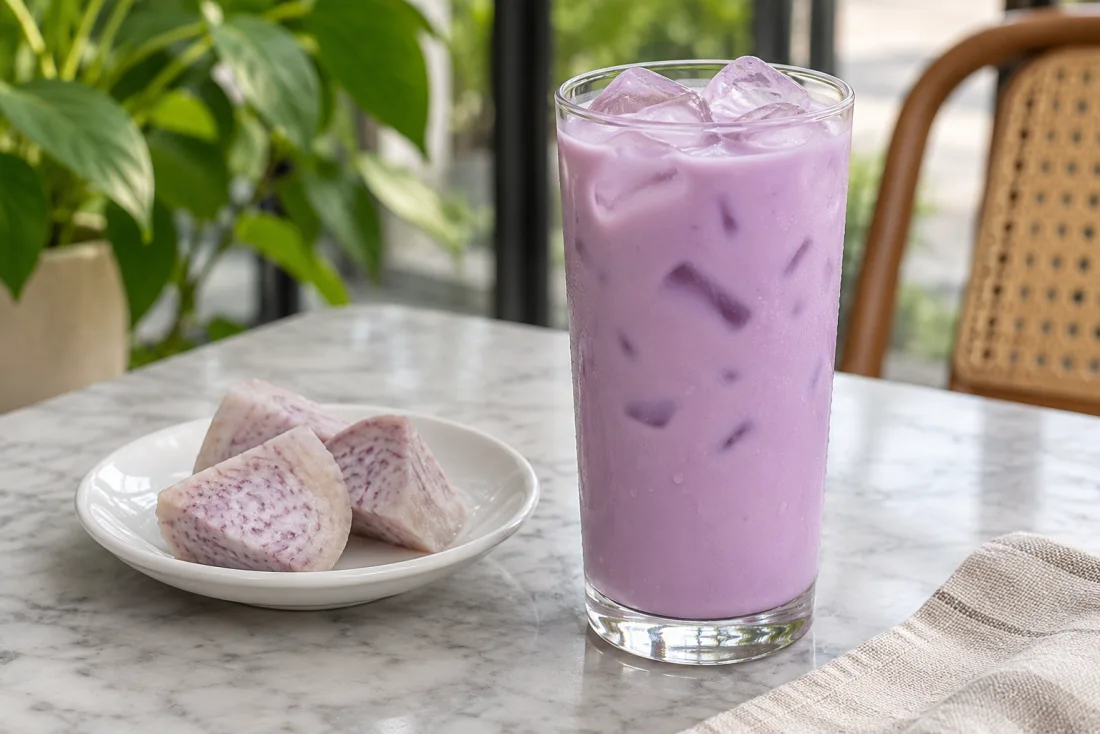

The Thai name
เผือก means taro. A Thai café may call an iced fresh-milk version นมสดเผือกเย็น and list taro milk tea or blended taro separately. It is a contemporary drink with no single province implied by the generic name.
Milk and the taro base
Thai recipes use taro powder in the milk or in a topping. Cooked taro purée is another option. Commercial powder can include sweeteners, milk-derived creamer, flavours or colours. Check the exact formulation.
Flavour and colour
Taro adds a gentle earthy, starchy aroma, while milk rounds out the texture. Cooked taro itself can be pale; lavender may reflect a blend. Separately poured milk and taro can form layers.
Mixing and icing
Mix the taro base with milk and sweetener if wanted, then pour over ice. A taro foam can be put on last. For a real-root version, cook the taro before puréeing. Blended ice gives a different texture.
Ordering
Ask about real taro or powder, the milk, sweetness and foam. A drink made without tea or coffee has no caffeine from them. Regular glass size depends on the shop.
Allergens and ingredients
Fresh dairy milk, dairy condensed milk and dairy foam contain milk protein. Powder and creamer can introduce milk, soy or tree nuts. Ask about coconut if used and shared frothers, ice scoops, jugs and blenders.
If you have a food allergy, tell the restaurant before ordering and ask about ingredients, sauces and shared cooking equipment.