
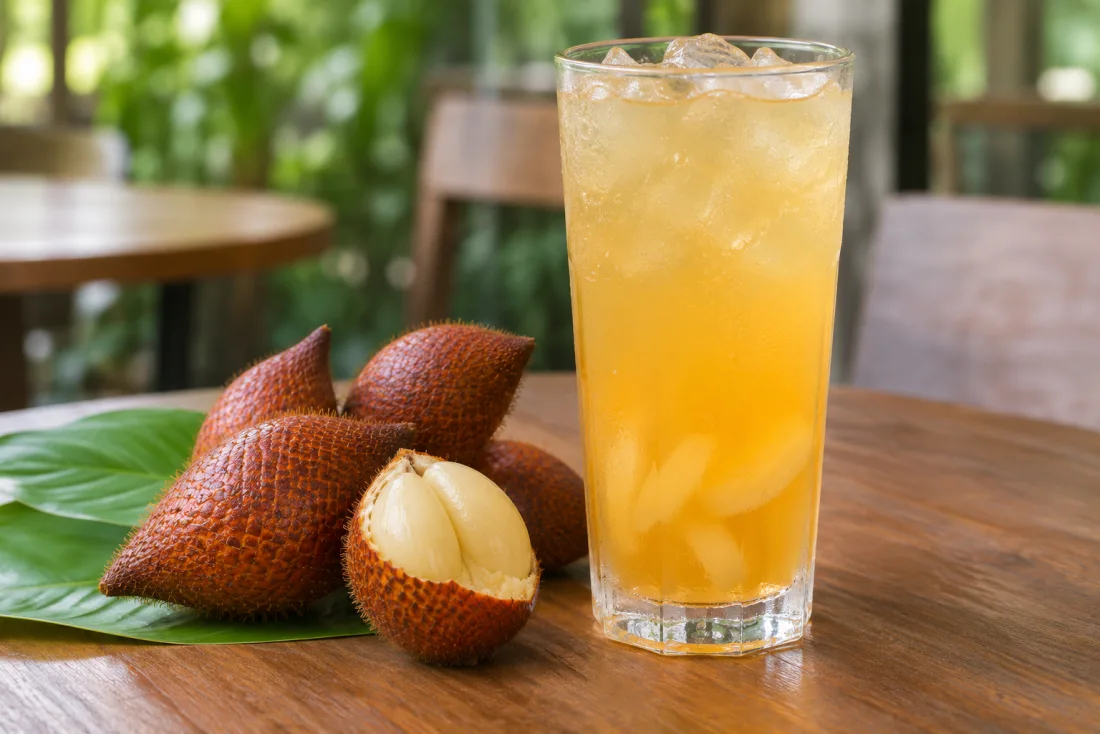

Recognising salak in Thailand
Salak has reddish-brown scales, pale flesh and hard seeds. Chanthaburi and other eastern provinces grow it, as do several southern provinces. The name on a glass does not specify an orchard.
Fruit and commercial flavouring
A Thai community standard describes an actual fruit drink made from peeled salak cooked in water and strained. Sugar, honey or salt may be added. Commercial sala-flavoured syrup is a separate base that is also used for cold drinks.
Tart-sweet and fruity
The fruit has a distinctive aroma and can be sweet with a tart edge. A strained base can be pale gold or amber. Added pieces provide a bite. The colour alone does not identify whether the base is fruit or syrup.
From fruit to drink
Peeled, deseeded flesh can be cooked in water and strained. Some cooks retain small pieces. A pre-sweetened base cannot always be adjusted at service. Salak in iced syrup is also served as a separate spoon dessert.
Ordering in Thailand
Ask whether the base comes from fruit or syrup and whether the drink is sweetened or has pieces. Salak soda and a milk-based salak drink may be listed separately.
Allergens and variants
Fruit, water, sugar and ice do not normally contain milk, egg or tree nuts. Salak itself can still cause an individual reaction. Ask about honey, dairy or plant milk, mixed syrups and shared knives, strainers, scoops or pitchers.
If you have a food allergy, tell the restaurant before ordering and ask about ingredients, sauces and shared cooking equipment.