
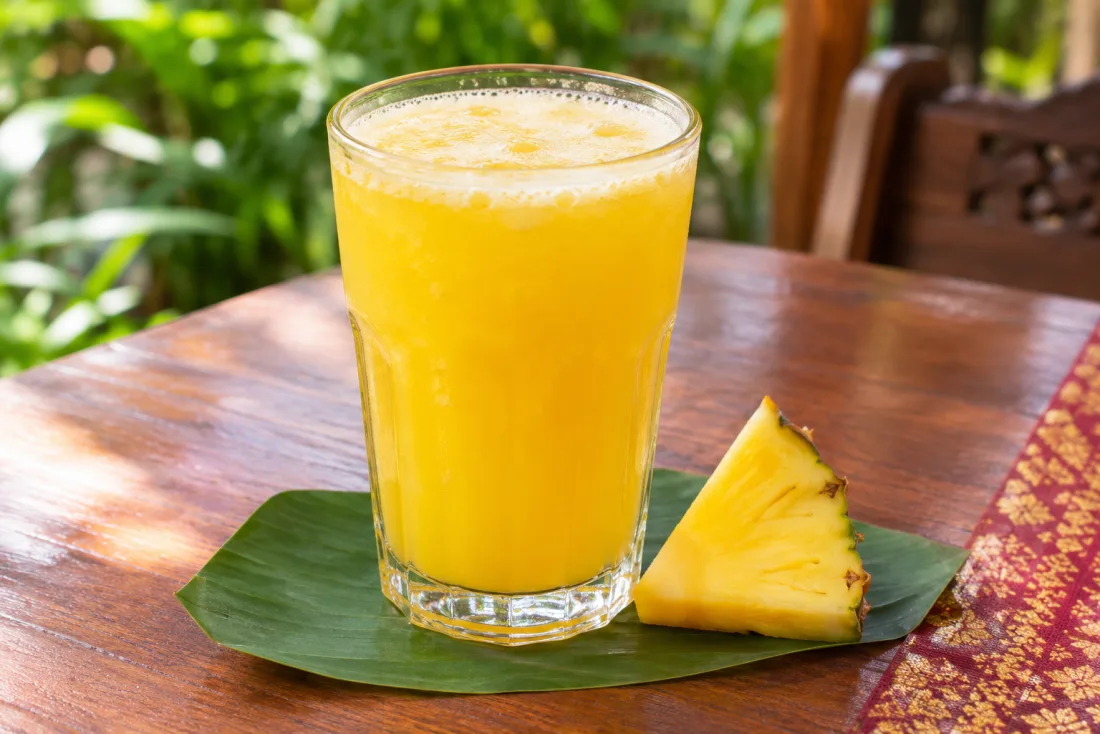

Juice or a blended ice drink
Nam sapparot is pineapple juice. Some vendors extract or blend the juice before pouring it over ice. If the fruit is blended together with the ice, the result can be a thicker slush. The colour can be pale gold or deep yellow depending on fruit, pulp and dilution.
Pineapple from Thai growing regions
Thai recipes show fresh pineapple juice served over ice. A Thai chef also documents using Phuket pineapple in a jasmine green tea blend. That is an example of a local fruit in a related drink. A glass labelled pineapple juice does not indicate one region of origin.
Pineapple, water, sugar, salt and ice
A representative recipe uses fresh pineapple, water, sugar, salt and ice. Ripe fruit may supply enough sweetness by itself. Water changes acidity and thickness, while little salt gives a savory edge. Lime, orange or coconut milk make separate blends. Ask whether sugar is already in the juice base.
Extract or blend, then remove coarse fibre
Peel the fruit and cut the flesh before pressing or blending it. Straining catches coarse fibre. Foam may settle at the top and fine pulp at the bottom. Stir before pouring over ice. Ice dilutes the juice. Packing ice separately can preserve the initial strength for later drinking.
Juicy sweetness and lively acidity
Ripe pineapple has a strong tropical aroma and a bright tart finish. A sweeter mix tastes gentler, while a higher fruit concentration brings out the aroma. Straining gives a cleaner texture. Pulp gives the drink more body. Coconut mixtures are thicker and more fragrant.
Fruit ingredients and shared tools
Ask about pineapple, mixed fruits and garnishes. Shops may blend with milk, yogurt or coconut milk. Shared blenders, strainers and scoops may touch milk, soy, nuts or other fruit. Removing the garnish or straining does not remove pineapple juice itself.
If you have a food allergy, tell the restaurant before ordering and ask about ingredients, sauces and shared cooking equipment.