
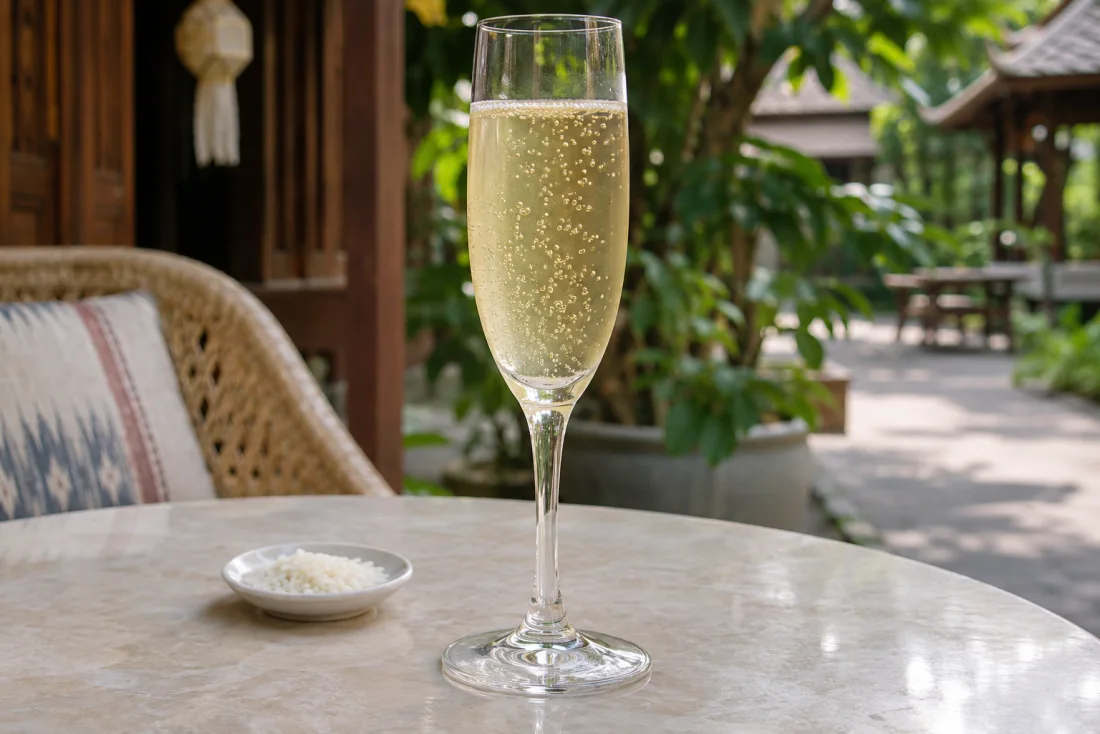

How rice appears
A Chiang Rai drink actually uses jasmine rice 105 as a main ingredient alongside seasonal fruit. Thai jasmine rice is distinct from glutinous rice. A mango sticky rice syrup name identifies a flavour reference and does not establish whole grains, sticky rice extract or an exact syrup recipe.
Chiang Rai and Bangkok examples
A Chiang Rai agricultural project documents a non-alcoholic sparkling rice drink with jasmine rice and seasonal fruit. A Bangkok restaurant lists a mango, coconut cream, mango sticky rice syrup, soda water and mango soft jelly mocktail. Another café lists a similarly named soda without disclosing the recipe. The menus document specific examples in Thailand.
Roles of rice, fruit and mixers
Jasmine rice is the stated base in Chiang Rai. The fruit changes with the season, and fixed sweeteners or ratios are not given. Mango purée, coconut cream and soft jelly change colour and texture in the Bangkok example, while soda adds fizz.
Fizz and texture
A clear rice drink may show fine bubbles and a light aroma. The fruit determines much of its colour and sweet-sour balance. Mango and coconut cream can make the other drink yellow and richer, with a longer finish and palpable pieces of jelly.
Service and related drinks
A narrow glass can highlight bubbles. The restaurant shows the mango version in a stemmed glass with mango garnish. Rice milk, rice wine and the dessert itself remain separate preparations. The two examples discussed here are described as non-alcoholic.
Allergens and alcohol labelling
Confirm the full packaged ingredients and the actual seasonal fruit. The Bangkok version contains mango and coconut cream. Ask about dairy additions, any gluten cross-contact and shared equipment if relevant. Rice aroma and bubbles do not establish alcohol content. Use the label or actual menu description when necessary.
If you have a food allergy, tell the restaurant before ordering and ask about ingredients, sauces and shared cooking equipment.