

Orange juice and fresh-squeezed menu wording
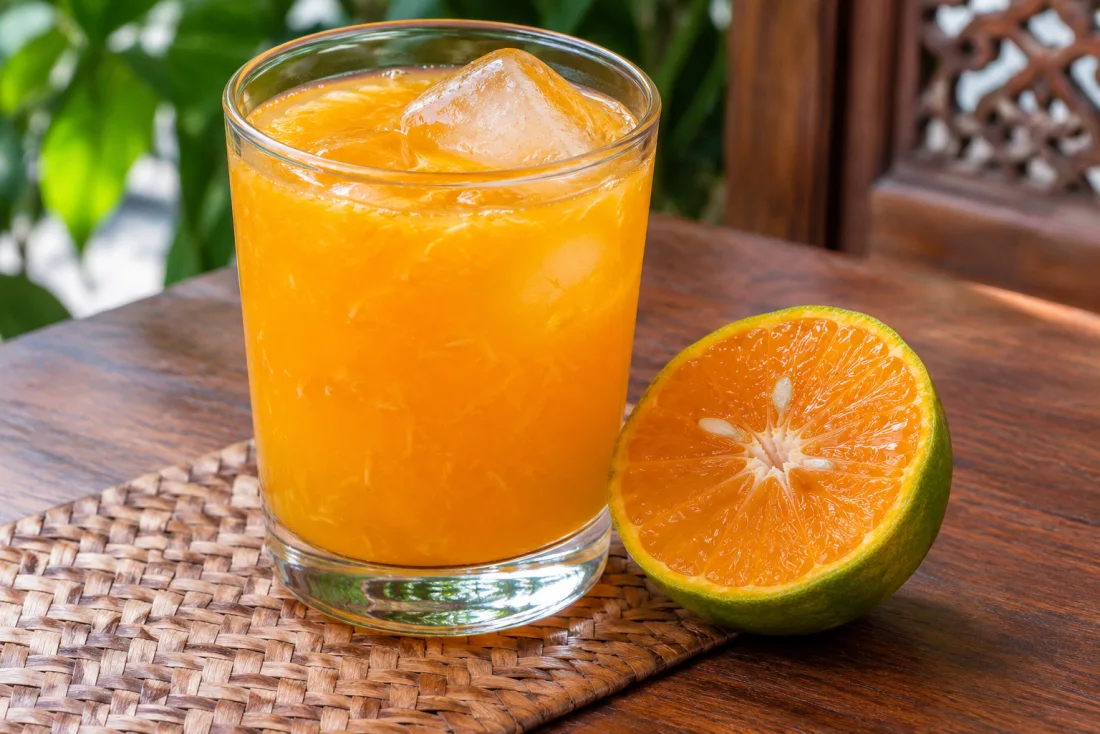
Nam som commonly means orange juice on a Thai drinks menu. Khan sot signals freshly squeezed juice. Thai recipes use mandarins, sometimes blending sweeter and tarter fruits. A ripe local mandarin can still have green skin.
The juice, pulp and seasoning
The fruit is the main ingredient and some fine pulp can remain. Blending two citrus varieties balances their acidity. Some preparations add a pinch of salt, while syrup or added water depends on the shop.
Pressing and straining
Wash the fruit, cut and press it, then strain out the seeds. A fine sieve removes more pulp. Pressing very hard can bring out a little peel bitterness. Serve chilled or over ice and follow storage directions on packaged juice.
Natural sweetness and fresh citrus
The taste depends on the fruit and its ripeness. Pulp gives more body, while ice gradually dilutes the flavour. A little salt may round the tartness. Ask whether sweetener or water is added.
Fresh juice, concentrate and orange tea
Fresh orange juice can be made with fruit alone. A mixed orange drink can use syrup or concentrate. Orange iced tea introduces tea aroma, astringency and possible caffeine. Ask how much pulp and ice come in the cup.
Allergens and optional fruit additions
The juice contains citrus. Plain juice needs no dairy, soy, wheat or nuts, but premixes and other beverages can have different ingredients. Ask about shared presses, sieves and measures. Removing a garnish does not remove citrus juice from the cup.
If you have a food allergy, tell the restaurant before ordering and ask about ingredients, sauces and shared cooking equipment.