
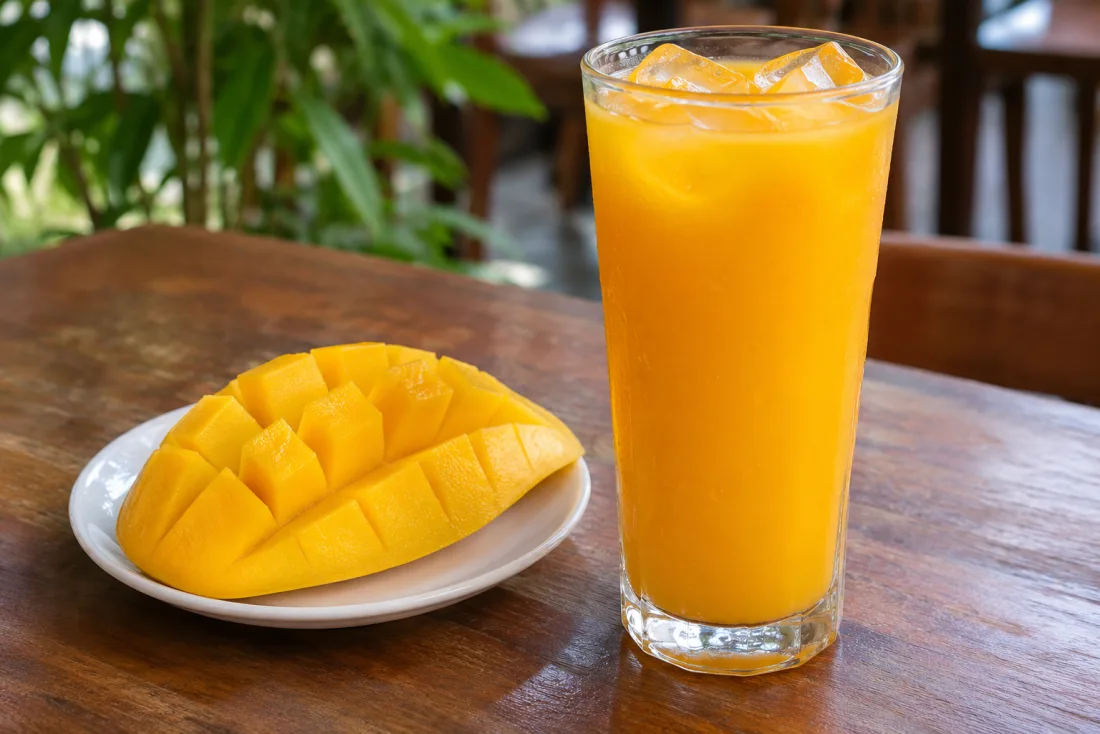

Mango juice on a Thai menu
Nam mamuang joins the Thai words for a liquid drink and mango. Restaurant menus in Phuket and Bangkok list it among their juices. Some describe it as fresh mango juice and others list a 100% mango juice. It is a restaurant fruit drink found across establishments, and the familiar Thai-grown fruit is a clearer part of its identity than any single place of invention.
Ripe fruit and juice texture
Soft ripe mango flesh is the foundation. Once peeled and separated from the stone, the flesh produces a gently thick, pourable juice with fine fruit fibres. A fragrant yellow mango such as Nam Dok Mai is a natural choice, though farms and restaurants use different fruit. Filtration, dilution and sweetness can vary; a drink explicitly sold as pure juice gives a more specific composition than a general fresh juice name.
Colour, aroma and finish
The juice is naturally gold to orange, with enough fine pulp to appear opaque. The aroma is sweet and distinctly ripe mango. Some fruit gives a faintly tart finish. A little soft pulp gives a fuller mouthfeel while a finely strained juice tastes more even. Chilling makes the drink crisp, and melting ice gradually softens the rich sweetness. The shade alone cannot tell you whether any sweetener was added.
Two ways to serve it
A tall glass poured over a few clear ice cubes is a familiar lunch service. A little cut ripe mango can sit beside it. In a smaller chilled glass without ice, the fruit aroma and body stay concentrated. Menus can list mango juice and a mango frappe separately. The juice remains readily pourable, while blended ice gives the frappe its distinctive texture and a milk shake brings its own ingredients.
How to order in Thailand
Look for it alongside pineapple, orange and coconut drinks. When ordering fresh juice, ask if some pulp remains and whether it will be served over ice. Chilled juice with little or no ice keeps its fragrance and matches savoury grilled fish, coconut curry and rice dishes. Ice gives a lighter drink. Ask if the sweetness comes from the fruit alone when you want to know whether the shop also uses syrup.
Allergens and shared equipment
People with a known mango allergy should avoid mango juice. A recipe made from mango and ice has no dairy ingredients, but a café may also make smoothies with milk, yoghurt, soy, coconut or nuts. If avoiding any of these, ask the restaurant what goes into the drink and whether the juicer, sieve or serving tools are shared. A mango photo or the juice name alone cannot establish the kitchen's cross-contact practices.
If you have a food allergy, tell the restaurant before ordering and ask about ingredients, sauces and shared cooking equipment.