
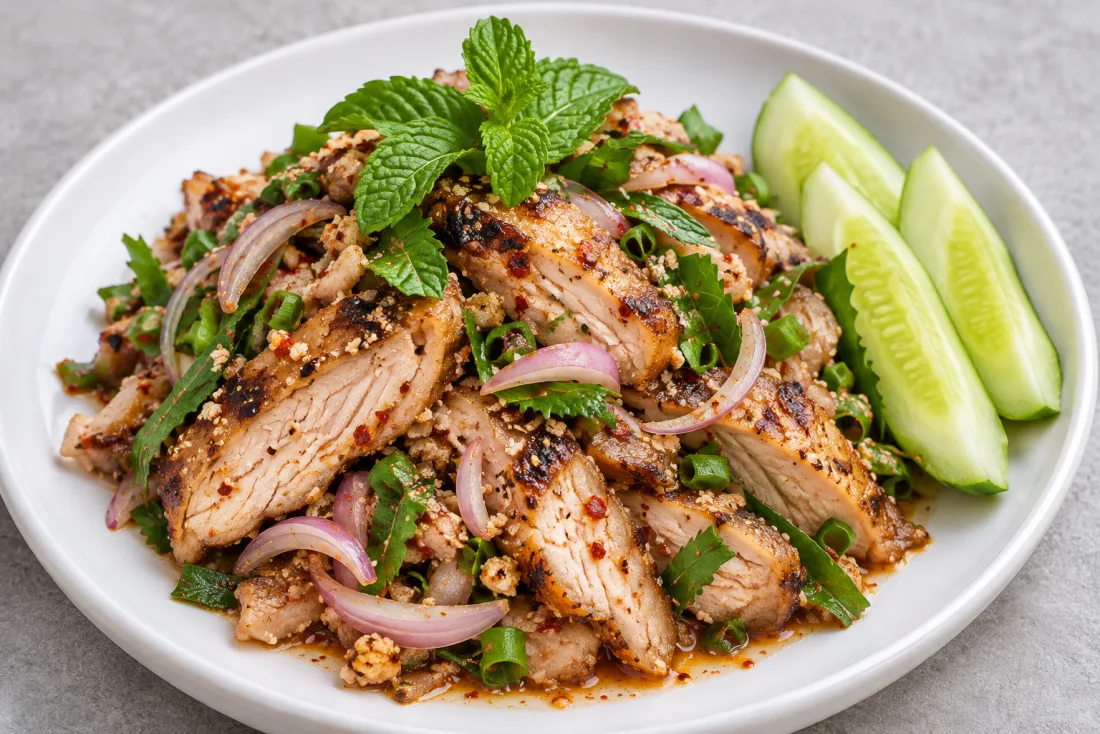

 grilled chicken slices
 fish sauce
An Isan sliced-meat salad made with chicken
Nam tok literally means waterfall and in this dish name refers to a preparation of sliced grilled meat tossed with chilli and toasted rice. Isan, northeastern Thailand, has several salads seasoned with toasted rice, chilli and herbs. Gai means chicken. The name identifies the preparation without fixing a province or city of origin.
Some recipes use nam tok gai yang, meaning grilled chicken nam tok. This describes sliced chicken already dressed, while grilled chicken can also be served with a separate dip. A restaurant can put it over rice, adding khao to the menu name.
Grilled chicken, fresh lime and toasted rice
Chicken breast or thigh can be used. Breast has a fine grain and thigh tends to be softer and juicier. Fully cooked grilled chicken is sliced into bite-size pieces. This keeps the browned edges and grilled scent before dressing. The marinade may use different seasonings from the salad itself.
The dressing commonly combines fish sauce, lime juice, dried chilli and toasted ground rice, sometimes with a little sugar. Shallot, scallion and culantro can go in, with mint where preferred. Toasted ground rice is pounded after toasting so it adds a roasted aroma and a little texture.
Acidity, char and chilli
A thin dressing clings to the chicken. Lime brings fruit acidity, fish sauce provides savor, and ground dried chilli gives lingering heat. Toasted rice absorbs some dressing, leaving small grains and an aroma that goes with the browned chicken. Shallot gives crunch, while culantro or mint adds freshness.
Rice grind and chicken skin can change the texture. A wetter version coats the slices more thoroughly, while a drier one leaves the grilled flavor more prominent. If you prefer less heat, ask about chilli in the dressing as well as any chilli or dip that comes alongside.
Eating it with sticky rice and crisp vegetables
The dressed chicken can be shared at an Isan-style table with sticky rice, cucumber, cabbage or long beans. Sticky rice picks up some of the spicy dressing, while crisp vegetables offer a change in texture. Serving it over steamed rice also makes an individual meal. Either version keeps the toasted-rice aroma.
Try a slice to gauge its heat before combining it with rice and vegetables. A piece with a little less dressing can showcase the grill flavor. Ask whether sticky rice comes separately and which vegetables are on the plate if you want to know the portion or accompaniments.
How it differs from larb, plain grilled chicken and pork nam tok
Chicken larb can use a related dressing of lime, fish sauce and toasted rice but commonly starts with cooked minced meat. Grilled chicken nam tok uses slices, keeping the grain and grilled edges. Plain grilled chicken may come chopped or bone-in with sauce on the side.
Nam tok moo uses grilled pork and can have the richness of fatty cuts such as pork collar. A chicken version may use different marinades or be adapted with sliced fried chicken. If only nam tok appears on a menu, ask which meat it is, whether it has been grilled and how it is dressed.
Allergies in the dressing and marinade
Fish sauce can contain fish. Chicken marinades sometimes contain soy sauce or oyster sauce, so ask about soy, wheat and mollusks such as oysters. Prepared seasonings and sauce on the side can contain additional ingredients. A nutty scent from toasted rice does not identify whether the kitchen uses peanuts.
Tell the restaurant what you need to avoid and ask about grills, tongs, cutting boards and mixing bowls. Removing a separate sauce does not remove either the marinade or fish sauce in the dressing. The people preparing the dish can confirm the ingredients and whether it can be made separately.
If you have a food allergy, tell the restaurant before ordering and ask about ingredients, sauces and shared cooking equipment.