
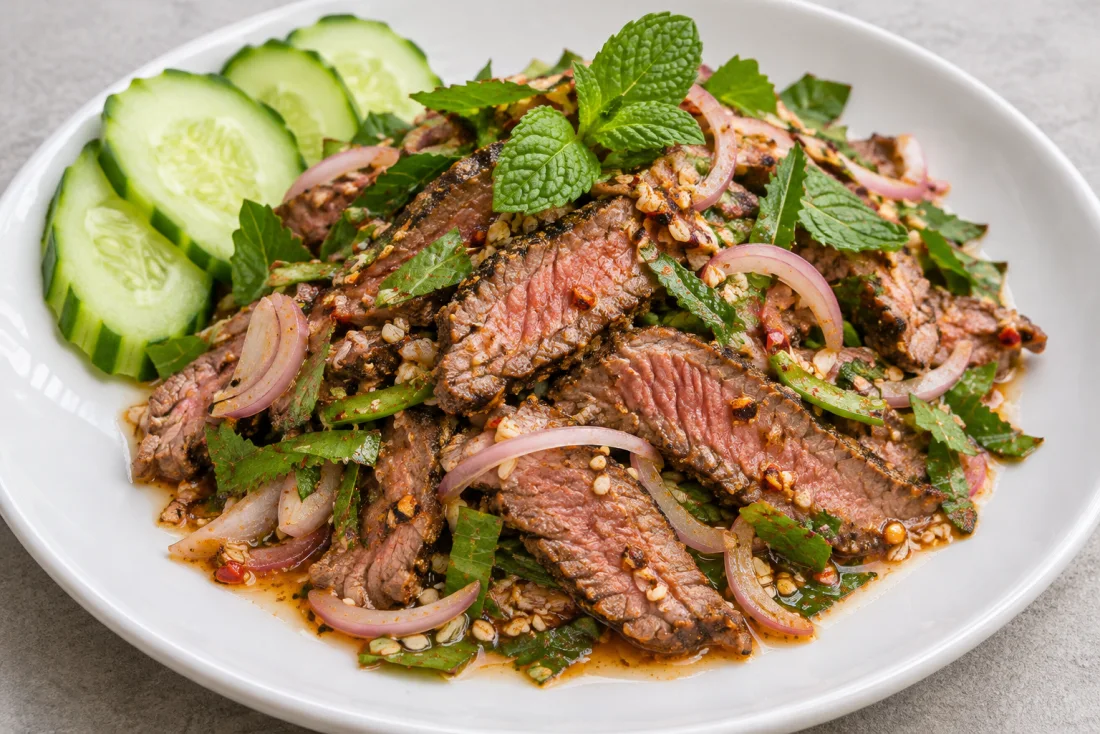

 grilled beef slices
 fish sauce
Understanding Isan beef waterfall salad
Nam tok literally means waterfall, and neua refers to beef here. A menu might translate the name as Beef Waterfall Salad. The dish is sliced grilled meat tossed in a spicy, sour dressing. The literal name does not settle its history. Isan seasoning, sliced beef and toasted rice are better clues.
In northeastern Thailand, several meat salads use fresh herbs and toasted rice. Some Bangkok Isan restaurants also serve beef nam tok. Nam tok neua yang adds the word for grilled. Recipes and restaurant examples establish the style without identifying a first vendor.
Grill the beef, then slice and dress it
A cut suited to grilling can be leaner or more marbled, which changes the bite and charred aroma. The cooked beef is sliced, with thickness varying by kitchen. Some thinner slices pick up more dressing per bite. The beef can also have a marinade of soy sauce, salt or other seasonings.
The dressing often uses lime, fish sauce, roasted dried chilli and toasted ground rice. Shallot or red onion, scallion, culantro and mint can be tossed in. Some recipes add a little stock or sugar to round out the acidity and salt. Ground toasted rice leaves small grains on the beef.
How char and lime work together
The grilled surface has a toasted aroma and the slices taste beefy. Lime adds bright acidity, fish sauce supplies savor and ground chilli brings heat that can develop over several bites. Toasted rice can smell nutty. Shallot offers crunch, and mint or culantro adds a fresh note.
Fatty beef gives more contrast between richness and sourness. Lean cuts can be sliced thinly to eat with the rice grains. If you prefer less heat, ask how the dressing is made and whether the kitchen adjusts chilli by order or prepares it in batches.
Sharing with sticky rice and fresh vegetables
Nam tok neua can be shared with sticky rice, cucumber or other crisp vegetables. Sticky rice takes up the dressing, while cucumber introduces another texture. It can appear alongside green papaya salad, grilled meat and other dishes on the same table.
Ask whether rice and vegetables are included. Try a piece with less dressing to taste the beef, then one with shallots and toasted rice to taste the seasoning. If the menu also lists grilled beef with a separate dip, that plate lets you season each bite yourself.
How nam tok differs from grilled beef, larb and pork versions
Plain grilled beef can have a dip beside it. With nam tok, the slices have already been dressed. Cooked beef larb can share lime, fish sauce and toasted rice, but often uses minced beef. It has a different texture from slices with browned edges. Nam tok moo uses pork.
Some shops toss more than one kind of meat together. A Bangkok restaurant documented adding grilled pork collar to its beef nam tok. Anyone avoiding pork can ask whether the dish uses beef alone. Nam tok also appears in names for some boat noodles, where it refers to a different kind of dish.
Fish sauce, marinades and shared grills
Fish sauce usually contains fish. A marinade can include soy sauce with soy or wheat. Other prepared seasonings may introduce other ingredients, including mollusks such as oysters in oyster sauce. Toasted rice can smell nutty, but that aroma does not tell you whether peanuts are added.
Tell the restaurant what you need to avoid and ask about the marinade, dressing, grill, tongs and cutting boards. Moving shallots or picking out a slice of beef does not remove ingredients already in the dressing. The kitchen can confirm whether it can use separate equipment and ingredients.
If you have a food allergy, tell the restaurant before ordering and ask about ingredients, sauces and shared cooking equipment.