
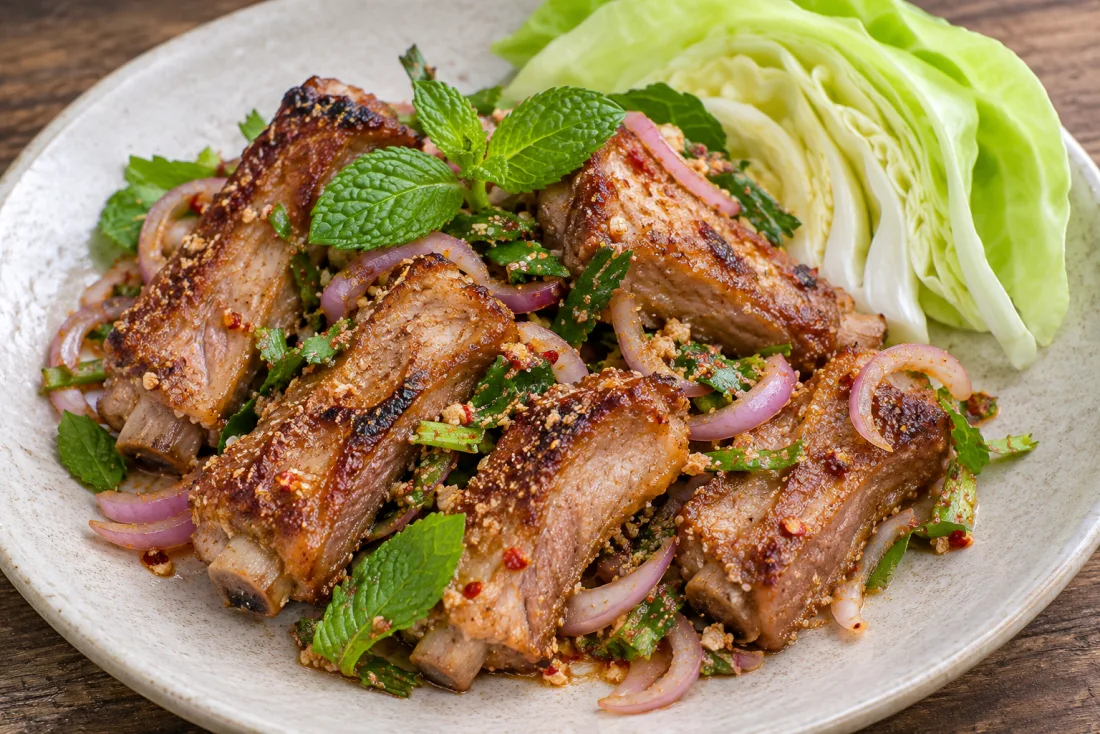

 pork ribs
 fish sauce
The Isan pork rib variation
Nam tok is the dressed meat style here, and si khrong mu means pork ribs. A Thai restaurant lists pork rib nam tok separately from its spicy pork rib soup and from pork neck nam tok. The rib dish uses the same family of Isan seasonings.
Ribs and the dressing
Grilled pork ribs can be seasoned with garlic, coriander root, pepper, light soy sauce and oyster sauce. Toss cooked ribs with fish sauce, lime, dried chilli, toasted rice, shallot and herbs. Mint, cucumber and cabbage are possible additions or sides.
Char, citrus and roasted rice
The bone-in meat can be juicy and slightly chewy, with brown char on the edges. Lime, fish sauce and chilli give a tart, salty heat. Toasted rice clings to the ribs and adds texture and a warm fragrance.
Grill the ribs, then dress
Cook the pork ribs through before cutting between the bones. Toss with the dressing shortly before serving, finishing with mint or herbs. A little meat juice can go into the dressing; the dish is served as a tossed salad.
Eating it with rice and vegetables
Sticky rice and crisp vegetables work as sides. Order it by the Thai pork rib nam tok name to distinguish the dish from spicy pork rib soup. Ask about less chilli or a separate dressing if useful.
Allergens in the marinade and dressing
Fish sauce contains fish. Soy sauce contains soy and can contain wheat; oyster sauce introduces molluscs. Check seasonings and ask about shared grills, bowls, tongs and grinding equipment, as the marinade and dressing can carry different allergens.
If you have a food allergy, tell the restaurant before ordering and ask about ingredients, sauces and shared cooking equipment.