

 beef
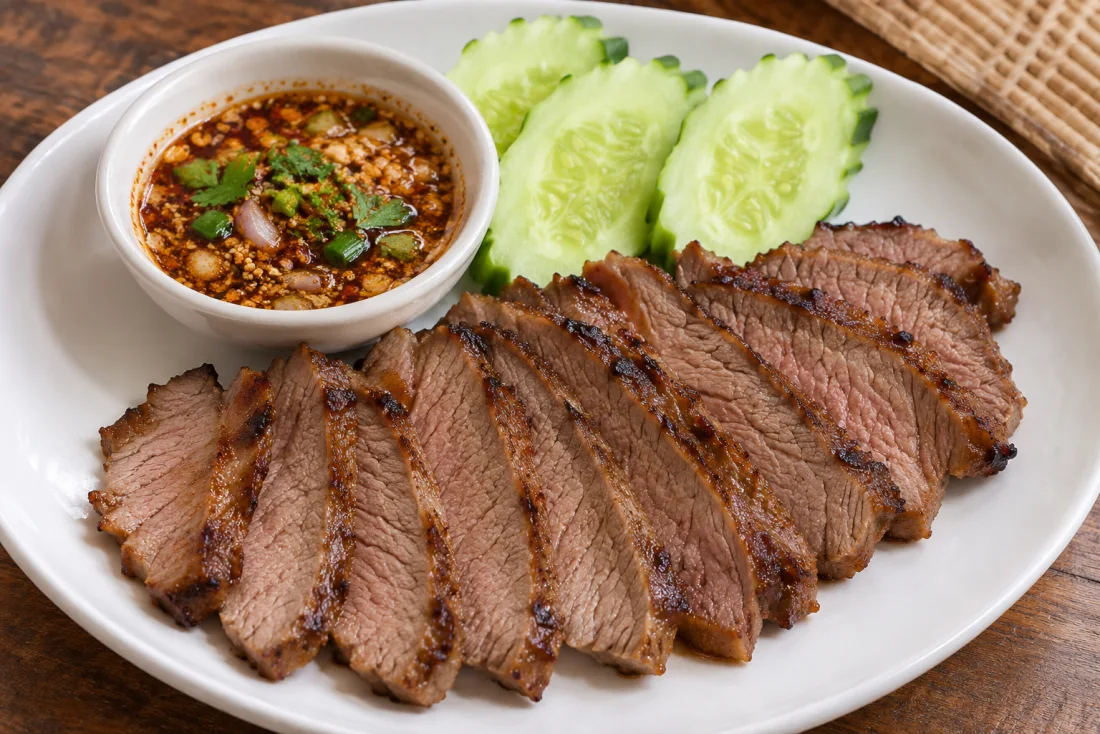
Sliced grilled beef on a Thai table
Neua yang usually means grilled beef. Slices and a little dish of jaew are common in Isan-style servings. Thai recipes use both tender cuts and cuts with more fat or chew. The cut and seasoning vary by shop.
Beef cuts, aromatics and jaew
Tenderloin gives lean, tender slices. Brisket and nearby cuts can be richer and firmer. Salt, pepper, coriander root and a little sugar form one seasoning base. Fish sauce, oyster sauce or soy can appear in other marinades. Jaew can use lime or tamarind, chilli, fish sauce and toasted rice.
Grilling a larger piece before slicing
Grill until the surface browns, then let the meat rest before slicing against the grain. Whole pieces retain a different texture from small cubes grilled on a skewer. Charcoal gives smoke and a hot pan gives a browned crust. Serve the dip separately.
Browned edges, beef richness and toasted rice
The surface smells of char and pepper. The centre reflects the fat and cut used. Lime or tamarind gives the dip acidity and ground toasted rice adds a warm aroma. Try a slice on its own or with a little sticky rice before dipping.
Skewers, grilled brisket and beef salad
Neua ping is often skewered. Suea rong hai is frequently made with a fattier brisket-type cut. Nam tok tosses grilled slices with herbs, lime, chilli and toasted rice. Plain grilled beef can be served with a separate dip and cool vegetables.
Allergens in marinades and jaew
Fish sauce or fermented fish contains fish. Oyster sauce may contain molluscs, soy sauces can contain soy and wheat, and shrimp paste adds crustaceans when used. Ask about both dip and marinade, plus shared grills and tongs. A separated dip does not remove an ingredient already used to season the beef.
If you have a food allergy, tell the restaurant before ordering and ask about ingredients, sauces and shared cooking equipment.