
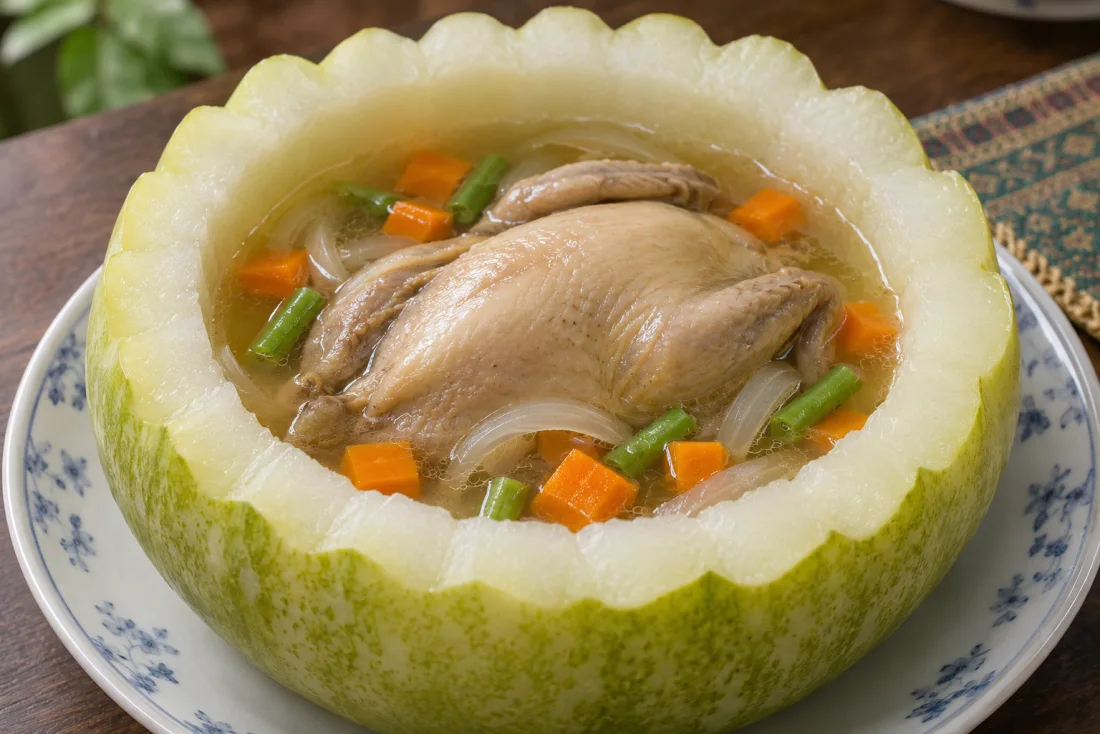

Recognizing the winter melon bowl
Nok phirap means pigeon and tun refers to slow or indirect cooking. The melon wall stays thick and may have a carved rim. Cooked squab, green beans and carrot are visible in the broth. The soft inner wall can be scooped.
A Thai cookbook example of carved melon
Tamrap Ahan describes opening and hollowing the melon while keeping enough wall for support. The book mentions squab and duck among possible melon-bowl soups. It records a Thai carving and cooking practice without assigning the dish a birthplace.
Squab, melon and vegetables
The recipe lists pigeon, winter melon, onion, short green beans, carrot, salt, pepper and light soy sauce. It allows tender white radish as an alternative to carrot. Use farmed edible squab. Onion and carrot contribute sweetness while soy and pepper season the liquid.
A clear broth with mild sweetness
Squab gives the broth a delicate savory flavor. The melon becomes tender and slightly sweet, the beans keep a little bite and carrot softens. Pepper adds gentle warmth. Small changes in the amount of soy affect the color and taste.
Serving and sharing the bowl
Divide the cooked bird and scoop soft melon from inside the rim. Ladle broth into separate bowls. A kitchen may plate smaller portions in a melon ring or serve a whole bowl on a tray. Plain rice and lightly seasoned greens fit alongside.
Allergens, cooked poultry and bones
Light soy sauce contains soy and can contain wheat. Check commercial flavorings or shared broth and cookware. Serve squab cooked through and look for small bones. The melon has absorbed the same broth.
If you have a food allergy, tell the restaurant before ordering and ask about ingredients, sauces and shared cooking equipment.