
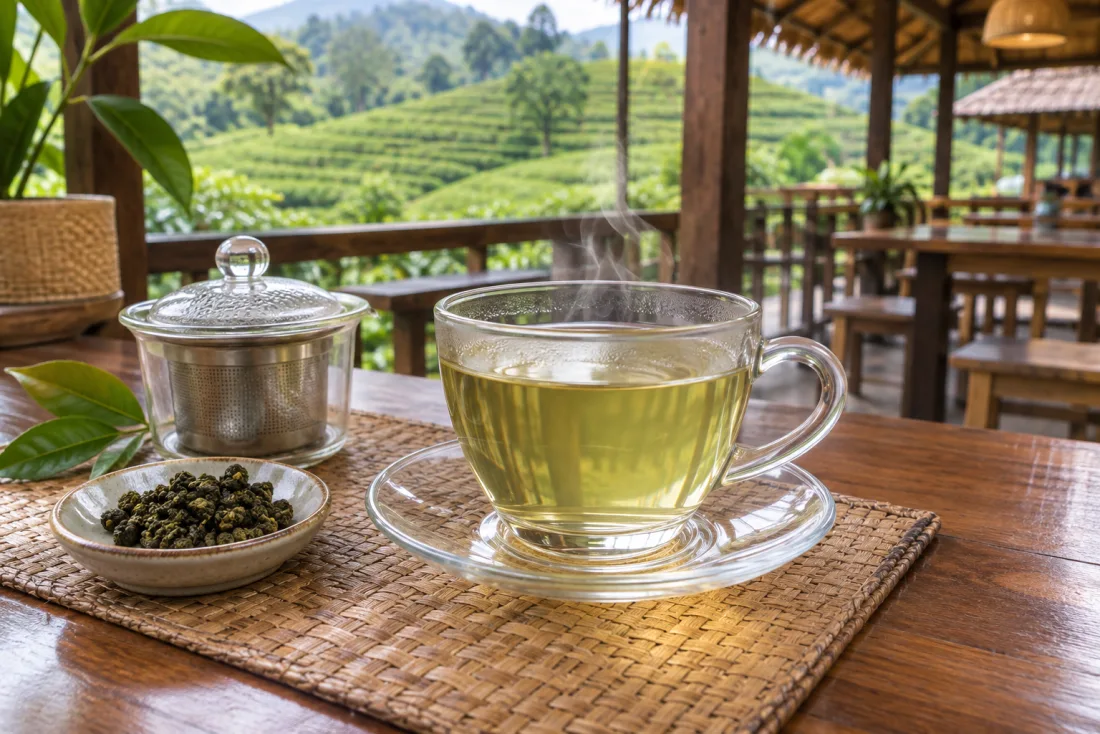

Northern Thai tea gardens
ชาอู่หลง means oolong tea. Producers in Chiang Rai, including in Mae Chan district, offer Thai-grown oolongs. The same menu name can cover local or imported leaves, and oolong itself is a broader tradition.
The leaf and the water
Plain oolong uses tea leaves and water. Leaves are partly oxidized before heat stops oxidation; rolling, drying and roasting shape individual styles. A café can use loose leaves or a tea bag. Added honey, milk and flavourings depend on the drink.
Pale gold through amber
Lighter examples may be floral with a fresh leaf note and a gentle sweet finish. More roasted examples can suggest grains or ripe fruit. Tea variety, roast and brewing strength contribute to colour and astringency.
Infusion and reinfusion
Hot water releases aroma and flavour. Rolled leaves unfold with time. A small pot can be used for successive infusions. A basket or tea bag can be removed from a mug once its strength suits the drinker.
Serving with a meal
Plain hot oolong accompanies pastries or a meal without adding sweetness. Ask whether the cup comes hot, plain and refillable if those details matter. A cup has no standard café size.
Allergens and additions
Plain tea and water do not normally contain milk, egg or tree nuts. Milk drinks, plant beverages and flavoured blends have different ingredients. Ask about labels and shared equipment. Tea naturally contains caffeine, which is separate from an allergy.
If you have a food allergy, tell the restaurant before ordering and ask about ingredients, sauces and shared cooking equipment.