
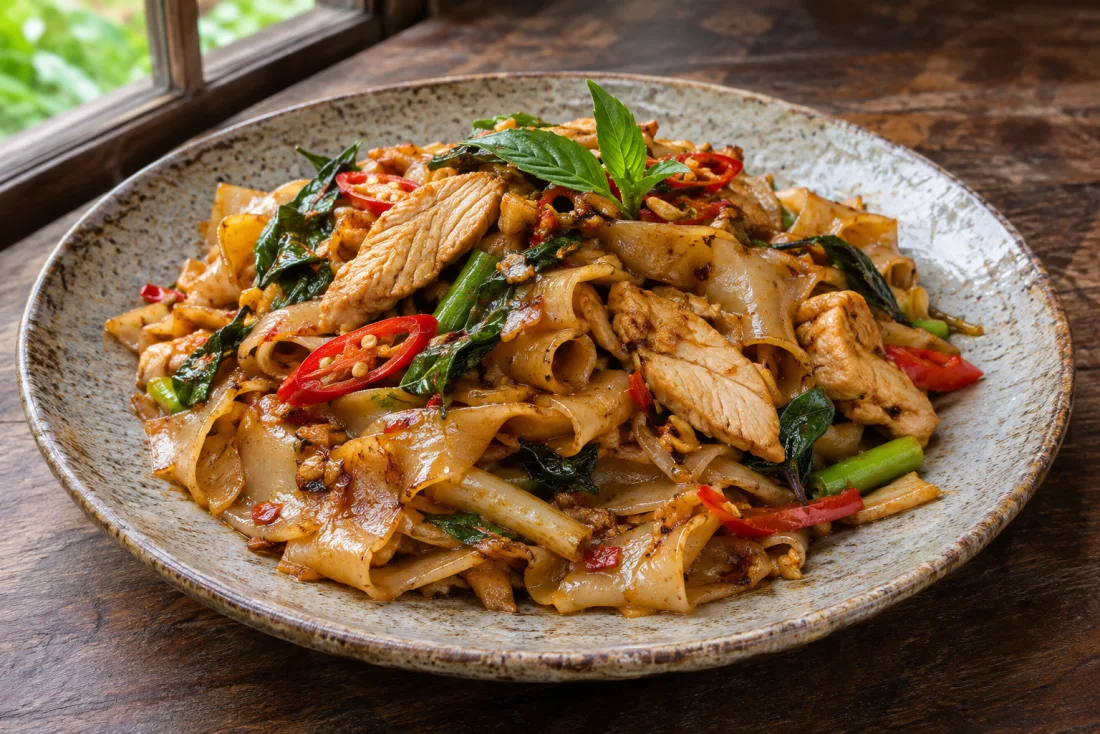

 chicken breast
 fish sauce
The name and where you might see it
Pad means stir-fried, kee mao can refer to a drinker, and gai is chicken. Kuai tiao specifies noodles. Stories about the name differ, including associations with drinking and the dish’s heat. The reference recipes do not require alcohol; check the actual kitchen if you need to avoid it.
What builds the flavour
Wide rice noodles catch the sauce. The chicken may be breast or thigh, cut to fry quickly. One recipe from Thai cook Phol adds onion, baby corn, snow peas and oyster mushrooms. Holy basil brings a peppery aroma. Thai sweet basil, a substitute in some overseas kitchens, tastes different.
How quick cooking changes the texture
The cook fries chicken, garlic and chilli, then combines the vegetables, noodles and sauce. Some methods briefly sear the noodles to develop char. Fresh rice sheets can break with too much tossing. Basil goes in near the end so that the leaves soften and retain their aroma.
Heat, garlic and savoury sauce
The sauce tastes savoury and the garlic, chilli and basil are more prominent than in a sweet soy noodle dish such as pad see ew. Vegetables can lend mild sweetness and crunch. Actual heat depends on which chillies the cook uses and how much goes into the wok.
Single plates and other versions
This version already contains noodles and chicken. Menus may also list pork, seafood or a spaghetti variation under a similar seasoning name. Ask if the kitchen can reduce the chillies if you prefer less heat. A premixed paste may already have chillies in it.
Allergens, seasonings and the wok
Check for oyster in oyster sauce, soy and possible wheat in soy sauce, fish in fish sauce, and crustaceans if chilli paste contains shrimp paste. Egg and noodles can also vary. Tell the kitchen what you need to avoid and ask about the chicken marinade, premixed sauce and shared utensils.
If you have a food allergy, tell the restaurant before ordering and ask about ingredients, sauces and shared cooking equipment.