

 pork
 fish sauce
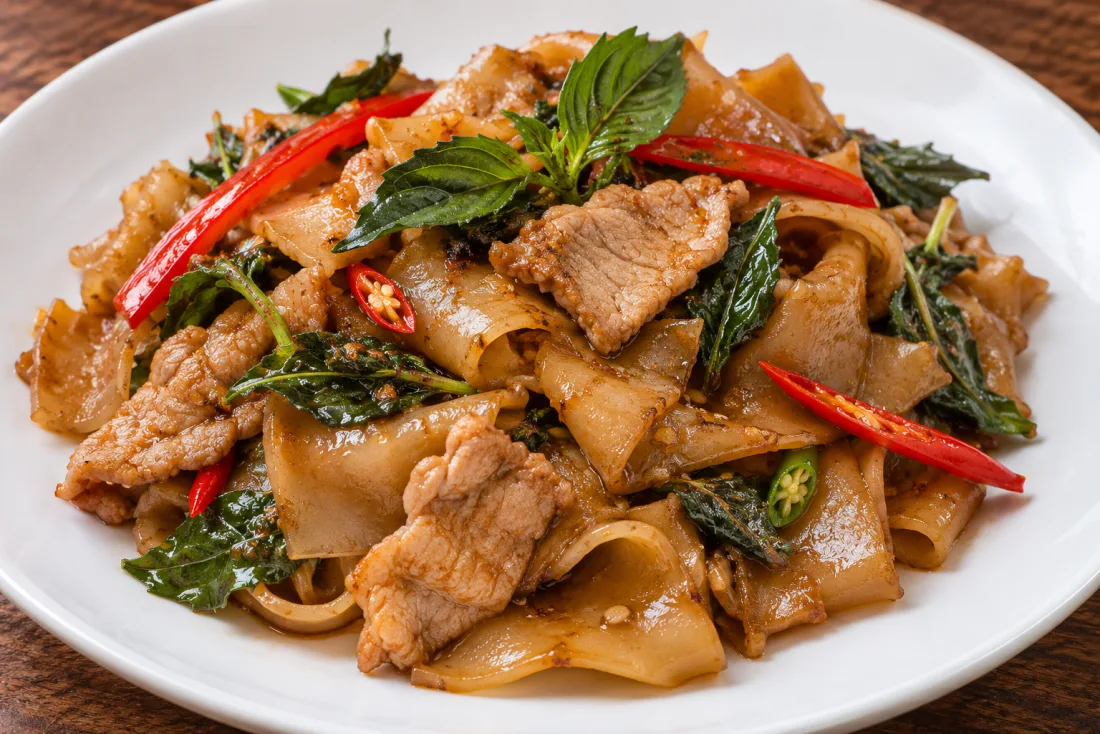
Pork in a Thai chilli and basil stir-fry
Pad kee mao moo names a pork stir-fry, and sen yai specifies wide rice noodles. A Thai reference uses sliced pork and a shop menu lists minced pork. The name drunken noodles describes the style, and the reference wide noodle recipes use no alcohol.
Wide rice noodles, pork, chilli and holy basil
Separate wide rice noodle sheets and use sliced pork or minced pork. Chilli, garlic and holy basil give the dish its fragrance. A reference uses fish sauce, oyster sauce, sweet dark soy sauce, sugar, carrots, baby corn and peppercorns.
Frying the aromatics and tossing the noodles
Fry crushed chilli and garlic, then cook the pork through. Add the noodles and seasonings and toss quickly. Vegetables can go in later to stay crisp, with holy basil folded in just long enough to wilt. Fried basil can be added when serving.
Fresh heat, savoury pork and silky wide noodles
Chilli and garlic are prominent, followed by savoury sauce and peppery holy basil. The noodles stay soft and slightly springy. The pork and vegetables give the noodles a more varied bite. Sauce colour alone gives little information about heat.
Sliced or minced pork and different noodles
Some shops use pork slices, while others use minced pork or a crisp pork topping. Other noodle styles are possible. Pad see ew typically highlights soy and greens or egg. Chilli and holy basil are much more prominent in this pad kee mao.
Allergens in seasoning, noodles and shared cookware
Fish sauce, oyster sauce and soy sauce can contribute fish, molluscs, soy and wheat. A chilli mixture can include shrimp paste, and other noodle choices can contain wheat or egg. Ask about the actual noodles, seasoning and shared wok or utensils if needed.
If you have a food allergy, tell the restaurant before ordering and ask about ingredients, sauces and shared cooking equipment.