

 beef
 fish sauce
What the drunken noodle name means
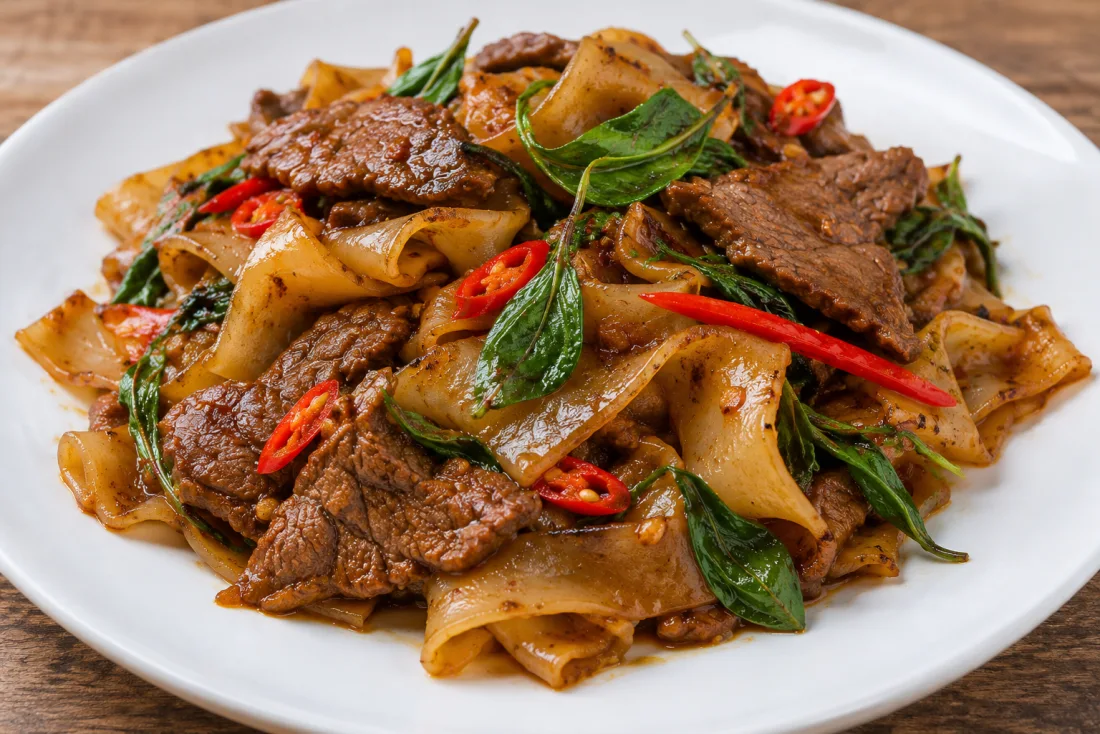
Pad kee mao neua describes the spicy beef stir-fry. Sen yai makes the wide rice noodle style explicit. On a shorter menu the same stir-fry family can also refer to a dish served with rice. The traditional English term drunken noodles does not identify a required alcoholic ingredient.
Where Thai menus serve it
Bangkok restaurants list both named beef dishes and wider choice of meat with spicy flat noodles. The selection appears at made-to-order shops and full-service restaurants. Vegetables and heat depend on the kitchen. Sliced and minced beef make the plate feel different.
Beef, noodles and fresh aromatics
A beef recipe uses wide fresh rice noodles, beef, garlic, chili, green peppercorns, fingerroot, makrut lime leaves, holy basil and long beans. Oyster sauce, light and dark soy, fish sauce and sugar season the noodles. Holy basil and green peppercorns give different peppery notes.
Wok heat and timing
Separate the fresh sheets before they enter the pan so the sauce can coat them. Garlic and chili scent the oil, and beef slices cook quickly. Firmer vegetables can go in earlier than basil. Add the leaves near the end so their fragrance is still clear on the plate.
Heat, savory sweetness and shop variations
Dark soy and the wok can darken the surface independently of the amount of chili. Chili gives heat, while green peppercorns and basil add herbal notes. Some formulas use shrimp paste in the seasoning. Ask whether the house sauce already contains chili before requesting mild.
Allergens in the stir-fry sauces
Fish sauce contains fish, oyster sauce can contain molluscs, and soy sauces contain soy and may contain wheat. Shrimp paste introduces crustaceans when used. Some kitchens add egg or offer wheat egg noodles. Check the marinade, house sauce and shared wok.
If you have a food allergy, tell the restaurant before ordering and ask about ingredients, sauces and shared cooking equipment.